
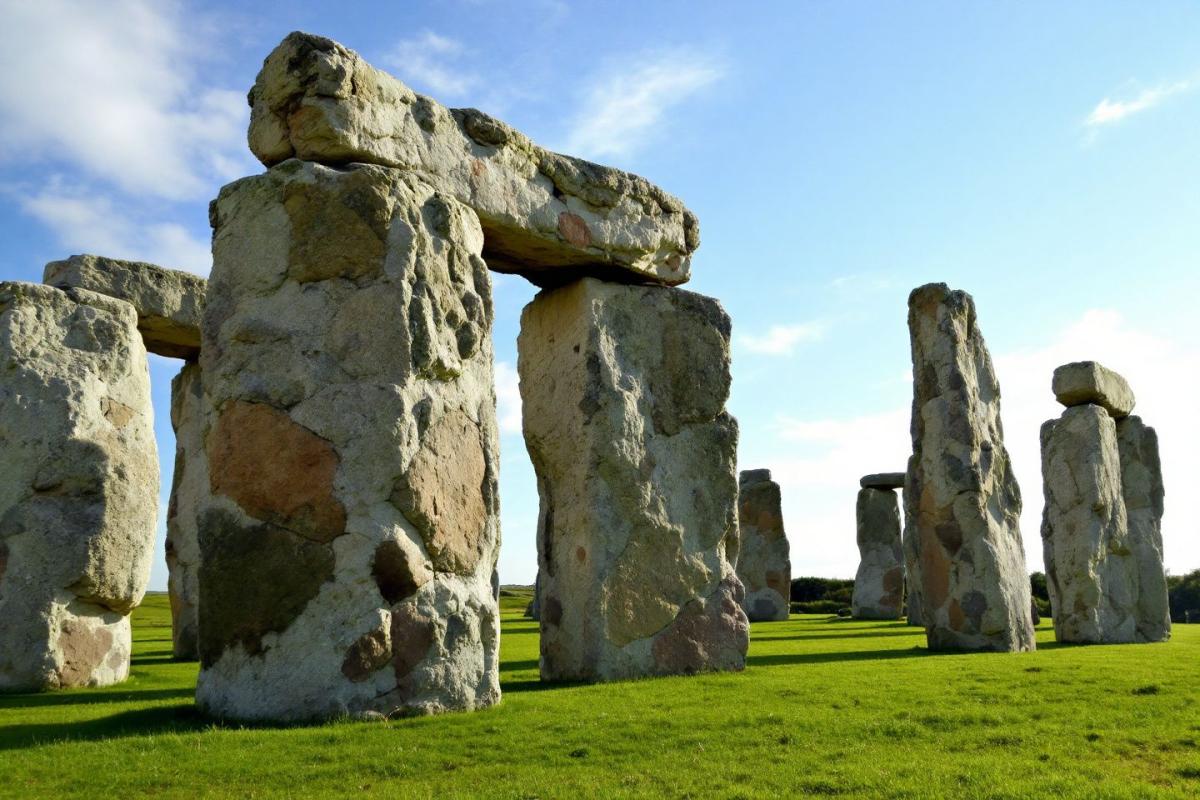
In the heart of Germany, an extraordinary archaeological site has captured the imagination of historians and visitors alike. Known as Pömmelte, this remarkable ritual landscape and settlement dates back over 2,000 years and rivals Stonehenge in both scale and significance. Located near Schönebeck, approximately 18km southeast of Magdeburg, this archaeological treasure has become one of Germany’s most important prehistoric sites, drawing around 40,000 visitors annually to its reconstructed timber circle.
Unveiling Germany’s ancient circular sanctuary
The ring sanctuary of Pömmelte was constructed around 2350 BC, at the transition between the Late Neolithic and Early Bronze Age periods. First discovered through aerial surveys in the early 1990s, the site underwent extensive excavation between 2005 and 2008, revealing a complex structure of circular ditches, an external rampart, and several rings of internal timber uprights and palisades.
What makes Pömmelte particularly fascinating is its striking similarity to Stonehenge. Both monuments share nearly identical external diameters of approximately 115-118 meters and feature complex concentric structures. While Stonehenge utilized monolithic stones, Pömmelte’s uprights were fashioned from oak trunks, likely sourced from nearby mountains or transported via the Elbe River. This difference in materials reflects the availability of resources in each region – central Germany had abundant timber but limited suitable stone for megalithic structures.
The site’s orientation appears deliberately aligned with what archaeologists call “mid-quarter festivals” – dates falling between solstices and equinoxes. The main entrances face sunrise and sunset at the end of October and beginning of February, suggesting astronomical significance similar to other ancient stone circles with ritual and astronomical importance. Evidence of ritual activities includes deposits found in 29 pits within the ditch: millstones, cattle bones, drinking vessels, and even human remains of women and children.
Just one kilometer northwest of Pömmelte lies a smaller but almost identical ring sanctuary at Schönebeck, with an outer diameter of approximately 80 meters. Together, these structures formed part of a ritual landscape stretching nearly 1.2km along a low terrace in the former River Elbe floodplain.
| Feature | Pömmelte | Stonehenge |
|---|---|---|
| Outer diameter | 115-118 meters | 115 meters |
| Construction date | c. 2350 BC | c. 2500 BC (major configuration) |
| Building material | Oak timber | Stone |
| Structure | Complex concentric circles | Complex concentric circles |
Settlement patterns and daily life around the sanctuary
What truly sets the Pömmelte landscape apart from Stonehenge is the extensive settlement discovered surrounding the ritual site. Excavations have revealed traces of approximately 140 houses, providing unprecedented insight into the communities that created and maintained these monuments.
The earliest buildings identified near Pömmelte belong to the Bell Beaker culture (c. 2350-2200 BC), with 12 structures spread over an area of about 27,000 square meters. As the site transitioned into the Early Bronze Age around 2200 BC, the local Únětice culture expanded the settlement dramatically to include over 100 additional buildings, suggesting the growing importance of the sanctuary over the following two centuries.
These Early Bronze Age longhouses followed a standardized design – always about 7 meters wide but varying in length from 15 to 30 meters. This consistency represents a remarkable early example of standardized building plans. Based on the average building size of 140 square meters and estimating about 10 square meters per person, each longhouse could potentially accommodate 14 individuals, though some space may have been reserved for animals.
Archaeological evidence has revealed fascinating details about daily life in this prehistoric community:
- Storage facilities including approximately 350 circular pits for grain
- A communal well located at the settlement’s southern edge
- A clay “refrigerator” for preserving perishable foods
- An earth cellar measuring nearly 2 meters deep for additional storage
- Evidence of grain processing through millstones and flint sickles
Animal bone analysis indicates a diet primarily consisting of beef, supplemented with sheep/goat meat and minimal pork, with very little hunting. Food residue analysis also confirms the consumption of dairy products, while grain likely formed the dietary staple.
The settlement appears to have ended abruptly in the 20th century BC, possibly triggered by climate deterioration. Interestingly, this coincides with a shift in the power center of the Únětice culture away from Pömmelte to southern regions, where bronze metallurgy would soon elevate these societies to new heights of prosperity and social stratification.
The evolution of a sacred landscape
The archaeological investigations at Pömmelte have revealed a long and complex history of human activity spanning several millennia. The oldest monumental structure in the area dates to the 4th millennium BC – a trapezoidal ditch measuring approximately 11m by 20m with a central burial, presumably once covered by a mound to serve as a landmark.
Around 2800 BC, roughly 500 years before the ring sanctuaries were built, two square enclosures were constructed at Pömmelte and Schönebeck. These structures featured entrances aligned with the summer and winter solstices, suggesting early astronomical awareness among the region’s inhabitants.
During this early period, at least four large burial mounds were also erected in the Pömmelte area, associated with the Corded Ware culture that dominated eastern Europe from approximately 2900-2050 BC. These mounds contained wooden funerary huts with individual male burials accompanied by typical flint blades.
After the abandonment of the settlement and ring sanctuaries around the 20th century BC, the area transformed into a purely sacred landscape. The monuments were gradually forgotten, and the region became a necropolis featuring at least 40 burial mounds. Later, as cremation practices became more common, an urn burial ground was established at Schönebeck, with around 80 vessels recovered so far.
The geographical setting likely influenced the site’s significance. Located along the fertile Magdeburg Loess plain with its productive black soils and proximity to salt deposits at nearby Bad Salzelmen, the area offered natural resources that supported prehistoric populations. However, the decisive factor may have been its strategic location beside the Elbe River – a crucial east-west connection. Digital terrain modeling reveals that the structures were built on a strip of land between two river oxbows, which would have periodically transformed into a naturally protected island during floods.
Today, visitors can experience the reconstructed Pömmelte ring sanctuary year-round, free of charge. A modern tourist information center, designed to replicate the shape of Únětice longhouses and constructed using traditional rammed earth techniques, welcomes those seeking to connect with this remarkable piece of European prehistory.

- Once-extinct European wildcats set to make a comeback in England - September 21, 2026
- Joe Salisbury takes break from tennis due to anxiety struggles - September 20, 2026
- Andy Haldane slams Budget 2025 for repeated policy mistakes - September 19, 2026

