
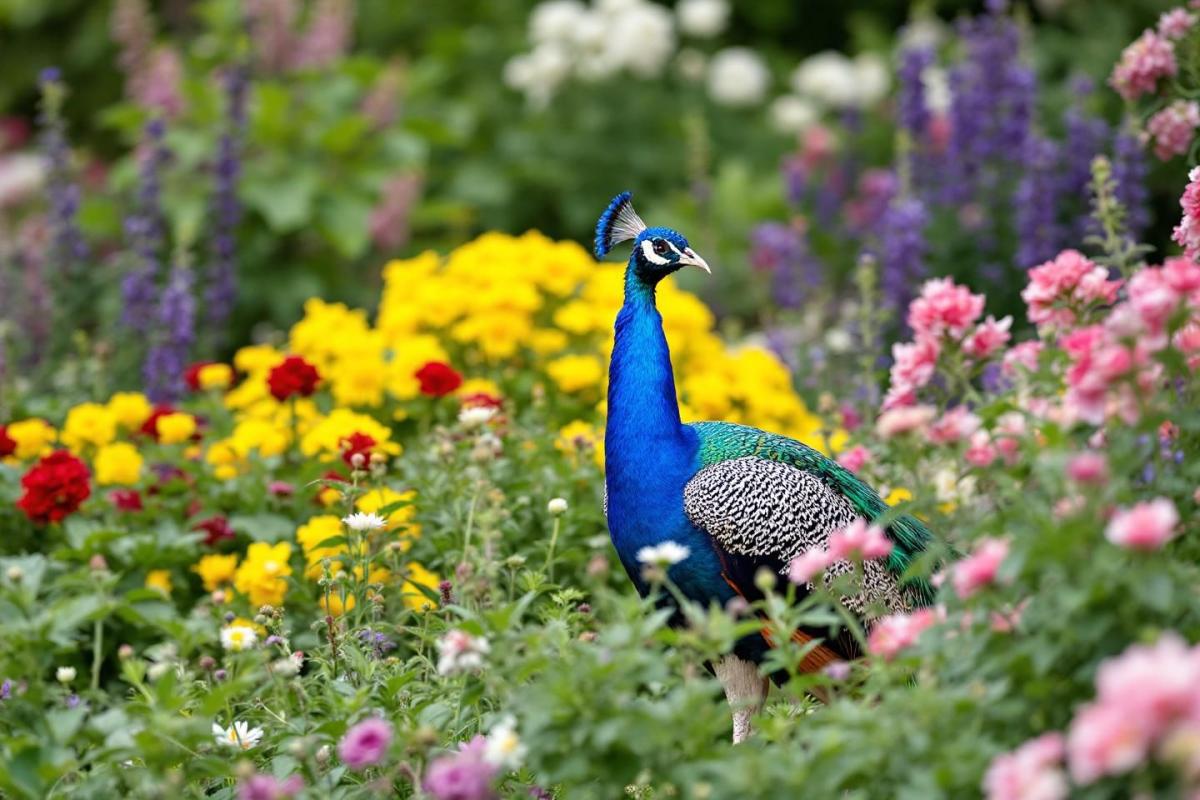
The tranquil village of Tutbury in east Staffordshire has become the unlikely battleground for a peculiar invasion. For over 25 years, a growing population of peacocks and peahens has divided local residents, creating tensions between neighbors and transforming community dynamics. These colorful birds, once confined to the grounds of Tutbury Castle, now freely roam the streets, leaving a trail of destruction and discord in their wake.
The royal peacock saga: how it all began
The story behind Tutbury’s feathered residents remains somewhat shrouded in mystery. According to local accounts, approximately 25 years ago, three peacocks were housed within the historic Tutbury Castle that overlooks the village. The identity of their original caretaker remains contested, but residents agree on one crucial detail – whoever was responsible for feeding these magnificent birds suddenly stopped.
This abandonment forced the peacocks to venture into the village in search of food, beginning what would become a decades-long saga. Some villagers claim these birds technically belong to the Crown, as Tutbury Castle forms part of the Duchy of Lancaster estates. This royal connection has allegedly complicated efforts to manage the growing peacock population.
Wildlife management issues aren’t uncommon in rural England. In fact, similar conservation efforts have been successful with other species, as seen with the England approves reintroduction of wild beavers: Conservation milestone for native species initiative, which took a more structured approach than Tutbury’s accidental peacock sanctuary.
Today, what started as three birds has multiplied into a significant population that has dramatically altered village life. The peacocks’ territorial nature and distinctive behavior patterns have created a living situation that many residents compare to being involuntary participants in a wildlife exhibit.
Daily disruptions: the peacock problem
For many Tutbury residents, the peacock presence has evolved from a novelty to a genuine nuisance. Lifelong villagers Humphrey and Jackie Toon, aged 78 and 64 respectively, represent those willing to speak openly about the situation. While acknowledging the birds’ good nature, they describe a daily reality filled with disruptions:
- Pre-dawn wake-up calls beginning around 4:30 am
- Traffic interference as birds stop buses and other vehicles
- Property damage when peacocks attack cars after seeing their reflections
- Excessive waste throughout public and private spaces
- Crop destruction in garden allotments
One anonymous resident described their experience in stark terms: “It’s like being in a zoo: they’re around you, you can’t get rid of them. It’s like you’re in the cage with them; day and night they’re there.” The constant noise and disruption have proven particularly challenging for residents recovering from medical procedures, with some planning to relocate specifically to escape the peacock problem.
George, who maintains a plot in the village allotment, has been forced to fortify his crops against the marauding birds. He characterizes the community’s reaction as polarized, noting that peacocks have become “like marmite” – inspiring either devoted affection or intense dislike among villagers.
| Peacock Impact | Resident Response |
|---|---|
| Early morning calls | Sleep disruption, particularly in summer |
| Waste production | Complaints about unhygienic conditions |
| Crop destruction | Defensive gardening measures |
| Vehicle interactions | Traffic disruptions and property damage |
Village divided: the community response
The peacock situation has created such tension that many residents refuse to speak publicly about their views, fearing conflict with neighbors. This silence further complicates community efforts to address the issue. The division has become so pronounced that identifying which households support or oppose the birds has become common knowledge among locals.
Jackie Toon summarized the birds’ impact with memorable candor: “They poo everywhere. They could poo for England.” Despite their complaints, the Toons maintain a sense of humor about their colorful neighbors, representing the resigned acceptance many longtime residents have adopted.
The controversy has reached local governance, with both the parish and borough councils acknowledging awareness of the issue. However, both entities claim limited ability to intervene, citing that responsibility lies with “whoever owned the peacocks” – a question with no clear answer given the birds’ murky origins.
This governmental reluctance has left residents feeling abandoned to manage the situation themselves, creating a power vacuum where neither side of the debate can implement lasting solutions. The peacock ownership question remains central to resolving the conflict, yet remains unanswered after decades of coexistence.
Beyond Tutbury: peacock problems elsewhere
Tutbury’s experience, while unique in its specifics, reflects similar wildlife management challenges faced by other communities across England. When non-native species establish feral populations, they often create complex ecological and social dilemmas that lack straightforward solutions.
The situation highlights the delicate balance between appreciating wildlife and addressing legitimate quality of life concerns. For Tutbury, the peacocks have transformed from castle ornaments to controversial residents, embodying the unexpected ways human and animal communities can become intertwined.
As summer approaches in 2025, Tutbury residents brace for another season of early morning peacock calls, continuing the village’s distinctive relationship with these majestic but troublesome birds. Whether resolution comes through official intervention or community compromise remains to be seen, but the peacocks of Tutbury have undoubtedly secured their place in local legend.

- Prehistoric artifacts older than Stonehenge found at Palace of Westminster - October 14, 2026
- Prehistoric artifacts older than Stonehenge found at Palace of Westminster - October 14, 2026
- Salisbury dedicates Christmas tree to former mayor in touching tribute parade - October 13, 2026

