
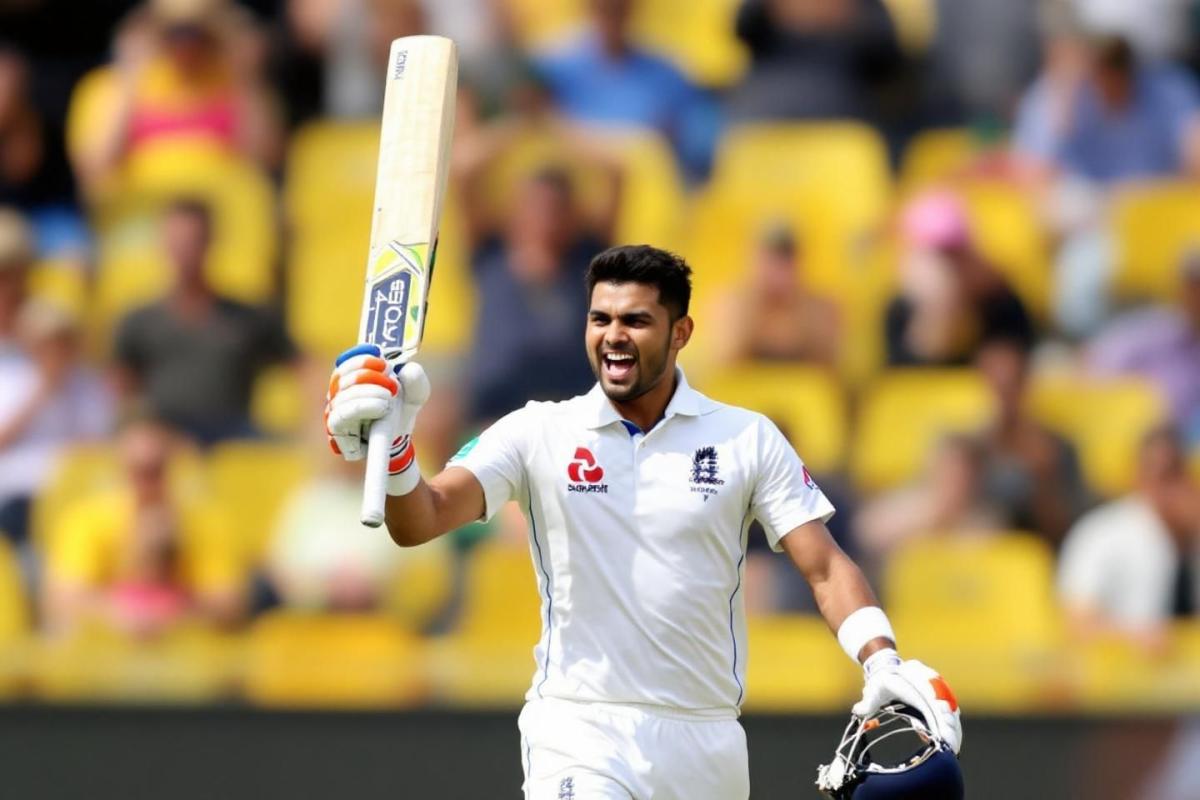
Shubman Gill showcased his batting prowess with a magnificent century, putting India in a commanding position against England in the second Test at Edgbaston. The young captain’s stellar 269-run innings formed the backbone of India’s imposing first innings total of 587, giving them a substantial advantage in this crucial encounter.
Gill’s masterclass dominates Edgbaston proceedings
Shubman Gill delivered a batting masterclass at Edgbaston, crafting a magnificent 269 off 387 deliveries that included 30 boundaries and 3 sixes. His patient yet authoritative approach against England’s bowling attack demonstrated his growing maturity as both batsman and captain. Facing 310 dots during his marathon innings, Gill showed remarkable concentration and technique throughout his 509-minute stay at the crease.
The 269-run innings represents Gill’s highest Test score and his most significant contribution since taking over captaincy duties. His strike rate of 69.51 perfectly balanced aggression with responsibility as he systematically dismantled England’s bowling plans across two days of play.
“This innings against England ranks among the finest Test performances I’ve seen from an Indian batsman in recent years,” noted cricket analyst Michael Vaughan. “The way Gill controlled the tempo and constructed his innings showed remarkable maturity for a young captain.”
Gill’s dismissal eventually came in the 144th over when he edged Josh Tongue to Ollie Pope, but by then he had firmly established India’s dominance in the match. His wicket fell at 574, with India already holding a massive first-innings advantage over the hosts.
Tongue finished as England’s most successful bowler with figures of 3-119, though his economy rate of 4.25 reflected the pressure India’s batsmen, particularly Gill, put on the bowling unit throughout the innings.
Supporting cast amplifies India’s advantage
While Gill’s performance rightfully took center stage, several Indian batsmen made valuable contributions to strengthen their position. Yashasvi Jaiswal continued his impressive form with 87 runs from 107 balls, striking 13 boundaries and showcasing his attacking intent before Ben Stokes had him caught by Jamie Smith.
The middle order provided crucial support with Karun Nair scoring a patient 31, while Ravindra Jadeja demonstrated his all-round value with a composed 89. Jadeja’s innings, featuring 10 boundaries from 137 balls, helped extend India’s dominance during a critical middle phase of the innings.
Washington Sundar added valuable lower-order runs with 42, while the tail provided enough resistance to push the total beyond 580. The collective batting performance enabled India to post their highest total at Edgbaston, surpassing their previous best of 521 set in 2018.
England’s bowling attack struggled to contain India’s batsmen across the extended innings. The workload was distributed as follows:
| Bowler | Overs | Maidens | Runs | Wickets | Economy |
|---|---|---|---|---|---|
| Josh Tongue | 28.0 | 2 | 119 | 3 | 4.25 |
| Shoaib Bashir | 45.0 | 2 | 167 | 3 | 3.71 |
| Chris Woakes | 25.0 | 6 | 81 | 2 | 3.24 |
| Brydon Carse | 24.0 | 3 | 83 | 1 | 3.45 |
| Ben Stokes | 19.0 | 7 | 74 | 1 | 3.89 |
Off-spinner Shoaib Bashir, despite conceding 167 runs, managed to claim three crucial wickets, including Rishabh Pant who contributed a brisk 25 runs. His performance highlighted England’s determination despite facing a mounting Indian total.
England’s faltering response deepens their challenge
Facing India’s mammoth first innings total, England’s batting response began disastrously. Mohammed Siraj and Akash Deep made immediate inroads into England’s top order, reducing the hosts to a precarious 13-2 in just 2.5 overs. The quick dismissals of Ben Duckett (5) and Ollie Pope (1) exposed England’s vulnerability against India’s new-ball attack.
Zak Crawley offered brief resistance, scoring 19 from 30 deliveries before falling to Siraj, caught by Karun Nair. His dismissal left England teetering at 25-3, staring at a potential follow-on situation.
England’s hopes now rest primarily on Joe Root and Harry Brook, who had moved the score to 77-3 by stumps. Brook has shown positive intent with 30 runs from 53 balls, while Root remains unbeaten on 18. Their unbroken fourth-wicket partnership of 52 runs has provided England a glimmer of hope, though they still trail by 510 runs.
The England batting lineup faces several key challenges as they attempt to respond to India’s total:
- Navigating the moving new ball with Mohammed Siraj finding significant swing
- Countering Akash Deep’s challenging line and length
- Dealing with expected spin from Ravindra Jadeja on a wearing pitch
- Building partnerships substantial enough to avoid the follow-on
- Managing the psychological pressure of the massive deficit
You can follow the latest developments in this exciting series through our live cricket score and match updates of India vs England encounters for comprehensive coverage.
Strategic implications for the remainder of the Test
India’s commanding position at Edgbaston has significant strategic implications for both teams. With a first-innings lead already exceeding 500 runs and England struggling at 77-3, India has multiple pathways to victory. Captain Shubman Gill now has the luxury of attacking field placements without worrying about conceding runs.
The pitch has shown signs of variable bounce and increasing turn, factors that will likely become more pronounced as the match progresses. This development favors India’s bowling composition, with Ravindra Jadeja expected to play an increasingly important role.
England’s immediate task is avoiding the follow-on, which requires them to reach 388. Should they fail to achieve this target, Gill would almost certainly enforce the follow-on, putting England under immense pressure to bat through two innings against a confident Indian bowling unit.
For England to salvage anything from this match, they need Root and Brook to convert their promising start into a substantial partnership. Their performance on the morning of day three will be crucial in determining whether England can mount any meaningful resistance against India’s dominant position.
Weather forecasts for the remaining days suggest clear conditions, eliminating England’s hopes for rain-assisted salvation. With three full days remaining, India has positioned themselves perfectly to take a lead in this Test series, building on the momentum established by Gill’s extraordinary batting performance.

- Once-extinct European wildcats set to make a comeback in England - September 21, 2026
- Joe Salisbury takes break from tennis due to anxiety struggles - September 20, 2026
- Andy Haldane slams Budget 2025 for repeated policy mistakes - September 19, 2026

