
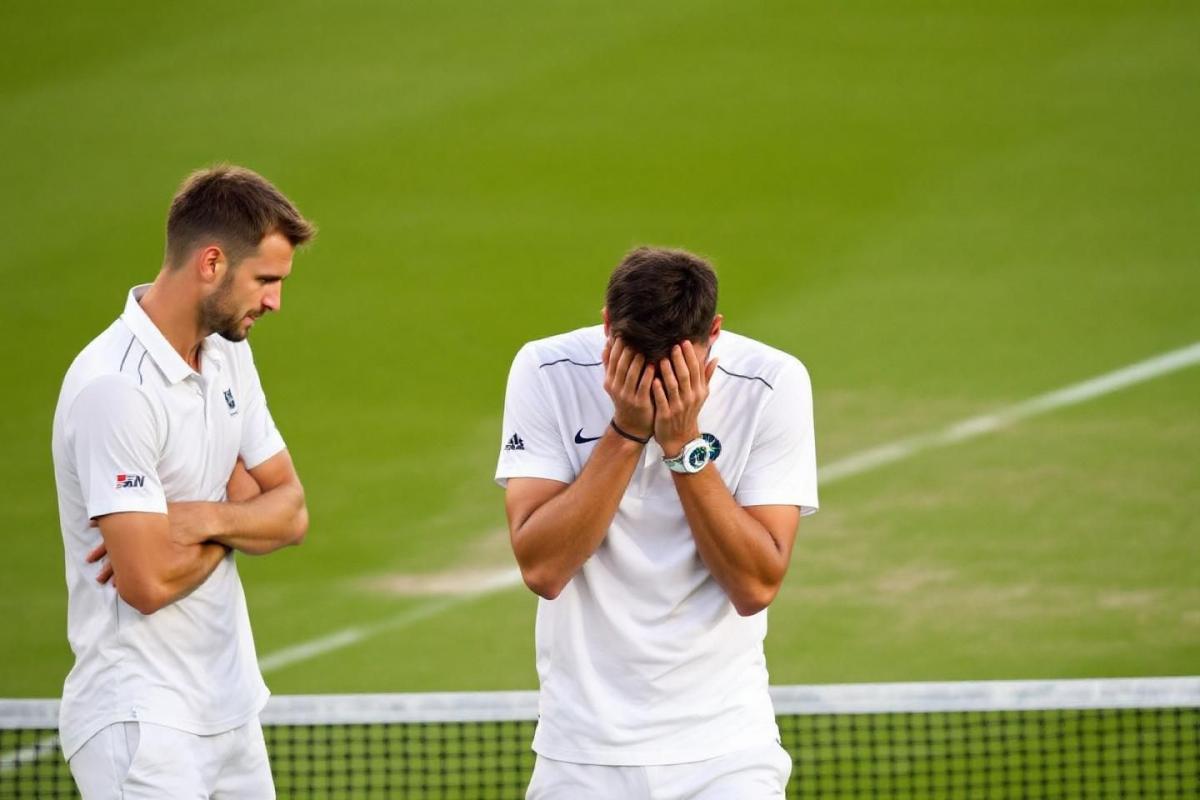
The recent announcement of format changes to the US Open mixed doubles competition has left Wimbledon champions heartbroken, sparking debate throughout the tennis community. Current title holders Sem Verbeek and Katerina Siniakova expressed profound disappointment after learning they cannot defend their partnership at the upcoming American Grand Slam, despite their recent success on Centre Court at the All England Club.
Wimbledon champions voice dismay over US Open format shift
Fresh from their victory on July 10, 2025, Wimbledon mixed doubles champions Sem Verbeek and Katerina Siniakova shared their frustration about significant changes to the US Open mixed doubles format. The Dutch-Czech duo, who defeated Britain’s Joe Salisbury and Brazil’s Luisa Stefani in straight sets on Centre Court, won’t have the opportunity to continue their successful partnership in New York.
Verbeek didn’t mince words about his feelings, stating that his heart is bleeding over the format change. The Dutchman acknowledged potential benefits of the new system but remained disappointed about being excluded. “As two athletes that would love to play it, it’s a shame to obviously know that we can’t,” Verbeek explained to reporters after their Wimbledon triumph.
Siniakova, the world number one in women’s doubles, was equally critical, describing the change as primarily a marketing decision that removes opportunities from dedicated doubles specialists. The Czech star’s concern highlights the growing tension between commercial interests and competitive traditions in Grand Slam tennis.
The new US Open format will organize mixed doubles as a standalone event before the main tournament begins, specifically designed to attract high-profile singles players. This strategic shift aims to create marketable partnerships but effectively sidelines most doubles specialists who have traditionally competed in this category.
| Tournament | Mixed Doubles Format | Impact on Specialists |
|---|---|---|
| Wimbledon | Traditional (during main event) | Accessible to doubles specialists |
| US Open | New standalone pre-event | Limited access for doubles specialists |
Star-studded pairings emerge as doubles specialists sidelined
The US Open’s format transformation has already attracted attention-grabbing partnerships that tournament organizers clearly hope will boost viewership and fan engagement. Among the most notable pairings announced is British number one Emma Raducanu teaming up with two-time Wimbledon champion Carlos Alcaraz. These high-profile collaborations represent exactly what the US Open aims to achieve with its restructured approach.
Verbeek, despite his personal disappointment, acknowledged potential benefits for tennis fans: “The positive I can think of is that there’s going to be more people that can see the top single stars earlier in the tournament when they are maybe a bit more accessible to the public.” This perspective highlights the complex balance between growing the sport’s audience and maintaining competitive opportunities for specialized players.
The new format creates several consequences for traditional doubles specialists:
- Reduced Grand Slam opportunities for doubles-focused players
- Limited chance to earn ranking points and prize money in mixed competition
- Potential shift in how players approach their doubles careers
- Questions about the future of mixed doubles at other major tournaments
While the US Open’s approach might succeed in drawing casual fans through celebrity pairings, it risks alienating dedicated doubles enthusiasts who appreciate the tactical nuances and specialized skills displayed by partnerships like Verbeek and Siniakova’s.
Salisbury’s Wimbledon dreams deferred again
The Centre Court final on July 10 represented more than just a championship match; for Britain’s Joe Salisbury, it marked another heartbreaking near-miss in his quest for a home Grand Slam title. Despite his impressive collection of major championships, Wimbledon remains the only title missing from Salisbury’s otherwise illustrious career.
The 33-year-old British specialist has experienced this particular disappointment before, having previously reached the mixed doubles final alongside compatriot Harriet Dart in 2021. This second defeat at the final hurdle extends his wait for the trophy he covets most.
The championship match itself proved highly competitive, with both teams exchanging breaks in the second set after a tightly contested opener. Ultimately, Siniakova’s exceptional net play proved decisive in both tie-breaks. The Czech star demonstrated why she has claimed ten major doubles titles, with confident volleys and tactical awareness throughout crucial points.
For Verbeek, the victory represented a breakthrough moment—his maiden major title. After securing championship point with Siniakova’s overhead smash, the Dutchman celebrated enthusiastically, even leading the Centre Court crowd in singing “Happy Birthday” to his father in an emotional moment that highlighted the personal significance of their achievement.
The shifting landscape of doubles tennis
The contrasting fortunes of these doubles specialists reflect broader questions about the evolving nature of paired competition in tennis. As Grand Slams experiment with formats designed to maximize commercial appeal, traditional doubles specialists face an increasingly uncertain competitive landscape.
Salisbury’s career demonstrates the potential for specialization success, with multiple Grand Slam titles across the US Open, Australian Open, and Roland Garros in both men’s doubles (with American Rajeev Ram) and mixed doubles (alongside American Desirae Krawczyk). However, the US Open’s format change suggests a potential devaluation of dedicated doubles expertise in favor of marquee singles names.
The “heart bleeding” sentiment expressed by Wimbledon champions represents more than personal disappointment—it signals concern about the future direction of doubles competition at the highest levels of tennis. As tournaments balance tradition with innovation, the voices of specialized players like Verbeek, Siniakova, and Salisbury highlight the human impact of structural changes to the sport they’ve dedicated their careers to mastering.

- Change to forecast imminent after big freeze brings milder weather conditions - September 23, 2026
- Once-extinct European wildcats set to make a comeback in England - September 21, 2026
- Joe Salisbury takes break from tennis due to anxiety struggles - September 20, 2026

