
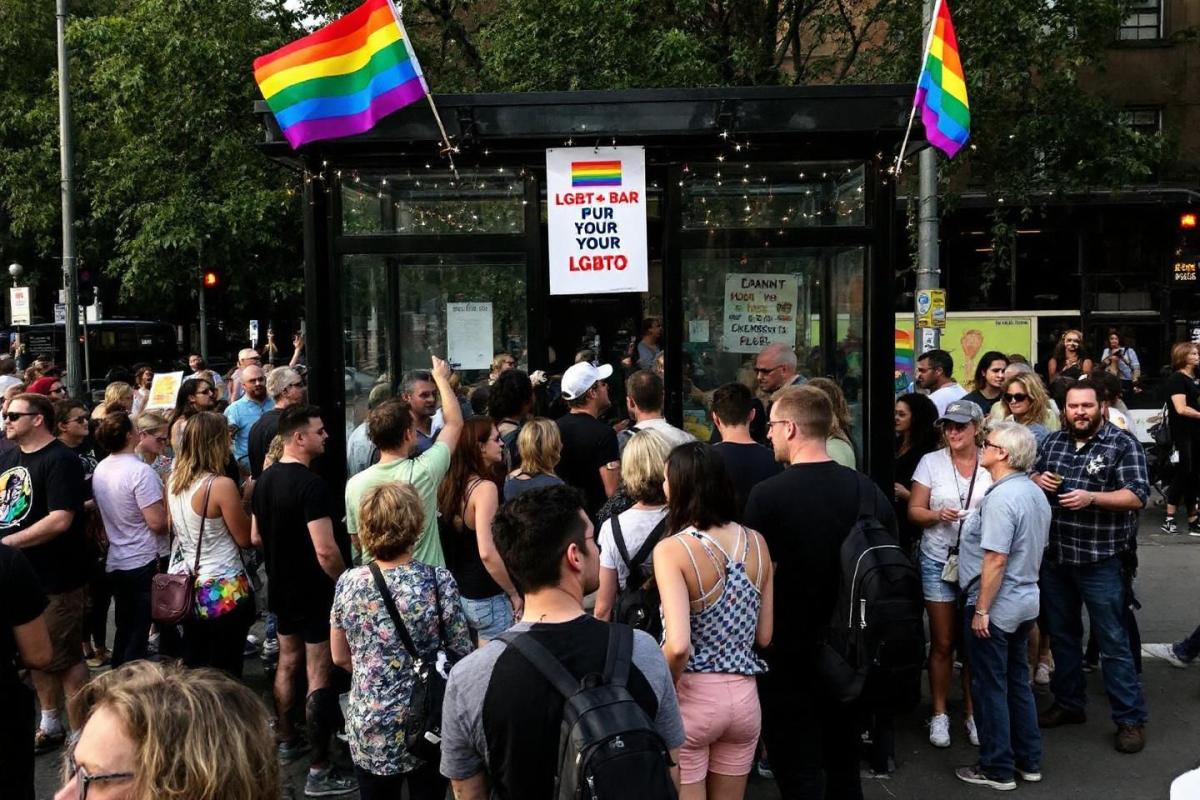
Controversy erupted in Salisbury this week as local residents expressed outrage over what has been dubbed the “bus stop bar” in Endless Street. A heated debate has emerged between bus service provider Reds and members of the community, particularly those who rely on public transportation. The focal point of contention revolves around the relocation of bus routes and the inadequate seating arrangements that many claim is “an insult to all the bottoms of Salisbury.”
Bus stop relocation sparks community backlash
The controversy began when Reds announced that the Harnham bus (Red 5) would be promoted to bus stop N on Blue Boar Row, while the Park and Ride 7 service would remain at its temporary location on Castle Street outside Tesco. This decision has ignited significant frustration among regular commuters, particularly those who depend on the P&R7 service.
Local councillor Lesley Waller from Bishopdown Farm has become a vocal critic of the decision. “When Fisherton Street underwent upgrades, the P&R7 was temporarily relocated to Castle Street,” she explained. “This location is widely considered one of the worst bus stops in the entire city, offering no seating for passengers with mobility needs.”
The situation has drawn attention to a broader issue of accessibility and comfort for public transport users in Salisbury. Community members have begun questioning Reds’ decision-making process and the priorities that appear to favor certain routes over others that serve larger numbers of passengers.
Public safety concerns have also been raised in the broader Salisbury area recently, with local authorities addressing various community issues. The Salisbury shooting investigation has highlighted the importance of safe public spaces throughout the city.
Comparing bus service priorities in Salisbury
A key point of contention in this dispute is the apparent imbalance in how different bus routes are being prioritized. According to frequent riders, the P&R7 service is regularly filled to capacity, often requiring Reds to deploy double-decker buses to accommodate passenger volume. In stark contrast, observers report that the Harnham bus rarely reaches full capacity.
This disparity has led to questions about the reasoning behind prioritizing the Harnham route for the more convenient Blue Boar Row location. Critics argue that this decision fails to serve the majority of bus users efficiently.
The following questions have been raised by concerned citizens regarding the bus stop allocations:
- How many shoppers from the London Road corridor (extending to Andover) arrive in Salisbury via the Harnham bus?
- What percentage of tourists utilize the Harnham bus service when visiting the city?
- How many P&R7 passengers have mobility issues requiring proper seating and shelter?
- Why are high-capacity routes receiving less favorable bus stop locations?
These questions highlight the community’s concern about equitable access to public transportation infrastructure and the need for decisions that serve the greatest number of passengers, particularly those with mobility challenges.
The controversial “bus stop bar” seating arrangement
Perhaps the most contentious aspect of this situation is what locals have dubbed the “bus stop bar” in Endless Street. Reds has claimed this facility provides adequate seating for waiting passengers, but many residents strongly disagree with this assessment.
The seating arrangement has been described as uncomfortable, inadequate, and “an insult to all the bottoms of Salisbury” by critics. For elderly passengers or those with mobility issues, proper seating is not merely a comfort issue but a necessity that impacts their ability to use public transportation.
| Bus Stop Location | Seating Quality | Shelter Provided | Accessibility Rating |
|---|---|---|---|
| Blue Boar Row (Stop N) | Adequate | Yes | Good |
| Castle Street (Tesco) | Poor | Limited | Poor |
| Endless Street “Bus Bar” | Criticized | Partial | Disputed |
| Original P&R7 Stop (L) | Good | Yes | Excellent |
The economic impact of these decisions has also been highlighted by community advocates. They note that both shoppers and tourists bring significant revenue to local businesses and deserve convenient, comfortable, and easy-to-find bus stops that enhance rather than detract from their experience in Salisbury.
Addressing the needs of all bus users
The situation has evolved into a broader discussion about public transportation priorities in Salisbury. Many residents feel that decisions about bus stop allocations should consider:
- Passenger volume on different routes
- Accessibility needs of elderly and mobility-impaired users
- Economic impact of various routes on local businesses
- Convenience and findability for tourists and occasional users
- Overall passenger comfort and protection from weather conditions
As the debate continues, community members are calling for greater transparency from Reds regarding their decision-making process. They’re asking for data-driven justifications for route prioritization and a reconsideration of the current bus stop allocations.
Councillor Waller has described the current situation as “an absolute disgrace” and is advocating for the return of the P&R7 service to its original stop L on Blue Boar Row. This location previously provided appropriate seating and shelter for the route’s many passengers, including those with mobility challenges.
As Salisbury continues to balance the needs of various community members, the “bus stop bar” controversy highlights the importance of inclusive infrastructure planning that considers the diverse needs of all public transportation users. The resolution of this dispute will likely set important precedents for how public transit decisions are made in the city going forward.

- England league-union hybrid match proposed for 2026 - October 16, 2026
- England league-union hybrid match proposed for 2026 - October 16, 2026
- Body found in Salisbury with no signs of foul play, police say - October 15, 2026

