
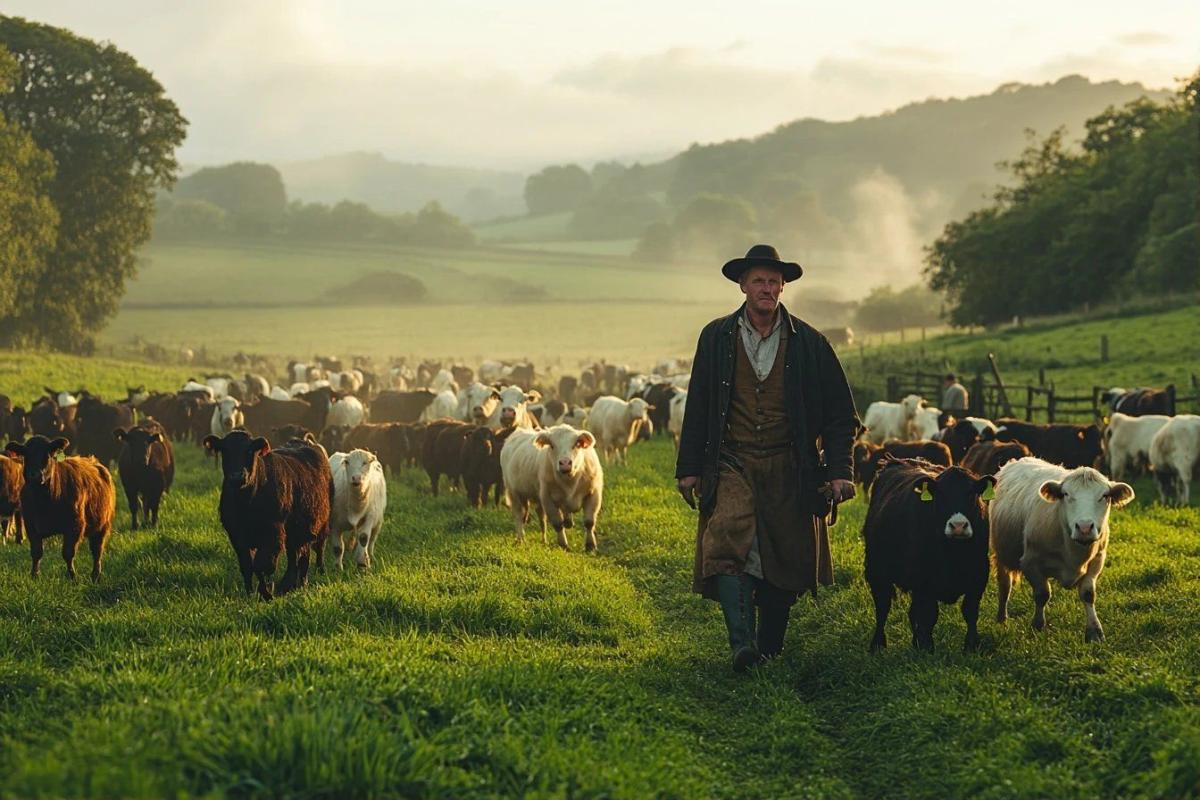
On a sunny August day, the BBC embarked on an ambitious project documenting the daily lives of farmers across England. This special coverage, known as Farmwatch 2025, provided viewers with unprecedented access to agricultural communities nationwide, showcasing both challenges and triumphs faced by those who feed the nation. From combine harvesters to innovative technologies, the broadcast captured the essence of modern farming while highlighting pressing issues affecting rural communities.
Inside the day-to-day reality of English farming
Farmwatch 2025 delivered an authentic glimpse into agricultural life across England’s diverse farming landscape. The BBC’s documentary team followed farmers through their daily routines, capturing the intensity and dedication required in this essential profession. Robin Aird welcomed cameras aboard his combine harvester during wheat harvest, while celebrity farmers including Clarkson’s Farm star Harriet Cowan joined the action, providing expert commentary from the field.
The broadcast revealed the extraordinary work ethic required in modern agriculture. One farming family disclosed their typical 100-hour work weeks, while young farmer Bethany Sharpe shared her experience taking over the family business. This demanding lifestyle requires immense dedication, with Tom Gretton from Inkberrow emphasizing: “Everyone around here locally works on the land and what people need to remember is it’s 24/7, seven days a week, there’s no days off.”
The documentary also highlighted the significant dangers farmers face daily. James Bannister courageously shared his story of losing an arm during a potato harvest accident, while Henry Moreton recounted several near-misses when cars overtook his tractor on rural roads. These hazards represent ongoing concerns within agricultural communities, similar to challenges faced by English communities facing difficulties abroad.
Perhaps most touchingly, Jo and Derek Jenkin from Cornwall revealed the deep emotional connections farmers develop with their livestock. While preparing their cow Mimosa for Stithians Show, Jo explained: “The animals are our best friends.” This sentiment was echoed across many farms, demonstrating that agriculture transcends mere business—it represents a profound way of life.
Challenges confronting English farmers in 2025
Throughout the documentary, several critical issues emerged affecting English farmers. Climate volatility ranked among their most pressing concerns. Simon Bainbridge in Northumberland described how droughts have shifted from occurring every few decades to becoming annual events: “We haven’t a clue what we’re going to get, what things are going to yield. There’s so many things out of our control, basically we’re gamblers.”
This unpredictable weather has created tangible consequences. The broadcast revealed an impending pea shortage following the earliest harvest in 14 years, attributed to an exceptionally sunny summer. These climate-related challenges reflect broader agricultural adaptations required nationwide.
Government policy changes have also created significant uncertainty. The documentary explored the controversial inheritance tax revisions, where inherited agricultural assets exceeding £1 million will face a 20% tax starting April 2026. This marks a dramatic shift from previous exemptions designed to support generational farming continuity.
Cheesemaker Liz Godsell expressed how these tax changes had “disillusioned” her daughter about taking over their Gloucestershire farm: “There are so few young people that actually want to come into farming… the inheritance tax isn’t encouraging people to carry on.” The following table illustrates key policy changes affecting farmers:
| Policy Change | Implementation Date | Potential Impact |
|---|---|---|
| 20% inheritance tax on agricultural assets over £1m | April 2026 | May force land sales, disrupt succession |
| National insurance increases | Current | Higher operational costs |
| Minimum wage adjustments | Current | Increased labor expenses |
The documentary highlighted farmers’ protests in Westminster, with thousands arriving—many by tractor—to voice opposition to these changes. While Environment Secretary Steve Reed defended the government’s position, citing “a record £11.8bn to sustainable farming and food production over this parliament,” many farmers remain unconvinced about their economic future.
Innovation transforming agricultural practices
Despite numerous challenges, Farmwatch 2025 showcased remarkable innovation throughout England’s farming communities. Technological advancements are revolutionizing traditional practices, improving efficiency while addressing sustainability concerns. These innovations include:
- Robotic feeding systems at Chesterton House Farm in Warwickshire
- Wearable sensors for livestock monitoring at Harper Adams University
- Anaerobic digesters converting animal waste to electricity
- Farm diversification into tourism, education, and specialty products
George and Heather Clarke demonstrated how robots—affectionately named after their children—help feed their herd of over 100 cows in Warwickshire. These machines push feed back within reach hourly, with George noting: “It works really well, it saves my back having to push it all in with a fork.”
Dr. Holly Vickery from Harper Adams University presented research on wearable technology for goats, similar to human fitness trackers. These devices monitor behaviors including “lying down time, rumination, eating behaviors and general activity,” providing valuable health insights despite the occasional goat headbutting that resets the devices.
Environmental sustainability features prominently in modern farming innovation. Home Farm in Wiltshire has invested £275,000 in technology converting animal waste into energy. Farm manager Phlip Steans explained this anaerobic digester transforms approximately five tonnes of daily cow slurry into electricity and heat, representing both environmental progress and economic sense with its “relatively small” payback period.
Diversification strategies have become essential for farm viability. Lucinda Bird’s family farm in County Durham has evolved across five generations, transitioning through dairy, arable, and cattle before adding equestrian services and wool processing. During the pandemic, they established Benridge Woolworks, which now processes fabric primarily sold to saddle fitters. As Bird affirms: “We have always forged our own future.”
Preserving agricultural heritage while embracing change
The BBC’s documentary captured the delicate balance between preserving agricultural traditions and embracing necessary evolution. This tension was beautifully illustrated through 91-year-old Tom Walne, affectionately known as “Farmer Tom,” whose lifelong dedication to the critically endangered Suffolk Punch horse breed represents a living connection to farming heritage. Having bred nearly 20 foals, including one donated to Queen Elizabeth II in 2003, his work preserves a crucial aspect of agricultural history.
Cultural representations of farming also maintain important connections to agricultural traditions. The documentary explored Inkberrow, the Worcestershire village that inspired The Archers’ fictional Ambridge setting. This beloved radio drama, celebrating 75 years on air, was originally conceived to inform farmers about new agricultural methods while accurately portraying rural life. The program’s continued popularity reflects ongoing public interest in understanding food origins.
As Farmwatch 2025 concluded, it left viewers with deeper appreciation for those who cultivate our food. While modern farming faces unprecedented challenges from climate volatility to policy shifts, the resilience and innovation demonstrated across England’s farms suggests agriculture will continue adapting as it has for centuries—evolving while maintaining essential connections to land and community.

- Once-extinct European wildcats set to make a comeback in England - September 21, 2026
- Joe Salisbury takes break from tennis due to anxiety struggles - September 20, 2026
- Andy Haldane slams Budget 2025 for repeated policy mistakes - September 19, 2026

