
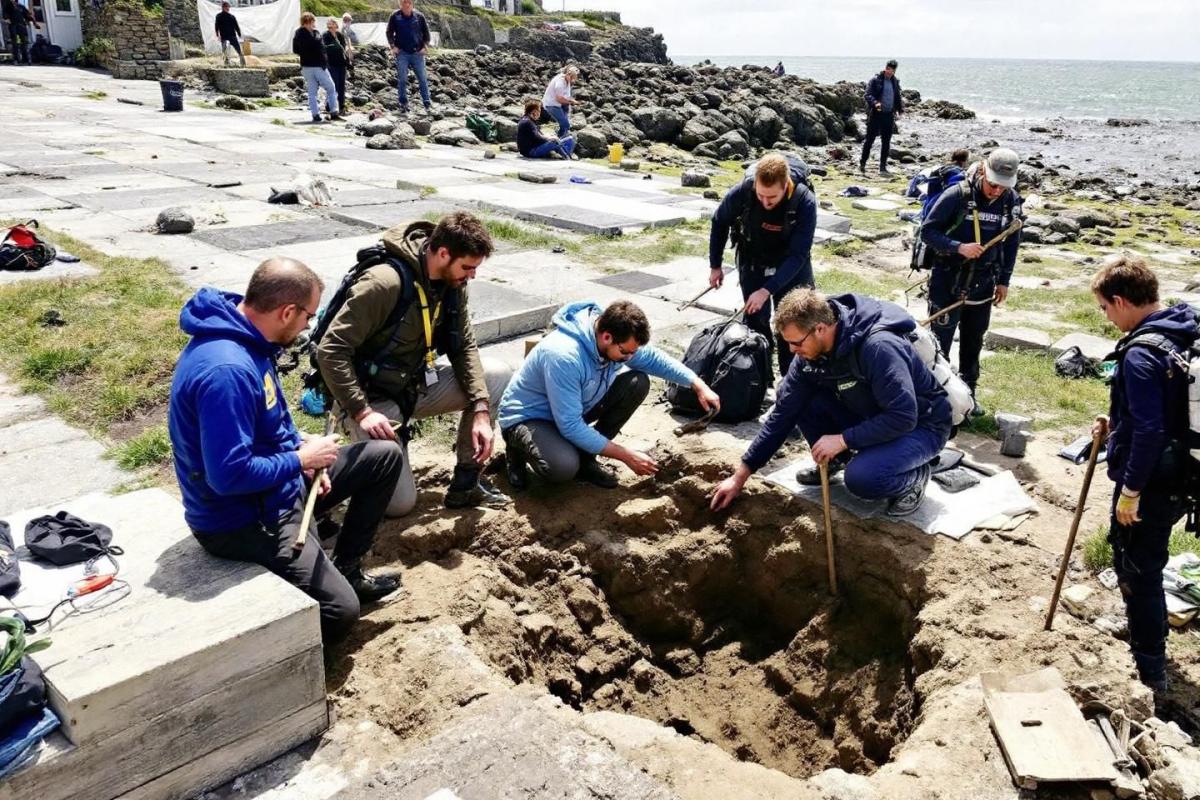
Archaeological teams are making remarkable progress at Castilly Henge near Bodmin, where evidence suggests Cornwall may house its own version of the famous stone circle. This ancient Neolithic site has captured the imagination of researchers and volunteers alike, with recent discoveries pointing toward a significant prehistoric monument that could rival England’s most celebrated archaeological treasures.
Uncovering prehistoric mysteries at Castilly Henge
The excitement reached fever pitch when 27-year-old volunteer Henry Stevens unearthed a pristine flint flake during excavations. The discovery sent shockwaves through the archaeological team, as the artifact had remained buried for millennia within what experts believe could be Cornwall’s lost stone circle. Stevens described the moment with palpable enthusiasm, explaining how the light shone through the ancient tool fragment when held against the sky.
This flint discovery represents far more than a simple artifact. The fragment likely originated from Neolithic toolmaking activities, suggesting that prehistoric communities actively used this site around 2,500 BC. Remarkably, analysis reveals the flint material didn’t originate locally but was transported from the Blackdown Hills along the Somerset-Devon border, indicating sophisticated trade networks existed thousands of years ago.
Olaf Bayer, Historic England’s senior archaeological investigator, orchestrated comprehensive geophysical surveys that revealed intriguing underground anomalies. These mysterious formations appear as distinct entities different from surrounding soil patterns, potentially representing stone-holding pits that once formed a complete circle. The oval earthwork features an external bank and internal ditch, characteristic of ceremonial henge monuments from Britain’s prehistoric period.
Archaeological evidence points toward stone circle discovery
The site’s strategic positioning strengthens theories about its ceremonial importance. Perched on a watershed with commanding views toward Brown Willy, Cornwall’s highest peak, Castilly Henge would have served as a natural gathering point for scattered Neolithic farming communities. This elevated location provided both practical and spiritual significance for ancient peoples who invested tremendous effort in its construction.
Cornwall currently houses several stone circles, but only one other features a henge structure – Stripple Stones on Bodmin Moor. This rarity makes Castilly Henge exceptionally significant for understanding prehistoric Cornwall’s ceremonial landscape. Bayer cautiously describes the underground anomalies while acknowledging their potential importance, stating that confirming a stone circle would be absolutely wonderful for archaeological understanding.
| Archaeological Feature | Description | Significance |
|---|---|---|
| External Bank | Raised earthwork perimeter | Defines sacred space |
| Internal Ditch | Circular excavated area | Ritual gathering zone |
| Stone Pits | Potential circle formation | Monument structure |
| Flint Deposits | Non-local tool fragments | Trade network evidence |
Additional excavations have uncovered medieval pottery fragments and 20th-century coins, likely dropped by archaeologists who investigated the site during the 1960s. Unfortunately, Cornwall’s acidic soil conditions eliminated hopes of discovering organic materials like bones, but researchers remain optimistic about future findings during the planned 18-month investigation period.
Community engagement transforms archaeological research
The Castilly Henge project exemplifies modern archaeology’s community-focused approach, engaging nearly 100 volunteers alongside professional researchers. This collaborative methodology has attracted diverse participants, including individuals prescribed archaeological participation by medical professionals as therapeutic intervention. Such innovative approaches demonstrate archaeology’s potential for promoting mental health and community wellbeing.
Hundreds of schoolchildren have visited the excavation site, gaining firsthand experience with prehistoric research methods. Sophie Meyer-Bourne from Cornwall Heritage Trust emphasizes how these educational opportunities provide students with practical historical connections they wouldn’t normally encounter. The hands-on learning experience allows children to physically connect with their ancestral heritage through direct archaeological participation.
Ann Preston-Jones of the Cornwall Archaeological Society describes the project’s atmosphere as exceptionally positive, noting how the initiative addresses social deprivation in surrounding areas. The archaeological work promotes community ownership and belonging, giving local residents pride in their prehistoric heritage while fostering educational opportunities for disadvantaged populations.
Key benefits of community archaeology include :
- Enhanced educational opportunities for local schools
- Therapeutic engagement for prescribed participants
- Increased community pride and historical awareness
- Volunteer skill development in archaeological methods
- Social connections across diverse demographic groups
Preserving Cornwall’s ancient heritage for future generations
Cornwall Heritage Trust actively fundraises to purchase the Castilly Henge site, ensuring long-term preservation of this potentially nationally significant monument. The acquisition would protect the archaeological remains from development pressure while enabling continued research into Cornwall’s prehistoric past. This preservation effort reflects growing recognition of regional archaeological sites’ importance beyond traditional monuments like Stonehenge’s aerial view reveals ancient secrets.
Nev Meek, president of Kernow Goth and the Federation of Old Cornwall Societies, participated directly in excavations while emphasizing the site’s immense importance for Cornwall. His involvement demonstrates how archaeological research can unite professional academics with passionate local historians, creating collaborative networks that strengthen cultural preservation efforts.
The Castilly Henge investigation represents more than academic curiosity – it embodies Cornwall’s commitment to understanding and preserving its ancient cultural landscape. Future research phases will employ advanced scientific techniques to definitively establish whether the site housed a stone circle, potentially rewriting Cornwall’s prehistoric narrative and adding another remarkable chapter to Britain’s archaeological heritage.

- Once-extinct European wildcats set to make a comeback in England - September 21, 2026
- Joe Salisbury takes break from tennis due to anxiety struggles - September 20, 2026
- Andy Haldane slams Budget 2025 for repeated policy mistakes - September 19, 2026

