
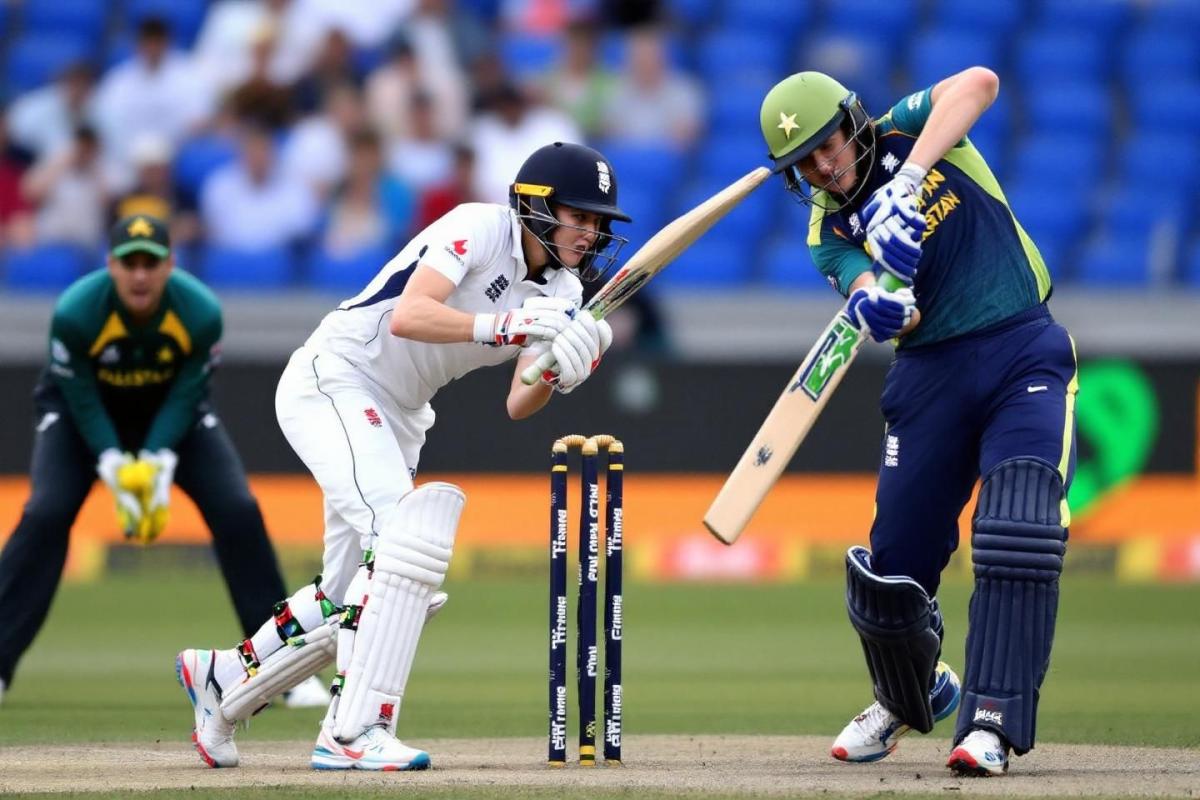
Pakistan’s disciplined bowling attack delivered a stunning performance against England in the Women’s World Cup 2025, exposing significant weaknesses in the defending champions’ batting lineup. The encounter in Colombo became a watershed moment that highlighted England’s vulnerabilities ahead of crucial fixtures against tournament favorites India and Australia.
Pakistan’s bowling masterclass dismantles England’s batting order
The Pakistan seamers produced an exemplary display of accurate bowling, exploiting conditions expertly to reduce England to a shocking 79-7 after 25 overs. Diana Baig’s exceptional spell set the tone early, dismissing opener Tammy Beaumont with a delivery that jagged back dramatically off the seam. Beaumont’s extravagant leave backfired spectacularly as the ball crashed into her off stump, symbolizing England’s misjudgment of the conditions.
Fatima Sana’s bowling figures reflected Pakistan’s strategic approach, with her deliveries consistently moving off the pitch by significant margins. The captain’s dismissal of Amy Jones showcased precise seam movement that caught England’s wicket-keeper completely off guard. This systematic targeting of the stumps created unprecedented statistics – England’s top seven all fell to bowled or lbw dismissals, a feat not witnessed in any format since January 1908.
The bowling attack’s discipline became evident through compelling match data. England faced 61 deliveries that would have struck the stumps during their revised 31-over innings, losing eight wickets to such deliveries while managing merely 23 runs. This clinical execution exposed England’s inability to adapt their batting approach to challenging seaming conditions.
| Bowler | Wickets | Overs | Runs Conceded |
|---|---|---|---|
| Diana Baig | 3 | 7 | 18 |
| Fatima Sana | 2 | 6 | 12 |
| Nashra Sandhu | 2 | 8 | 25 |
| Sadia Iqbal | 1 | 5 | 15 |
England’s middle-order fragilities become apparent under pressure
Nat Sciver-Brunt and Heather Knight’s early dismissals triggered England’s batting collapse, revealing the team’s over-reliance on their experienced core. When both key batters departed cheaply, the remaining lineup crumbled against Pakistan’s varied attack. Sciver-Brunt’s reaction to her dismissal – arms spread wide in disbelief – captured England’s unpreparedness for the seaming conditions they encountered.
The middle-order struggles extended beyond the established stars, with Emma Lamb and Sophia Dunkley failing to provide stability. Lamb’s unfamiliar role at number six has yielded disappointing returns, managing just 18 runs across three innings. Her professional record shows striking success in top-order positions, averaging 44 with five centuries in 61 innings when batting in the top three domestically and internationally.
Charlie Dean emerged as an unexpected bright spot, top-scoring with 33 against Pakistan while batting at number eight. Her consistent contributions throughout the tournament – including a crucial 27 not out against Bangladesh and 19 against Sri Lanka – highlight the depth issues within England’s batting order. The fact that a bowler has outperformed several specialist batters raises serious questions about England’s batting selections.
- Emma Lamb : 18 runs in three innings at number six
- Sophia Dunkley : 29 runs in three innings, all dismissals to spin
- Charlie Dean : Most consistent performer after Sciver-Brunt and Knight
- Alice Capsey : Showing glimpses of promise at number seven
Weather intervention saves England from historic defeat
Rain’s arrival after 25 overs provided England with an unexpected lifeline, preventing Pakistan from completing what would have been a famous victory. The weather break occurred just as Pakistan had reached 34-0 in their pursuit of 113, requiring only 79 more runs with all wickets intact. Captain Fatima Sana’s visible disappointment contrasted sharply with England’s relieved expressions as the Colombo outfield became waterlogged.
The meteorological intervention highlighted England’s fortunate escape from what could have been their first-ever ODI defeat to Pakistan. Their previous encounters had heavily favored England, with only one loss recorded in T20 format back in 2013. This near-miss served as a stark reminder of Pakistan’s growing capabilities and England’s current vulnerabilities.
The timing proved crucial for both teams’ World Cup campaigns. Pakistan, still searching for their first victory of the tournament, came agonizingly close to securing a morale-boosting triumph against the defending champions. Meanwhile, England’s unbeaten record remained intact, though the performance raised serious concerns about their championship credentials.
Challenges ahead as India and Australia loom large
England’s schedule presents immediate challenges with matches against India and Australia approaching rapidly. The team travels to Indore for these crucial encounters, facing opponents who will have observed their batting frailties closely. Recent encounters between India and England suggest the hosts will pose significant threats to England’s World Cup ambitions.
The tournament’s demanding schedule across four different venues requires constant adaptation to varying conditions. England’s struggle against Pakistan’s seaming attack raises concerns about their ability to adjust quickly to different playing surfaces. Charlotte Edwards’ coaching decisions regarding batting order selections will face intense scrutiny ahead of these pivotal fixtures.
Danni Wyatt-Hodge remains unused on the bench despite her middle-order experience, while the Emma Lamb experiment at number six continues despite underwhelming results. These selection dilemmas must be resolved quickly as margin for error diminishes against stronger opposition. England’s campaign could rapidly deteriorate if similar batting collapses occur against India and Australia’s potent bowling attacks.

- Once-extinct European wildcats set to make a comeback in England - September 21, 2026
- Joe Salisbury takes break from tennis due to anxiety struggles - September 20, 2026
- Andy Haldane slams Budget 2025 for repeated policy mistakes - September 19, 2026

