
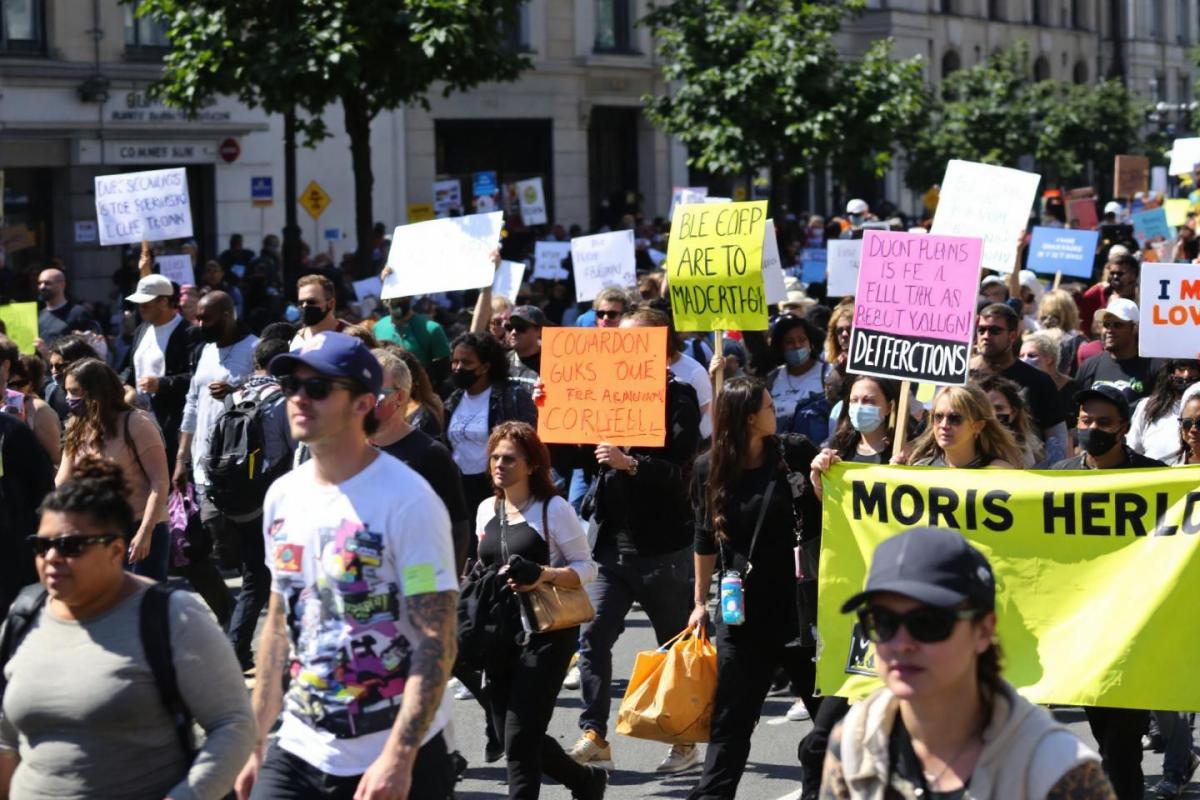
Across the United States, a powerful wave of civic engagement swept through communities as millions gathered to voice their opposition to what they perceive as authoritarian overreach. Salisbury joined this nationwide movement, with hundreds of residents taking to West Innes Street in a demonstration that reflected the broader national sentiment against concentrated executive power.
Grassroots mobilization brings diverse voices together
The local demonstration in Salisbury attracted approximately 500 participants according to organizers’ point-in-time count, representing a cross-section of the community that defied traditional political boundaries. Joyce Nash, who secured the necessary permits for the event, emphasized how collaboration between local organizations created significant momentum for participation.
Several groups contributed to the organizing effort, including the Rowan County Democratic Party, Women for Community Justice, and Salisbury Indivisible. These organizations worked together to ensure broad outreach and maximum attendance. National coordination proved essential for driving local turnout, as Nash explained how connecting with larger movements helps overcome the challenge of reaching diverse audiences through fragmented media landscapes.
Sheila Womack of Granite Quarry observed the remarkable diversity among protesters during her participation. Veterans, people of various faiths, and even Republicans troubled by current policies stood side by side. This demographic breadth suggests that concerns about governmental overreach transcend typical partisan divisions, creating unlikely alliances based on shared democratic values.
Protesters express alarm over federal agency dismantling
Demonstrators articulated specific grievances about policy directions they view as fundamentally undermining American institutions. Womack, who retired from the VA last year and has attended numerous protests since, highlighted several areas of particular concern that motivated participants to take action.
The following issues emerged as primary catalysts for the demonstrations :
- Systematic dismantling of federal agencies
- Defunding of critical public services
- Immigration enforcement without due process
- Undermining of research and development initiatives
- Threats to diversified labor forces
Participants framed their opposition not as partisan politics but as fundamental questions of right versus wrong. Womack emphasized that protesters believe current policies actively damage elements that historically made America successful on the global stage. This perspective positions the demonstrations as patriotic acts rather than political opposition.
Media characterization versus demonstrator reality
A significant disconnect emerged between how political leaders characterized the protests and how participants described their motivations. High-ranking Republicans labeled the events as “hate America rallies,” while protesters insisted their actions demonstrated deep love of country and concern for its future direction.
Laurel Harry, a Salisbury resident and participant, directly challenged this characterization. She emphasized that demonstrators gathered precisely because they love their country and feel alarmed about current trajectories. Harry specifically cited concerns about ignoring Congress, courts, and constitutional principles as motivating factors for participation.
The contrast between political rhetoric and protester motivations illustrates the polarized information environment surrounding these demonstrations. Social media amplified both supportive and critical narratives, with some officials posting provocative content that further inflamed tensions rather than addressing underlying concerns.
| Official Characterization | Participant Perspective |
|---|---|
| “Hate America” rally | Expression of patriotic concern |
| Partisan opposition | Right versus wrong framework |
| Political theater | Genuine democratic engagement |
Historical context and future implications
The scale of participation nationwide carries particular significance when viewed through the lens of historical social movements. Harvard political scientist Erica Chenoweth’s research on nonviolent campaigns suggests that 3.5 percent active population participation often represents a tipping point for serious political change.
Current nationwide estimates place participation at approximately seven million people, representing about 2 percent of the US population. This figure represents growth from previous demonstrations, suggesting increasing engagement rather than declining interest. Harry believes the country may be approaching a critical historical moment requiring sustained civic participation.
Nash emphasized the importance of channeling protest momentum into long-term organizing efforts. She noted that while demonstrations build excitement and awareness, sustained change requires converting that energy into concrete actions like voter registration, canvassing, and phone banking. The balance between immediate expression and long-term strategy remains crucial for movement effectiveness.
The Salisbury demonstration reflects broader national trends toward increased civic engagement among Americans concerned about democratic institutions. Whether this momentum translates into lasting political change will depend largely on organizers’ ability to maintain participation beyond single events and create sustainable networks for ongoing advocacy and electoral participation.

- Once-extinct European wildcats set to make a comeback in England - September 21, 2026
- Joe Salisbury takes break from tennis due to anxiety struggles - September 20, 2026
- Andy Haldane slams Budget 2025 for repeated policy mistakes - September 19, 2026

