
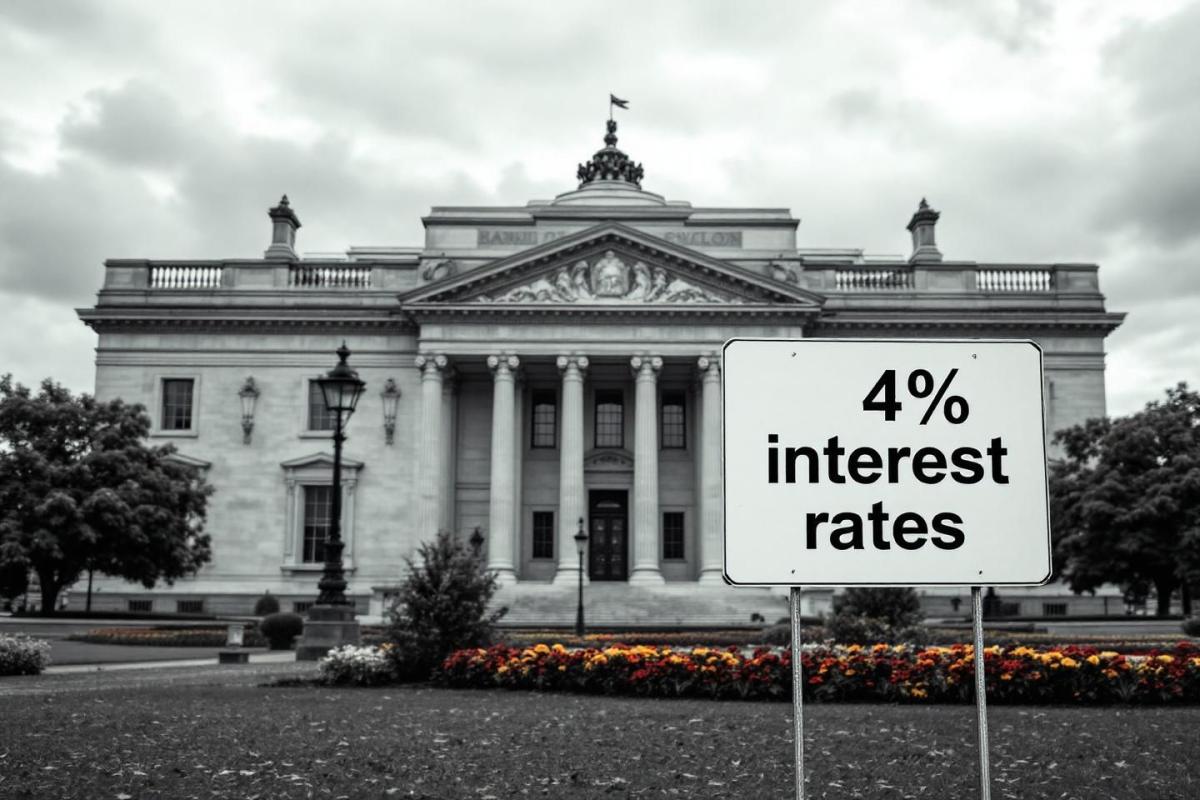
The Bank of England’s monetary policy committee delivered its anticipated verdict yesterday, maintaining the base rate at 4% amid growing economic uncertainties. This decision reflects the central bank’s cautious stance as policymakers navigate between controlling persistent inflation and supporting economic growth. Governor Andrew Bailey and his colleagues opted for a wait-and-see approach, despite mounting pressure for rate reductions from various economic sectors.
Central bank maintains cautious monetary stance
The Monetary Policy Committee’s deliberation resulted in a narrow 5-4 vote, highlighting the challenging balance between economic stimulation and inflation control. Bailey’s casting vote proved decisive in maintaining current borrowing costs, as he expressed preference for observing additional economic data before implementing changes. The governor emphasized that while inflation appears to have reached its peak, residual risks remain that require careful monitoring.
This measured approach comes at a critical juncture, with the government’s upcoming Budget on November 26th casting uncertainty over fiscal policy directions. Chancellor Rachel Reeves faces speculation about potential tax increases, creating additional complexity for monetary policy decisions. The central bank’s reluctance to speculate on budgetary measures demonstrates its commitment to evidence-based decision-making rather than political considerations.
The committee’s assessment suggests that borrowing costs will likely follow a gradual downward trajectory in coming months. However, policymakers stressed the importance of confirming that inflationary pressures have genuinely subsided before implementing rate cuts. This conservative approach aims to prevent premature policy adjustments that could reignite price pressures across the economy.
| Committee Member | Vote | Key Reasoning |
|---|---|---|
| Andrew Bailey | Hold | Prefers to wait for more inflation data |
| Clare Lombardelli | Hold | Concerns about inflationary pressures |
| Sarah Breeden | Cut | Economic slack continues building |
| Dave Ramsden | Cut | Disinflation uncertainties have reduced |
The December meeting now carries heightened significance, with many observers anticipating potential rate reductions before year-end. Market participants are closely monitoring economic indicators and government policy announcements that could influence the committee’s next decision. The proximity to Christmas has led some analysts to question whether the central bank will deliver an early holiday gift to borrowers.
Economic implications for borrowers and savers
The rate maintenance directly affects various segments of the financial landscape, with tracker mortgage holders experiencing no immediate change in their monthly repayments. However, the broader context suggests significant implications for both current and prospective borrowers. Approximately one million homeowners with variable-rate mortgages will maintain their existing payment schedules, providing temporary relief from additional financial pressure.
Fixed-rate mortgage markets have already begun incorporating expectations of future rate cuts, with several major lenders reducing interest rates on new products. This anticipatory pricing suggests that December’s potential rate reduction may already be factored into current market conditions. First-time buyers and those seeking mortgage renewals are particularly sensitive to these rate movements and market expectations.
For savers, the current rate environment continues providing attractive returns compared to recent historical levels. However, expectations of future rate reductions may prompt banks to adjust savings rates downward in anticipation of policy changes. This creates a complex dynamic where savers must balance current returns against future rate prospects.
- Tracker mortgage holders : No immediate payment changes
- Fixed-rate seekers : Potential benefits from pre-emptive lender rate cuts
- Savers : Current attractive rates may decline with future policy changes
- Credit card users : Borrowing costs remain elevated pending rate cuts
The government’s borrowing costs remain elevated due to current interest rate levels, adding pressure on public finances. This situation becomes particularly relevant as Chancellor Reeves prepares her Budget announcement, with speculation about tax increases driven partly by higher debt servicing costs. The interplay between monetary and fiscal policy creates additional complexity for economic management.
Inflation dynamics and future policy direction
Inflation assessment forms the cornerstone of the Bank’s decision-making process, with recent data showing rates holding at 3.8% in September. While this figure exceeded forecasts, policymakers expressed confidence that price pressures have reached their peak. The central bank’s mandate to maintain inflation near its 2% target continues driving policy considerations, despite current levels remaining significantly above this threshold.
Economic forecasts suggest inflation will decline to approximately 3% early next year before gradually approaching the target rate. This trajectory provides the foundation for the committee’s gradual approach to rate reductions. However, policymakers remain vigilant about potential inflationary surprises that could derail this expected path.
The committee’s hawkish members continue expressing concerns about structural changes in wage and price-setting behaviors. Chief economist Huw Pill highlighted worries about persistent inflation patterns that could prove more resistant to traditional monetary policy tools. These concerns underscore the importance of maintaining restrictive monetary conditions until disinflation proves sustainable.
Political reactions to the rate decision revealed partisan divisions, with shadow chancellor Mel Stride criticizing the government’s economic approach. His comments about “doom-loops” and policy failures highlight how monetary policy decisions become intertwined with broader political narratives. Meanwhile, Chancellor Reeves emphasized the positive aspects of previous rate cuts and future inflation forecasts.
Looking ahead, the December meeting will provide crucial insights into the Bank’s willingness to begin more aggressive policy normalization. The committee’s assessment of Budget impacts, inflation data, and labor market conditions will determine whether borrowers receive relief before year-end. For those seeking entertainment during these uncertain economic times, comprehensive coverage of major sporting events like England vs Italy Six Nations rugby offers welcome distraction from financial concerns.

- England league-union hybrid match proposed for 2026 - October 16, 2026
- England league-union hybrid match proposed for 2026 - October 16, 2026
- Body found in Salisbury with no signs of foul play, police say - October 15, 2026

