
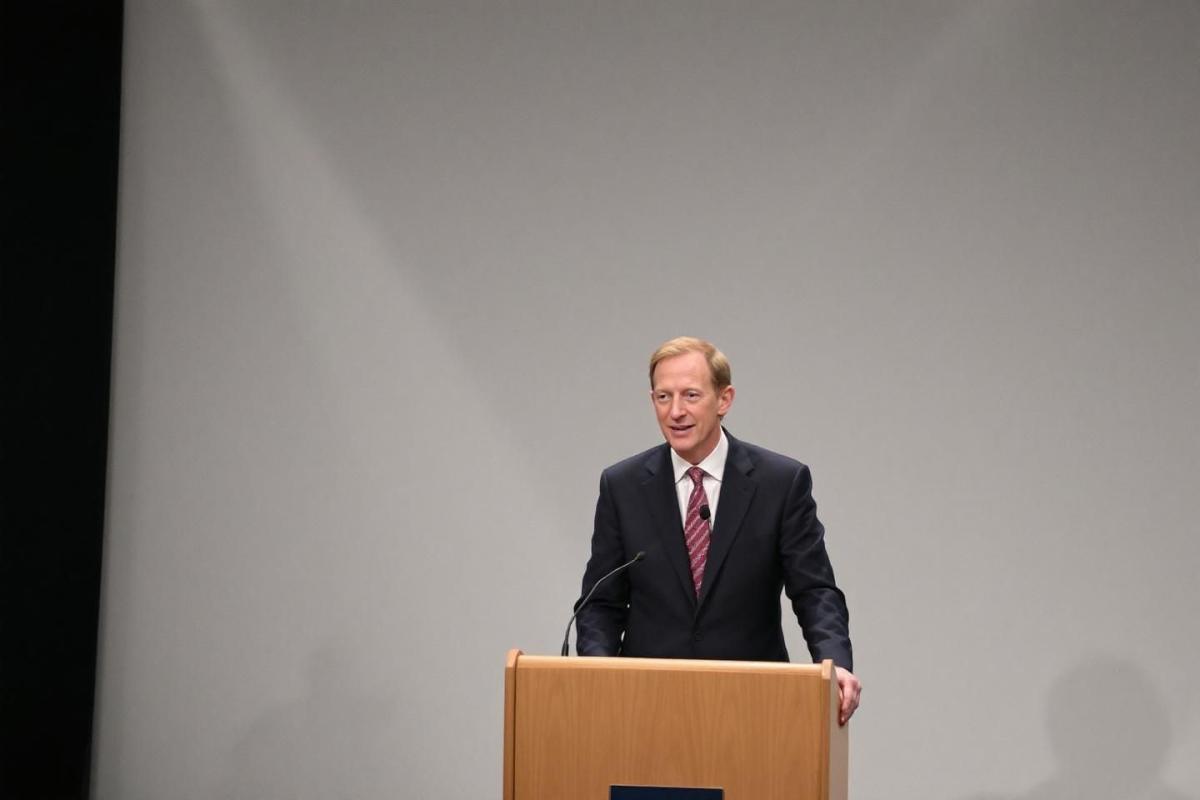
The United Kingdom’s economic trajectory faces fresh scrutiny as Andy Haldane, former chief economist at the Bank of England, delivers a scathing assessment of governmental fiscal management. Speaking on Sky News, he highlighted how policy errors have systematically undermined business confidence and consumer sentiment throughout the past two years. His criticism centres on the destructive pattern of budget speculation and premature leaks that have become characteristic of recent fiscal planning cycles.
Haldane’s intervention comes at a critical juncture, with unemployment climbing to 5% and quarterly economic expansion slowing dramatically to just 0.1%. These figures, released by the Office for National Statistics last week, paint a concerning picture of an economy struggling under the weight of uncertainty and cautious decision-making.
Fiscal mismanagement undermines economic stability
The former rate-setter’s assessment pulls no punches regarding the government’s approach to economic stewardship. During his seven-year tenure on the monetary policy committee, Haldane gained intimate knowledge of how policy communication affects market behaviour. His current observations suggest that Chancellor Rachel Reeves has mishandled critical moments, particularly through the cultivation of crisis narratives around public finances.
“It’s been a bad hand played, in truth, pretty poorly,” Haldane stated bluntly during his appearance. The characterisation extends beyond mere criticism of individual decisions to encompass a broader pattern of systematic errors. These mistakes, according to the economist, have created an environment where businesses and households prioritise saving over investment and consumption, effectively strangling growth potential.
The “black hole narrative” that dominated discussions surrounding last October’s budget has resurfaced with renewed intensity. This rhetorical framing, whilst intended to justify difficult fiscal decisions, has inadvertently sucked all life and energy from economic activity. When decision-makers constantly emphasise financial crisis, they inadvertently encourage defensive behaviour across the economy.
Communication failures and their economic consequences
Haldane identifies a fundamental flaw in how budget preparations unfold. The current system operates as an uncomfortable halfway house between complete transparency and confidential policymaking. Daily speculation about tax increases creates an atmosphere of perpetual uncertainty that serves nobody’s interests. This represents a stark contrast to how Bank of England likely to cut rates as UK economy faces downturn, where monetary policy decisions follow rigorous confidentiality protocols.
The former chief economist proposes two alternative approaches that could restore stability to fiscal planning. These options include :
- Implementing watertight confidentiality similar to monetary policy committee deliberations, preventing leaks entirely
- Establishing genuinely open consultation processes that allow stakeholder engagement without destabilising speculation
- Reducing the elongated timeline between policy conception and announcement to minimise uncertainty periods
The current arrangement fails on both counts, creating an environment where ministerial hints and strategic leaks fuel market anxiety. Businesses find themselves unable to plan confidently when tax policy remains subject to constant rumour. Consumer spending decisions similarly become paralysed by fear regarding where budgetary measures might impact household finances.
Recent U-turn highlights governmental inconsistency
Last Friday’s events provided concrete evidence supporting Haldane’s broader critique. The chancellor appeared to reverse course on potential income tax increases, despite having spent weeks preparing political ground for precisely such a move. This manifesto-breaking prospect had already caused considerable consternation among Labour parliamentarians before the apparent policy reversal.
| Policy aspect | Initial position | Revised stance | Economic impact |
|---|---|---|---|
| Income tax rates | Potential increase signalled | Increase ruled out | Restored partial confidence |
| Budget timeline | Extended speculation period | Unchanged process | Continued uncertainty |
| Communication strategy | Crisis narrative emphasis | Maintained approach | Depressed sentiment |
Treasury sources attributed the reversal to better than expected forecasts from the Office for Budget Responsibility. However, this explanation raises questions about why such significant policy shifts occur so close to formal budget announcements. The episode exemplifies the communication chaos that Haldane identifies as fundamentally damaging to economic performance.
Broader implications for UK economic policy
The economist’s critique extends beyond immediate budgetary concerns to encompass wider questions about governmental approach. Prime Minister Keir Starmer’s stated intention to “tread more lightly on our lives” stands in sharp contrast to the reality of constant fiscal speculation and policy uncertainty. The disconnect between political rhetoric and economic reality has become increasingly apparent over recent months.
Unemployment reaching pandemic-era levels whilst economic growth stagnates demonstrates the tangible consequences of policy missteps. When Haldane speaks with businesses and consumers, he encounters widespread fearfulness about future fiscal measures. This anxiety translates directly into reduced spending and investment, creating a self-reinforcing cycle of economic weakness.
The government’s defensive response to these criticisms emphasises principles and stability commitments without addressing the fundamental process failures identified. A Downing Street spokesman defended the chancellor’s approach as appropriately preparing the public for difficult decisions whilst maintaining fiscal discipline. Yet this misses Haldane’s central point about how the mechanics of budget preparation themselves inflict economic damage.
As next week’s budget approaches, the challenge remains whether policymakers can learn from these documented failures and reform their approach to fiscal communication. Without fundamental changes to how budget preparation unfolds, the economy risks remaining trapped in cycles of speculation-induced stagnation regardless of actual policy content.

- Andy Haldane slams Budget 2025 for repeated policy mistakes - September 19, 2026
- Time Team star Phil Harding braves Stonehenge sleep out for charity - September 18, 2026
- Harry Kane’s brace secures England’s perfect record in 2-0 win over Albania - September 17, 2026

