
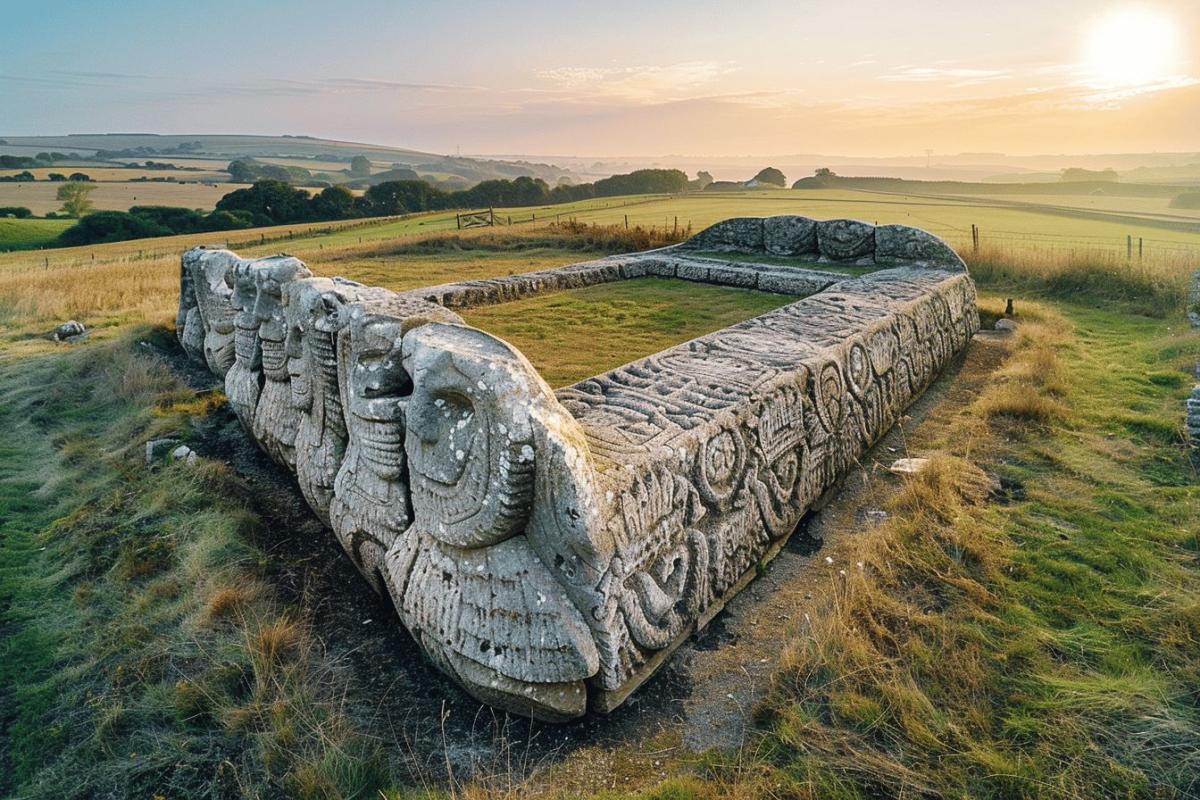
In a groundbreaking discovery, archaeologists have unearthed evidence that an ancient burial site in Dorset predates the iconic Stonehenge. This revelation has sent ripples through the archaeological community, challenging long-held assumptions about Neolithic Britain and shedding new light on the evolution of prehistoric monuments.
Unveiling the secrets of the Flagstones monument
The Flagstones monument, located near Dorchester in Dorset, has long intrigued researchers. Recent archaeological investigations conducted by the University of Exeter in collaboration with Historic England have dramatically altered our understanding of this enigmatic site. Through advanced radiocarbon analysis, experts have determined that the Flagstones monument dates back to approximately 3,200 BCE, making it roughly two centuries older than previously believed.
This redating places the Flagstones monument in a pivotal position within Britain’s prehistoric timeline. It now stands as the earliest known large circular enclosure in the country, predating even the initial construction phase of Stonehenge. This discovery has led researchers to speculate about the potential influence of Flagstones on subsequent monumental structures, including the world-famous stone circle on Salisbury Plain.
The significance of the Flagstones site extends beyond its age. Excavations have yielded a treasure trove of artifacts and remains, including:
- Human skeletal remains
- Red deer antlers
- Charcoal deposits
- Neolithic pottery fragments
These findings offer invaluable insights into the burial practices and ritual activities of our Neolithic ancestors. The presence of multiple burials within the enclosure pits suggests that Flagstones served as an important ceremonial center for the local community.
Rewriting the chronology of Neolithic Britain
The redating of the Flagstones monument has far-reaching implications for our understanding of Neolithic Britain. Dr. Susan Greaney, a lead researcher on the project, emphasized the importance of this discovery: “The chronology of Flagstones is essential for understanding the changing sequence of ceremonial and funeral monuments in Britain.”
This new timeline raises intriguing questions about the relationship between Flagstones and other Neolithic sites. Notably, the first phase of Stonehenge bears a striking resemblance to Flagstones but is believed to date from around 2,900 BCE. This has led researchers to ponder whether Stonehenge might have been inspired by the earlier Dorset monument.
The similarities between these sites have prompted some experts to suggest that scientists uncover new clues to Stonehenge mystery in groundbreaking research, potentially revising our current understanding of its construction timeline. This interconnectedness extends beyond southern England, with archaeologists noting parallels to sites in Wales and even Ireland.
To illustrate the chronological relationship between key Neolithic sites, consider the following timeline:
| Site | Estimated Date (BCE) | Location |
|---|---|---|
| Flagstones | 3,200 | Dorset, England |
| Stonehenge (Phase 1) | 2,900 | Wiltshire, England |
| Llandygái ‘Henge’ A | 3,000-2,900 | Gwynedd, Wales |
Piecing together Neolithic networks
The Flagstones discovery has highlighted the interconnectedness of Neolithic communities across Britain and beyond. Archaeologists have identified similarities in artifacts and burial practices between Flagstones and sites as far afield as Ireland. This suggests a complex network of cultural exchange and shared traditions spanning the British Isles during the Neolithic period.
These connections are particularly evident in the following aspects:
- Architectural design of circular enclosures
- Use of red deer antlers in ritual contexts
- Placement of human remains within monument structures
- Shared styles of Neolithic pottery
The evidence points to a sophisticated system of long-distance communication and cultural diffusion among Neolithic societies. This challenges earlier notions of isolated, localized developments and paints a picture of a more interconnected prehistoric Britain.
The legacy of Flagstones and future research
Today, the Flagstones site presents a unique challenge for archaeologists and preservationists. Half of the monument lies beneath the Dorchester bypass, while the remainder is located under Max Gate, the former home of renowned author Thomas Hardy. This situation underscores the delicate balance between modern development and the preservation of our archaeological heritage.
Despite these challenges, the Flagstones discovery has opened up exciting new avenues for research. Archaeologists are now reassessing other Neolithic sites in light of this new chronology, potentially uncovering further connections and revising long-held assumptions about the development of monumental architecture in prehistoric Britain.
The findings at Flagstones serve as a powerful reminder of the dynamic and innovative nature of Neolithic societies. Far from being primitive, these early communities were capable of complex engineering feats and maintained sophisticated networks of cultural exchange. As research continues, we can expect further revelations that will enhance our understanding of this pivotal period in human history.
The Flagstones monument, once hidden beneath the Dorset landscape, now stands as a testament to the ingenuity and cultural richness of our Neolithic ancestors. Its rediscovery and redating not only shed light on the origins of Britain’s iconic prehistoric monuments but also invite us to reconsider the complex web of relationships that shaped the Neolithic world.


