
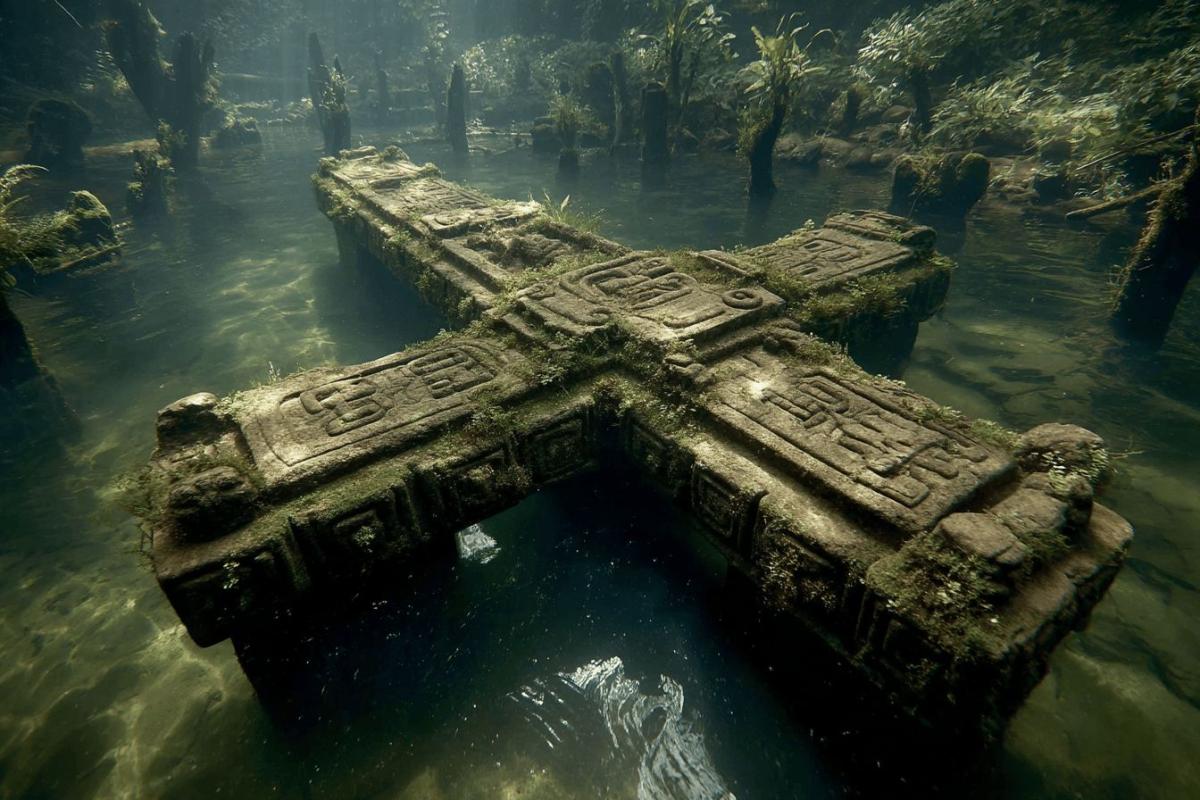
The discovery of ancient underwater structures continues to fascinate archaeologists and history enthusiasts worldwide. In a remarkable find that rivals England’s famous monument, researchers have uncovered what appears to be a prehistoric stone arrangement beneath the waters of Lake Michigan. This ancient underwater Stonehenge discovered in Lake Michigan has been dated to approximately 9,000 years ago, making it significantly older than its British counterpart.
Mysterious stone alignment discovered beneath Grand Traverse Bay
During a routine sonar exploration of Grand Traverse Bay, Dr. Mark Holley, an underwater archaeology professor at Northwestern Michigan University, made an unexpected discovery that would rewrite our understanding of prehistoric North America. Hidden approximately 40 feet below the surface lies a serpentine arrangement of stones extending over a mile in length. The deliberate placement of these rocks, ranging from basketball-sized to those comparable to small cars, immediately caught the attention of researchers.
Grand Traverse Bay, stretching 32 miles long and 12 miles wide along Lake Michigan’s northeastern coast, has long been known for its shipwrecks and maritime history. However, this discovery shifts focus to a much earlier period when the area wasn’t yet submerged. Experts believe these stones were positioned around 9,000 years ago, shortly after the last Ice Age, when water levels were significantly lower.
Among the most intriguing aspects of this find is a distinctive boulder measuring approximately 3.5 feet tall and 5 feet wide. What makes this particular stone remarkable is the carved image of a mastodon etched into its surface. This artistic representation provides a direct connection to a time when humans coexisted with these now-extinct prehistoric mammals, offering rare insight into early North American culture.
Following the discovery in 2007, Dr. Holley demonstrated cultural sensitivity by promptly informing the Grand Traverse Band of Ottawa and Chippewa tribes. To protect this invaluable archaeological site from potential damage, its exact coordinates remain confidential, accessible only to authorized researchers.
Ancient stone structures across the Great Lakes region
The Lake Michigan discovery isn’t isolated, as similar prehistoric stone arrangements have been found throughout the Great Lakes region. These formations provide valuable context for understanding the purpose and significance of the Grand Traverse Bay structure.
Dr. John O’Shea from the University of Michigan has extensively studied another ancient stone formation located in Lake Huron. Also dating back approximately 9,000 years, this structure lies 120 feet underwater along the Alpena-Amberley Ridge. Researchers believe it served as a sophisticated hunting infrastructure, strategically designed to channel caribou herds into areas where hunters could more easily target them.
Additional stone formations discovered on Beaver Island, Lake Michigan’s largest island, further illuminate the region’s rich archaeological landscape. Along the western shore’s Reddings Trail, researchers have documented a circle of glacial boulders featuring inscriptions and functional elements, including a stone with a deliberately carved hole. These arrangements potentially served as:
- Astronomical observation points
- Seasonal calendars tracking solstices and equinoxes
- Ceremonial or religious sites
- Territorial markers for early inhabitants
The following table compares key aspects of these Great Lakes stone structures:
| Location | Approximate Age | Depth | Notable Features |
|---|---|---|---|
| Grand Traverse Bay (Lake Michigan) | 9,000 years | 40 feet | Mile-long serpentine pattern, mastodon carving |
| Alpena-Amberley Ridge (Lake Huron) | 9,000 years | 120 feet | Hunting structure, V-shaped corridors |
| Beaver Island (Lake Michigan) | Unknown (prehistoric) | Above water | Stone circle, inscriptions, carved hole |
Significance and ongoing research challenges
The Grand Traverse Bay structure predates England’s Stonehenge by approximately 4,000 years, placing it in the early Holocene period. This timing coincides with significant environmental changes as North America emerged from the last Ice Age. The melting glaciers gradually transformed the landscape, creating the Great Lakes and forever altering how early inhabitants interacted with their surroundings.
Researchers face considerable challenges when studying these submerged sites. The underwater environment complicates traditional archaeological techniques, while visibility and access issues slow progress. Despite these obstacles, technological advancements in underwater archaeology continue to enhance our ability to document and interpret these mysterious structures.
Several competing theories have emerged regarding the purpose of the Grand Traverse Bay arrangement:
- A sophisticated hunting system designed to corral and trap game animals
- An astronomical calendar for tracking seasonal changes and celestial events
- A ceremonial or sacred site for early inhabitants
- A territorial marker establishing boundaries between different groups
- A combination of practical and symbolic functions integrated into daily life
The mastodon carving provides particularly valuable insights, as these mammals went extinct approximately 11,000 years ago. This suggests the carving might be even older than the stone arrangement itself, or that early memories of these creatures remained culturally significant long after their disappearance.
Preserving our underwater heritage
Archaeological discoveries beneath the Great Lakes highlight the importance of underwater cultural heritage preservation. These ancient structures provide invaluable windows into prehistoric life that complement our understanding derived from land-based excavations. As climate change and human activities increasingly threaten underwater sites worldwide, the protection of these resources becomes increasingly critical.
The decision to keep the exact location of the Grand Traverse Bay structure confidential demonstrates a commitment to preservation. By limiting access to authorized researchers and respecting indigenous connections to these cultural resources, archaeologists hope to ensure these ancient monuments remain intact for future study.
As research continues, these submerged stone arrangements will likely yield additional insights into the sophisticated knowledge and engineering capabilities of North America’s earliest inhabitants. The surprising complexity of prehistoric constructions challenges outdated notions about ancient technological capabilities and cultural development in the region.
Through careful documentation, respectful collaboration with indigenous communities, and innovative research methodologies, archaeologists continue working to decode these silent stone witnesses to our distant past. Each new discovery beneath the waves of the Great Lakes brings us closer to understanding the rich cultural landscape that existed long before written history began.

- Three children charged with murder in court following man’s death - March 22, 2026
- Three children charged with murder in court following man’s death - March 22, 2026
- Fire breaks out in field near Stonehenge world heritage site - March 21, 2026

