
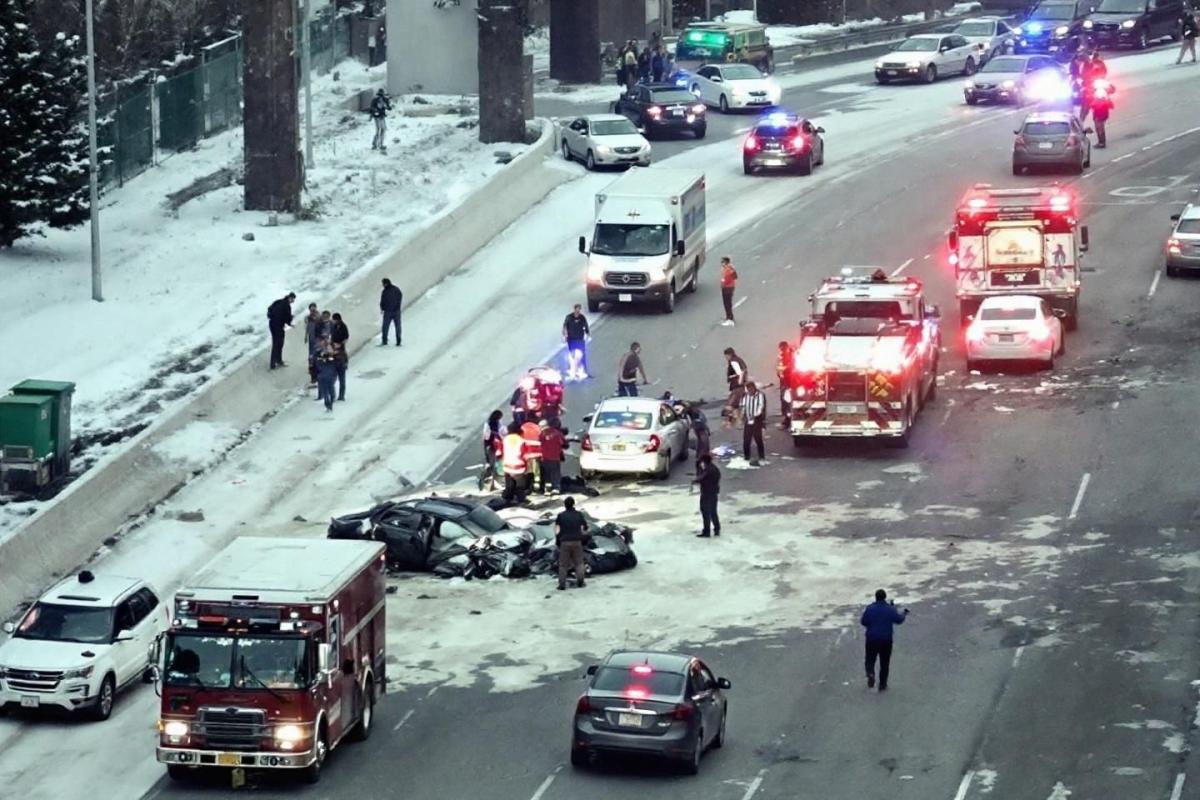
A significant truck collision has disrupted traffic flow on a major Massachusetts highway, creating widespread transportation challenges for Sunday morning travelers. The incident occurred on the southbound lanes of Interstate 95, specifically impacting the Salisbury section and causing authorities to implement extended road closures. Emergency response teams quickly mobilized to address the situation while transportation officials worked to manage the resulting traffic disruptions.
Major highway closure affects Salisbury traffic patterns
The Massachusetts Department of Transportation confirmed the Interstate 95 southbound closure near mile marker 90 in Salisbury around 9 :45 a.m. on Sunday morning. This critical section of highway serves as a vital transportation corridor for both local commuters and interstate travelers moving between New England states.
Transportation officials indicated the closure would remain in effect for several hours, creating significant challenges for motorists planning to traverse this route. The extended timeline reflects the complexity of the cleanup operation and the extent of infrastructure damage caused by the collision.
Drivers attempting to navigate the area faced major detour requirements, with authorities strongly recommending alternate route selection. The closure impacted not only immediate traffic flow but also created ripple effects throughout the regional transportation network as vehicles sought alternative pathways.
| Time | Status | Location | Impact Level |
|---|---|---|---|
| 9 :45 a.m. | Closure Announced | Mile Marker 90 | High |
| Morning Hours | Active Investigation | Southbound Lanes | Severe |
| Several Hours | Expected Duration | Salisbury Section | Critical |
Local news outlets documented the severity of the incident through photographic evidence shared on social media platforms. The Newburyport Daily News published images revealing a tractor-trailer overturned alongside the highway, with visible utility infrastructure damage complicating the recovery process.
Emergency response and utility infrastructure damage
The collision resulted in significant utility pole damage, creating additional safety concerns beyond the immediate vehicle accident. Downed electrical lines and damaged infrastructure required specialized crews to address power-related hazards before standard recovery operations could proceed effectively.
Multiple emergency vehicles responded to the scene, including police units and ambulances, indicating the serious nature of the incident. First responders established a secure perimeter while conducting their initial assessment and coordinating with various agencies involved in the response effort.
The presence of utility damage significantly extended the estimated recovery timeline, as electrical crews needed to safely isolate damaged infrastructure before heavy equipment could begin vehicle removal operations. This multi-agency coordination demonstrates the complexity involved in managing highway incidents with infrastructure complications.
Transportation officials emphasized the importance of public cooperation during the extended closure period. The combination of vehicle recovery, utility repairs, and highway surface assessment required comprehensive safety protocols that prioritized both responder safety and public welfare.
Traffic management and alternative route recommendations
Massachusetts Department of Transportation implemented comprehensive traffic management strategies to address the significant disruption caused by the highway closure. Officials coordinated with local traffic control systems to optimize signal timing on alternate routes and minimize congestion spillover effects.
Motorists received strong advisories to avoid the affected area entirely, with transportation authorities providing the following guidance :
- Seek alternate routing through secondary highways and local roads
- Allow additional travel time for planned journeys
- Monitor real-time traffic updates through official channels
- Consider postponing non-essential travel during peak closure hours
- Use navigation applications for dynamic route optimization
The closure created particular challenges for commercial vehicle operators who rely on Interstate 95 for freight transportation. Truck drivers faced complex rerouting decisions, as many alternate routes have weight restrictions or geometric limitations that prevent large vehicle access.
Regional transportation networks experienced increased pressure as diverted traffic sought available capacity on parallel routes. State Route 1A and other local highways absorbed additional volume, creating secondary congestion points that required ongoing monitoring and management.
Recovery operations and highway restoration efforts
Specialized heavy recovery equipment arrived on scene to address the overturned tractor-trailer and begin the complex process of highway clearance. The operation required careful coordination between multiple agencies, including state police, transportation departments, utility companies, and private recovery contractors.
Highway restoration efforts extended beyond simple vehicle removal, encompassing pavement damage assessment and utility infrastructure repairs. Transportation engineers conducted thorough evaluations to ensure road surface integrity before authorizing traffic resumption on the affected lanes.
The incident highlighted the vulnerability of critical transportation infrastructure to major vehicle accidents, particularly when utility systems become involved. Recovery operations demonstrated the importance of coordinated emergency response protocols that address both immediate safety concerns and long-term infrastructure restoration requirements.
Officials maintained regular communication with the public throughout the recovery process, providing updates on progress and estimated reopening timelines. This transparency helped motorists make informed decisions about travel planning and route selection during the extended closure period.

- England league-union hybrid match proposed for 2026 - October 16, 2026
- England league-union hybrid match proposed for 2026 - October 16, 2026
- Body found in Salisbury with no signs of foul play, police say - October 15, 2026

