
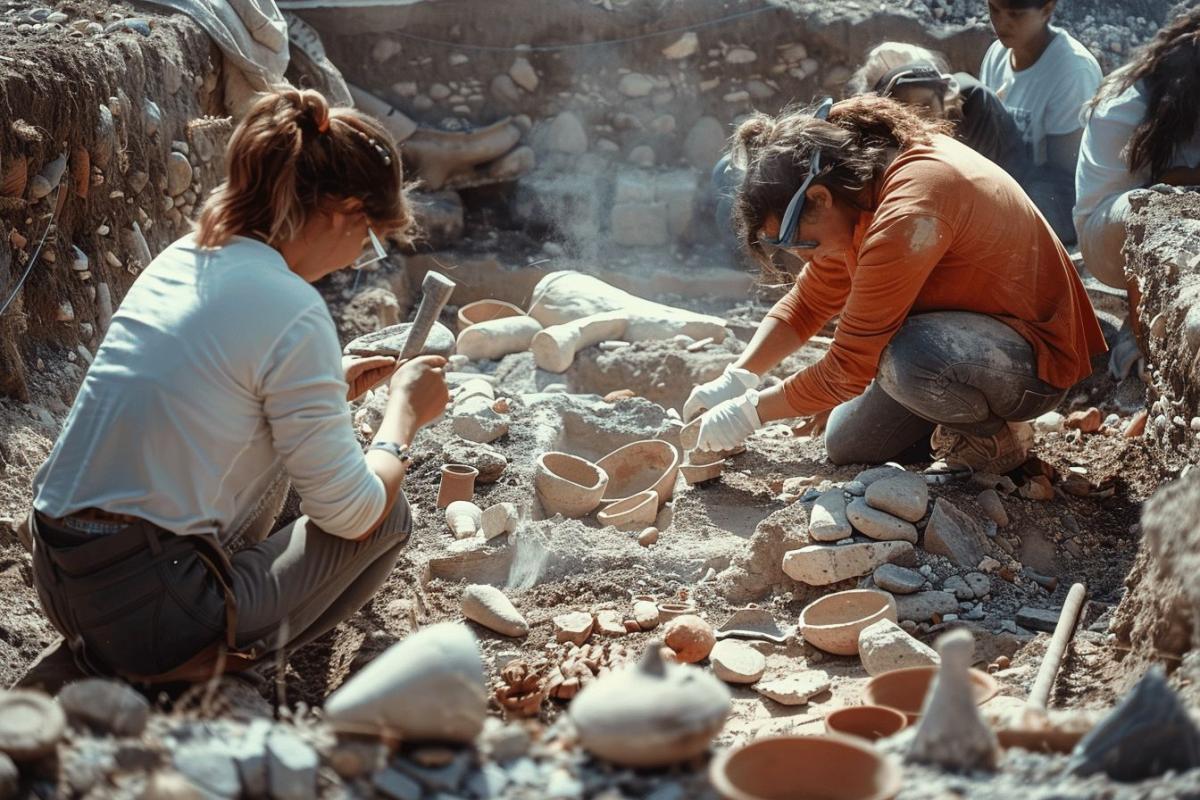
In the realm of archaeological discoveries, a recent finding in Dorset has sent ripples through the scientific community, challenging our understanding of Neolithic Britain. The Flagstones monument, nestled near Dorchester, has been thrust into the spotlight, prompting a reevaluation of the timeline surrounding one of Britain’s most iconic prehistoric sites – Stonehenge.
Unearthing the past: Flagstones monument’s surprising age
The Flagstones monument, a circular enclosure spanning 100 meters in diameter, has been a subject of intrigue since its discovery in the 1980s. Recent advancements in radiocarbon analysis have led to a startling revelation: the site is approximately two centuries older than previously believed. This groundbreaking research, conducted by the University of Exeter in collaboration with Historic England, has dated the monument to around 3200 BC.
The significance of this finding cannot be overstated. Dr. Susan Greaney, an archaeologist from the University of Exeter and lead author of the study published in the Antiquity journal, explains: “The chronology of Flagstones is essential for understanding the changing sequence of ceremonial and funeral monuments in Britain.” This new timeline positions Flagstones as potentially the earliest known large circular enclosure in Britain, predating even the initial phase of Stonehenge.
The excavation of Flagstones has yielded a wealth of artifacts and human remains, including:
- Red deer antlers
- Charcoal samples
- Cremated adult remains
- Three non-cremated children’s burials
- Partial cremations of adults
These findings have provided crucial data for the revised dating of the site, offering a glimpse into the funerary practices of our Neolithic ancestors.
Rethinking Stonehenge: A Dorset connection?
The revelation of Flagstones’ age has ignited a flurry of questions regarding its relationship to Stonehenge. The similarities between the two sites are striking, with Stonehenge’s first phase bearing an almost identical layout to Flagstones. However, current dating places Stonehenge’s construction around 2900 BC, approximately three centuries after Flagstones.
This temporal gap has led researchers to ponder: “Could Stonehenge have been a copy of Flagstones? Or do these findings suggest our current dating of Stonehenge might need revision?” The implications of these questions are far-reaching, potentially reshaping our understanding of Neolithic Britain’s cultural and architectural evolution.
The connection between Flagstones and Stonehenge is further reinforced by the discovery of an ancient stone circle with remarkable similarities to early Stonehenge. These findings collectively paint a picture of a complex network of Neolithic sites, each influencing and inspiring the others.
Unveiling Flagstones: A timeline of Neolithic activity
The new analysis has revealed a fascinating chronology of activity at the Flagstones site:
| Time Period | Activity |
|---|---|
| 3650 BC | Early Neolithic activity, including pit digging |
| 3200 BC | Creation of the circular ditched enclosure |
| 3200 BC – 3100 BC | Immediate placement of burials within the enclosure |
| Approximately 2200 BC | Burial of a young adult male under a large sarsen stone at the center |
This timeline illustrates a prolonged period of use and significance for the Flagstones monument, spanning over a millennium. The site’s enduring importance is evident in the continued practice of interment, with the final recorded burial taking place roughly 1,000 years after the enclosure’s initial construction.
Beyond Dorset: Flagstones’ wider archaeological significance
The Flagstones monument doesn’t exist in isolation. Its significance extends beyond Dorset, showing connections to other important Neolithic sites across Britain. One such connection is with Llandegai in Gwynedd, Wales, suggesting a broader network of cultural exchange and shared practices across Neolithic communities.
Dr. Greaney’s analysis suggests that Flagstones may have served as a prototype for later monuments, including Stonehenge. She notes, “Flagstones is an unusual monument, a perfectly circular ditched enclosure, with burials and cremations associated with it. In some respects it looks like monuments that come earlier, which we call causewayed enclosures, and in others it looks a bit like things that come later that we call henges.”
This unique positioning of Flagstones in the archaeological timeline offers valuable insights into the evolution of Neolithic monuments. It bridges the gap between earlier causewayed enclosures and later henge monuments, providing a crucial piece in the puzzle of Britain’s prehistoric landscape.
Preserving the past: Flagstones’ modern-day status
Today, the Flagstones monument stands as a testament to Britain’s rich prehistoric heritage. However, its preservation comes with modern challenges. Half of the site now lies beneath the Dorchester bypass, a stark reminder of the often-delicate balance between progress and preservation.
The remaining portion of the site resides beneath Max Gate, the former home of renowned author Thomas Hardy. Now under the stewardship of the National Trust, this location adds an intriguing layer of literary history to the already significant archaeological site.
Flagstones’ status as a scheduled monument ensures its protection for future generations. The artifacts and excavation archives are carefully preserved at Dorset Museum, allowing researchers and the public alike to engage with this crucial piece of Britain’s Neolithic past.
As we continue to unravel the mysteries of Flagstones and its contemporaries, we gain a deeper appreciation for the ingenuity and cultural complexity of our Neolithic ancestors. The discovery not only challenges our understanding of Stonehenge but also opens new avenues for exploring the rich tapestry of prehistoric Britain. With each new finding, we inch closer to a more comprehensive picture of our shared human heritage, reminding us of the enduring importance of archaeological research in illuminating the distant past.

- Salisbury dedicates Christmas tree to former mayor in touching tribute parade - October 13, 2026
- Salisbury dedicates Christmas tree to former mayor in touching tribute parade - October 13, 2026
- Flood alerts issued across England and Wales as heavy rainfall warning announced - October 12, 2026

