
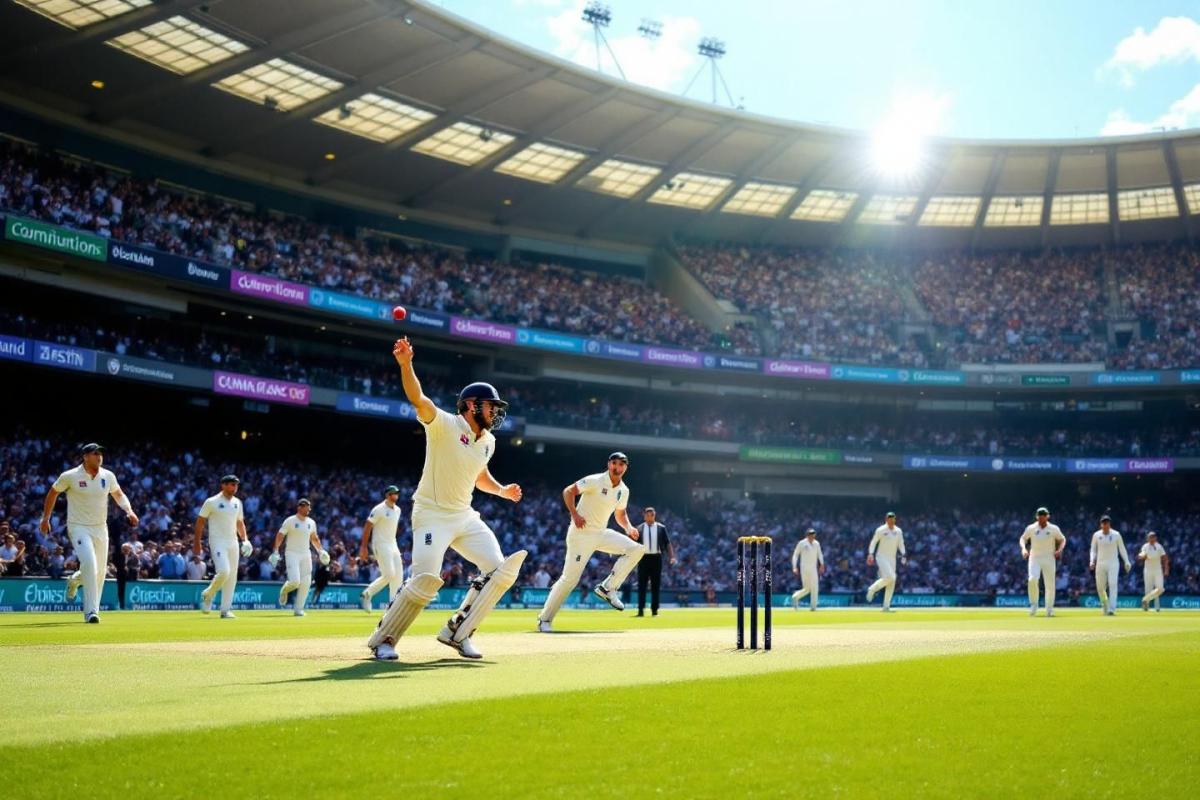
The Australian summer of 2025 has turned into a nightmare scenario for English cricket. With the series effectively slipping away after just six days of competition, the touring side faces the grim reality of potentially delivering their poorest Ashes campaign in recent memory. The stark scoreline tells a story of comprehensive Australian dominance and English fragility that has left supporters questioning fundamental aspects of the team’s approach.
A catalogue of batting disasters undermines England’s hopes
The most glaring weakness in England’s armoury has been their inability to construct meaningful innings under pressure. The batting lineup, selected with considerable confidence before departure, has repeatedly surrendered wickets through reckless stroke-play rather than Australian brilliance. Opener after opener has fallen to injudicious drives, edges flying to the slip cordon with predictable regularity. Even international legends like Sachin Tendulkar demonstrated greater discipline during his famous 241 in Sydney, deliberately resisting the temptation to drive loosely.
Scott Boland’s revealing comment highlights the gulf in approach between the two sides. The Australian bowler faced more deliveries during the second Test than several key English batsmen combined, including Ben Duckett, Ollie Pope and Harry Brook. This stark statistic exposes a fundamental flaw in execution that goes beyond technique. When tail-enders show more patience than specialist batsmen, serious questions demand answers. Wicketkeeper Jamie Smith has appeared overwhelmed by the intensity of Test cricket at this level, his struggles behind the stumps compounding the team’s difficulties.
The contrast between Australian adaptability and English rigidity becomes evident when examining their respective philosophies. Steve Smith articulated the home side’s methodology : adapting to conditions, playing the game in real time, and avoiding regretful hindsight. Meanwhile, assistant coach Marcus Trescothick’s insistence that “we are trying to play the way we want to play” reveals a stubborn adherence to predetermined tactics regardless of circumstances. This ideological inflexibility has transformed an initially refreshing approach into a straitjacket limiting tactical options.
| Recent England away record | Tests played | Losses |
|---|---|---|
| Last 14 away Tests | 14 | 10 |
| Last 15 overall Tests | 15 | 8 |
Historical context reveals magnitude of potential failure
England’s predicament becomes even more troubling when placed within historical context. No English side has overturned a 2-0 deficit against Australia in living memory. The hosts, already holding the urn, haven’t lost three consecutive home Tests to any opponent in 38 years. Mathematical possibilities aside, realistic assessment suggests this series has already slipped beyond retrieval. For fans who remember England vs West Indies 2nd ODI live cricket score, radio commentary, highlights and updates, the contrast in performance levels proves particularly dispiriting.
Examining previous Australian tours provides uncomfortable comparisons. The 2002-03 campaign yielded a 4-1 defeat but offered hope through Michael Vaughan’s run-scoring. The 2006-07 disaster saw an injury-ravaged squad face arguably one of cricket’s greatest ever teams. The 2013-14 series witnessed Mitchell Johnson’s devastating pace overwhelming all opposition. Even the COVID-affected 2021-22 tour carried low expectations from the outset. This current expedition, however, arrived with genuine belief and extensive preparation including County Championship experiments with Kookaburra balls.
The strategic planning now appears misguided. James Anderson’s retirement was positioned as necessary rejuvenation. Australia was characterized as declining and vulnerable. Instead, the hosts have demolished England using reserve bowlers while Usman Khawaja nursed a back injury. Pat Cummins felt comfortable enough to create selection intrigue around his Brisbane participation, while Steve Smith found time for television appearances. Perhaps most humiliatingly, Michael Neser claimed wickets bowling medium pace with the keeper positioned at the stumps, a tactic reminiscent of county cricket veterans.
Key areas of English underperformance
- Batting discipline : repeated dismissals through poor shot selection against full deliveries outside off stump
- Wicketkeeping standards : Jamie Smith’s struggles both with gloves and bat have compounded problems
- Bowling consistency : the pace attack has delivered only one genuinely threatening session across two Tests
- Selection flexibility : limited backup options restrict tactical adjustments during the series
Leadership faces existential questions about methodology
The philosophical foundations underpinning England’s recent revival now face intense scrutiny. The Stokes-McCullum partnership has contracts extending through the 2027 home Ashes, providing institutional security regardless of immediate results. However, public and professional opinion will influence decision-making at governance level. Rob Key manages both leaders, while ECB hierarchy including Richard Gould and Richard Thompson must gauge supporter sentiment currently reaching boiling point.
Eight defeats in fifteen Tests represents concerning form. Away from home, the record deteriorates to ten losses from fourteen matches. England have failed to win any five-Test series against Australia or India during this era. The management’s post-Brisbane comments carried unusual sharpness, with Stokes declaring his dressing room “not a place for weak men” in remarks that could prove prophetic or inflammatory depending on subsequent events. Whether this alpha-male posturing galvanizes or alienates remains uncertain.
The squad composition offers limited flexibility for change. Without a specialist backup keeper, Smith appears certain to continue despite his struggles. No reserve specialist opener provides alternatives at the top of the order. Jacob Bethell represents the sole batting reinforcement, while spinner Shoaib Bashir awaits selection for Adelaide despite patchy Lions form yielding figures of 0-115. Australia can summon Nathan Lyon’s 562 Test wickets when required; England must gamble on social media promise and potential.
With over a week remaining before the third Test, the squad faces scrutiny during their Sunshine Coast break. Upon returning, their task involves keeping Ashes hopes alive beyond Christmas. Failure would cement this tour’s status as England’s worst Australian expedition of the modern era, surpassing even the most pessimistic pre-series predictions. The empire that Bazball built now teeters on the brink of comprehensive collapse, its aggressive ideology exposed as insufficient against disciplined, skilled opposition prepared to exploit its inherent weaknesses.

- England fights to avoid worst Ashes tour in modern Australia history - October 27, 2026
- England and Scotland learn World Cup 2026 kick-off times - October 26, 2026
- England and Scotland learn World Cup 2026 kick-off times - October 26, 2026

