
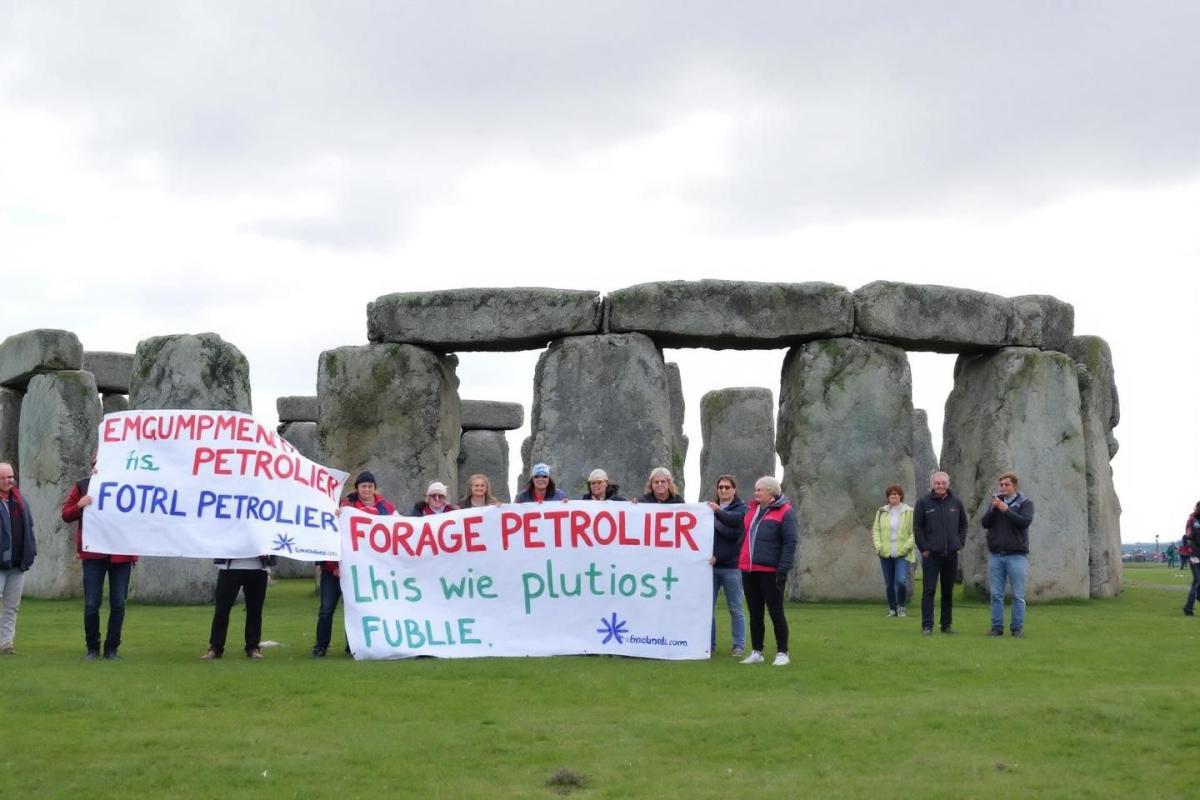
Three environmental activists face serious charges at Salisbury Crown Court following their controversial demonstration at one of Britain’s most treasured historical sites. The defendants, aged between 22 and 74, stand accused of damaging the ancient stone circle during what prosecutors describe as a calculated act of vandalism targeting the prehistoric monument.
Prosecution presents case against Stonehenge protesters
Prosecutor Simon Jones outlined the charges against Rajan Naidu, 74, from Birmingham, Niamh Lynch, 22, a University of Oxford student from Bedford, and Luke Watson, 36. The trio faces allegations of damaging an ancient protected monument and causing public nuisance following the June 19 incident last year.
Jones emphasized to the jury that this represented blatant and clear vandalism rather than legitimate protest activity. The prosecution alleges the defendants deliberately targeted the stone circle using fire extinguishers filled with cornflour, talc, and orange dye to spray the monument’s surface.
According to court testimony, Watson allegedly drove his co-defendants to the Wiltshire site that morning and encouraged their actions. The prosecution argues this demonstrates the premeditated nature of the protest, showing careful planning rather than spontaneous activism.
| Defendant | Age | Location | Alleged Role |
|---|---|---|---|
| Rajan Naidu | 74 | Birmingham | Spraying monument |
| Niamh Lynch | 22 | Bedford | Spraying monument |
| Luke Watson | 36 | Unknown | Driver and encourager |
Details of the alleged monument damage
The court heard how Naidu and Lynch crossed protective boundary ropes at the site, carrying fire extinguishers as weapons of protest. They allegedly sprayed orange powder across the ancient stones, covering portions of the 5,000-year-old structure in their demonstration.
Jones described the incident’s impact on this architecturally sophisticated prehistoric stone circle, recognized worldwide as an exceptional example of ancient engineering. The site attracts visitors from across the globe, offering both educational and spiritual experiences to thousands annually.
The timing proved particularly problematic, occurring just one day before the summer solstice celebration, when approximately 15,000 people were expected to gather. This scheduling raised concerns about disrupting traditional ceremonies and public access to the monument.
Cleaning costs reached £620, though prosecutors argue the financial impact represents only a fraction of the broader damage to public heritage. The incident created risks to public safety and disrupted normal site operations during a critical period.
Environmental activism versus heritage protection
The prosecution acknowledges the defendants will likely claim their actions constituted legitimate protest aimed at pressuring the government to end new fossil fuel licensing. This defense strategy reflects broader tensions between environmental activism and heritage preservation.
However, Jones argued that targeting protected monuments creates serious harm risks to public sections. The prosecution contends that while protest rights deserve respect, damaging irreplaceable historical sites crosses legal and ethical boundaries.
The case highlights growing conflicts between climate activists and cultural institutions. Several factors contribute to these tensions :
- Increased urgency in environmental messaging
- Limited traditional protest effectiveness
- High-profile monument targeting for maximum publicity
- Heritage site vulnerability to permanent damage
- Public backlash against monument vandalism
Stonehenge represents more than tourism revenue or archaeological significance. The monument embodies cultural identity and connects modern Britain to its prehistoric past, making damage particularly resonant with public sentiment.
Legal implications and monument protection
The charges carry significant legal weight, reflecting society’s commitment to protecting ancient protected monuments. These sites enjoy special legal status recognizing their irreplaceable cultural value and vulnerability to damage.
Public nuisance charges address broader impacts beyond physical damage. The prosecution argues the defendants’ actions disrupted legitimate public use and created safety concerns during a major cultural celebration.
The defendants have entered not guilty pleas, setting up a trial that will examine competing claims about protest rights versus heritage protection. Their legal strategy likely involves arguing necessity and proportionality in addressing climate change urgency.
This case may establish important precedents for future environmental protests targeting cultural sites. Courts must balance free speech protections with monument preservation, considering both immediate damage and long-term preservation needs.
The trial continues as legal observers watch for decisions that could influence similar cases. Environmental groups monitor proceedings while heritage organizations advocate for stronger monument protection measures against future incidents.

- England league-union hybrid match proposed for 2026 - October 16, 2026
- England league-union hybrid match proposed for 2026 - October 16, 2026
- Body found in Salisbury with no signs of foul play, police say - October 15, 2026

