
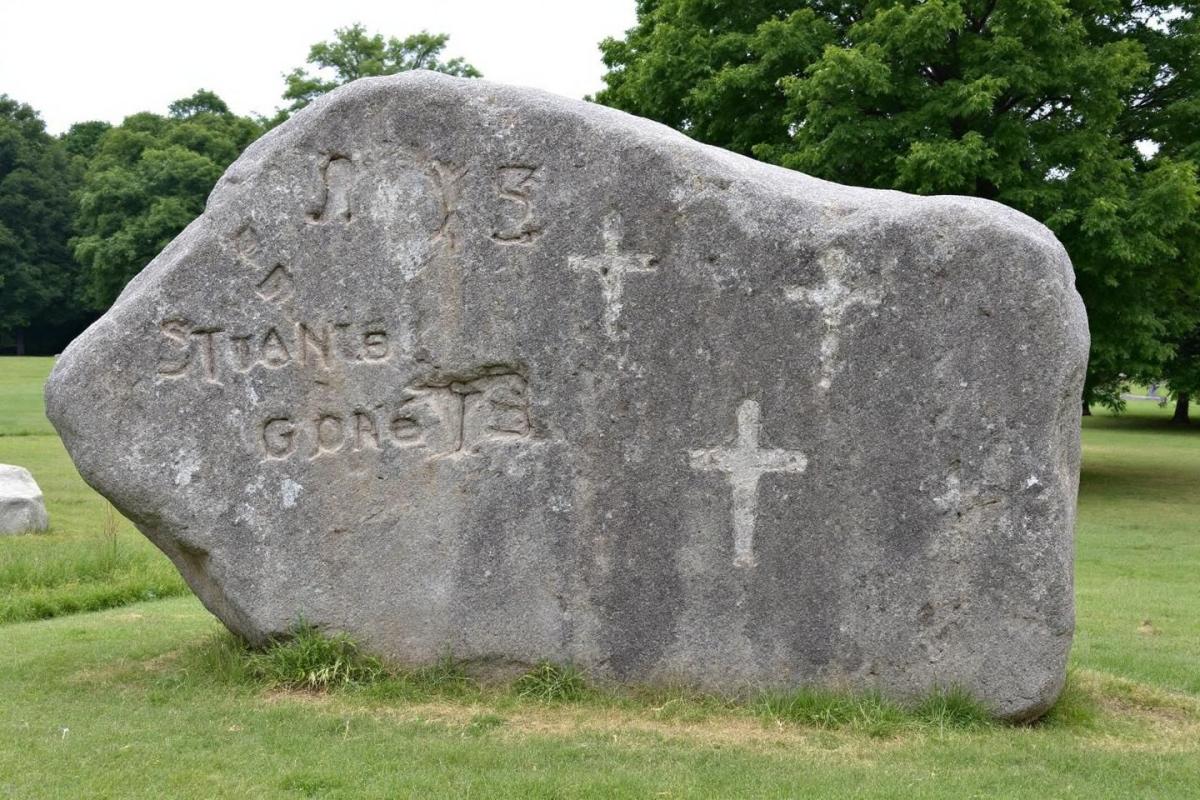
The discovery of the Newall Boulder at Stonehenge in 1924 has sparked renewed scientific interest in understanding the origins and transportation methods of the monument’s famous bluestones. This bullet-shaped rock fragment has become a central piece of evidence in the ongoing archaeological debate about whether human effort or natural glacial forces brought these massive stones to Salisbury Plain. Recent analysis provides compelling insights that may finally resolve this long-standing mystery.
New evidence from the Newall Boulder challenges glacial transport theory
Archaeological debates surrounding Stonehenge’s construction have persisted for decades, with the Newall Boulder sitting at the heart of competing theories. Initially examined in the early 1990s, some researchers suggested this small rock fragment represented a glacial erratic—implying that ice sheets, not human hands, transported Stonehenge’s massive building blocks to their current location.
However, recent comprehensive scientific analysis has provided compelling evidence against the glacial transport hypothesis. Researchers have meticulously examined the boulder’s surface characteristics, finding that while some wear patterns initially appeared consistent with sub-glacial abrasion, these features aren’t definitively diagnostic of ice transport. Most surface markings could simply result from natural weathering processes acting on the rock’s internal structure.
Perhaps most significantly, scientists uncover new clues to Stonehenge mystery in groundbreaking research that demonstrates a complete absence of other glacial erratics or glacial deposits throughout Salisbury Plain. This crucial finding substantially undermines the ice transport theory, as glacial movement would typically leave behind multiple indicators of its presence across the landscape.
The petrographic analysis of the Newall Boulder reveals its likely origin:
- Fragment of one of Stonehenge’s original bluestones
- Identical composition to rhyolite found at Craig Rhos-y-felin in Wales
- No evidence of glacial extension from this Welsh quarry site to Stonehenge
- Strong archaeological indicators of prehistoric quarrying activity at Craig Rhos-y-felin
Origins of Stonehenge’s bluestones traced through geological fingerprinting
The geological composition of the Newall Boulder provides crucial insights into Stonehenge’s construction history. By examining its mineral structure, researchers have established a direct connection between this fragment and specific Welsh quarry sites. The boulder displays identical petrographic features to those found in rhyolite at Craig Rhos-y-felin in the Preseli Hills of Wales—approximately 240 kilometers from Stonehenge.
This geological “fingerprinting” allows archaeologists to trace the exact origin of Stonehenge’s building materials with unprecedented precision. The bluestones, distinctive for their bluish tinge when wet or freshly broken, have been confirmed to originate from multiple quarry sites in the Preseli region. Meanwhile, the massive Altar Stone has been traced to northeastern Scotland, an astonishing 700 kilometers from its current placement.
| Stone Type | Origin Location | Distance to Stonehenge | Transport Method |
|---|---|---|---|
| Bluestones | Preseli Hills, Wales | 240 km (150 miles) | Human transport (confirmed) |
| Altar Stone | Northeast Scotland | 700 km (430 miles) | Human transport (likely) |
| Sarsen Stones | Marlborough Downs | 30 km (19 miles) | Human transport (confirmed) |
The striking match between the Newall Boulder and specific Welsh quarry sites effectively rules out random glacial deposition as an explanation. Instead, it points to deliberate selection and extraction of specific stone types by Neolithic communities beginning around 3000 BCE. Evidence of prehistoric quarrying at these Welsh sites further supports human agency in transporting these massive stones across challenging terrain.
Human ingenuity behind monumental transportation
With glacial transport increasingly dismissed by the scientific community, researchers have turned their attention to understanding the remarkable human achievement represented by Stonehenge’s construction. The transportation of multi-ton stones across hundreds of kilometers required sophisticated engineering knowledge and social organization previously underestimated in Neolithic communities.
The human effort behind Stonehenge’s construction
The rejection of the glacial transport theory spotlights the extraordinary human achievement behind Stonehenge’s creation. Moving these massive stones across varied terrain presented enormous logistical challenges that required innovative solutions. Archaeological experiments suggest Neolithic builders likely used a combination of:
- Wooden sledges and rollers for overland transport
- Water routes via rivers and coastal waters
- Coordinated community effort involving hundreds of individuals
- Multi-generational planning and execution
The deliberate selection of specific stone types from distant sources underscores the cultural and potentially spiritual significance these materials held for Stonehenge’s builders. Rather than simply using locally available materials, Neolithic communities invested enormous resources in acquiring particular stones from specific landscapes—suggesting these rocks held special meaning beyond their physical properties.
The Newall Boulder’s analysis represents a pivotal moment in Stonehenge research. By definitively linking this fragment to Welsh quarry sites while disproving glacial transport, archaeologists have strengthened our understanding of human agency in megalithic construction. This small rock fragment helps illuminate the remarkable capabilities of ancient societies who, without modern technology, undertook monumental building projects requiring sophisticated planning, engineering, and social coordination.
As researchers continue analyzing the Newall Boulder and similar artifacts, we gain deeper appreciation for the ingenuity and determination of our Neolithic ancestors. Their ability to transport massive stones across challenging landscapes stands as testimony to human problem-solving capacity and collaborative potential, regardless of technological limitations.

- England league-union hybrid match proposed for 2026 - October 16, 2026
- England league-union hybrid match proposed for 2026 - October 16, 2026
- Body found in Salisbury with no signs of foul play, police say - October 15, 2026

