
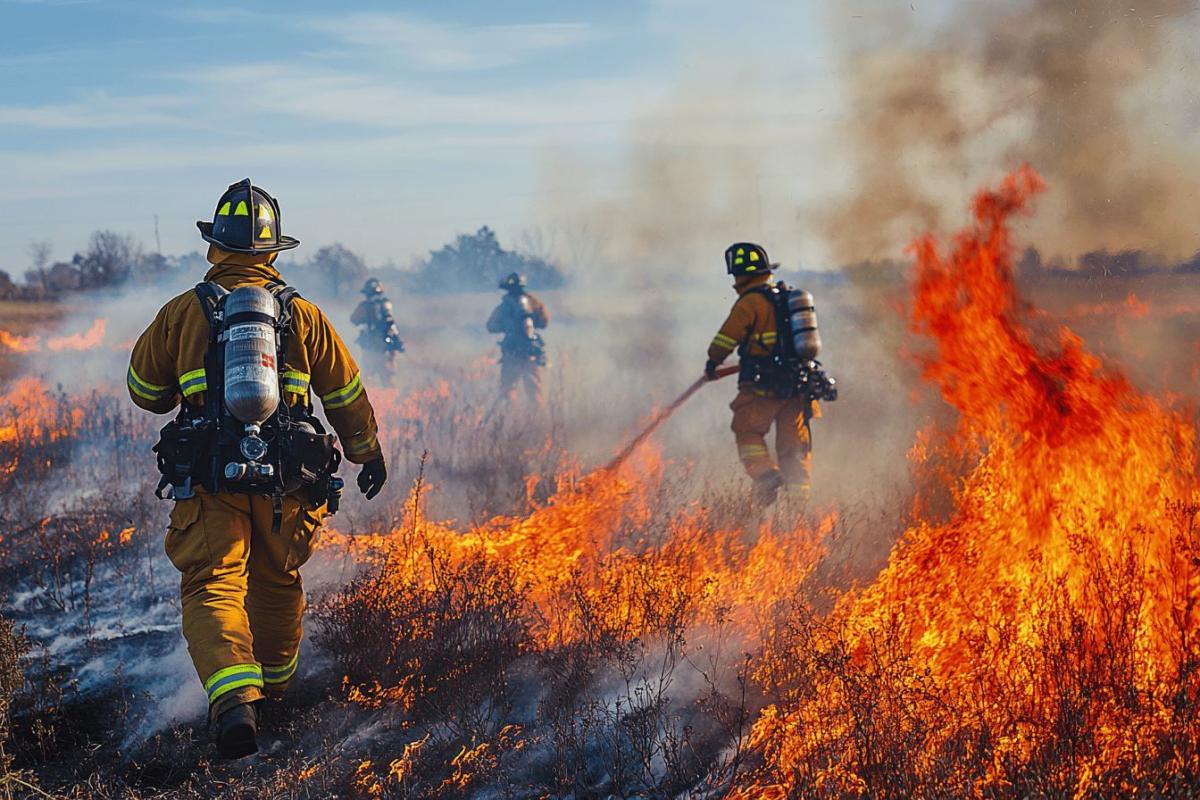
Dry conditions across New Hampshire created challenging circumstances for emergency responders battling a significant brush fire in Salisbury over the weekend. The blaze, which required coordination between multiple fire departments, highlighted the ongoing fire risks facing communities throughout the state during this particularly arid period.
Emergency response coordinates multi-department effort in Salisbury woods
Fire Chief Bill MacDuffie first detected smoke early Saturday morning, initiating what would become an extensive search operation. The firefighters from multiple departments spent several hours locating the source of the smoke before discovering the brush fire’s exact position deep within the wooded terrain off Gerrish Road.
The fire’s remote location presented significant logistical challenges for responding crews. Emergency personnel had to carry their equipment deep into the forest, navigating difficult terrain while transporting the necessary tools to combat the flames effectively. More than fifteen firefighters ultimately participated in the suppression efforts, representing a collaborative response from various departments across the region.
Video documentation shared on the department’s social media platforms illustrated the complexity of the operation. The footage revealed the extent of coordination required to access the fire’s location and the challenging conditions crews faced while working in the dense woodland environment.
Dry ground conditions complicate firefighting operations significantly
The current drought conditions created unprecedented challenges for suppression efforts, according to Chief MacDuffie’s assessment. Unlike surface fires that can be more easily contained, this particular blaze penetrated deep into the ground, requiring specialized techniques to ensure complete extinguishment.
The fire chief explained how the extremely dry conditions allowed flames to burn approximately one foot below ground level. This phenomenon necessitated intensive water application directly to the affected soil, making the suppression process considerably more time-consuming and labor-intensive than typical brush fires.
The following factors contributed to the operational complexity:
- Extended drought conditions throughout the region
- Deep ground penetration of burning materials
- Remote woodland location requiring equipment transport
- Multiple hot spots requiring individual attention
- Ongoing monitoring requirements for hidden embers
Despite these challenges, crews successfully contained the fire to less than one acre, preventing potential spread to surrounding forest areas. The quick response and coordinated effort between departments proved crucial in limiting the fire’s impact on the local ecosystem.
Investigation procedures and cause determination remain ongoing
Authorities have initiated a comprehensive investigation into the brush fire’s origin, though initial findings remain inconclusive. The remote location and extensive ground burning have complicated efforts to determine the exact ignition source, requiring detailed forensic analysis of the affected area.
Chief MacDuffie committed to conducting follow-up inspections, planning to return to the site the following morning to assess for any remaining hot spots. This ongoing monitoring reflects standard protocols for deep-burning ground fires, which can reignite hours or even days after apparent extinguishment.
Similar investigations continue across the region, including ongoing probes into recent airfield incidents that demonstrate the widespread nature of current fire risks. These parallel investigations highlight the importance of thorough cause determination in preventing future incidents.
| Investigation Aspect | Current Status | Timeline |
|---|---|---|
| Cause Determination | Under Investigation | Ongoing |
| Hot Spot Monitoring | Daily Inspections | Next 48 Hours |
| Area Assessment | Containment Verified | Completed |
Statewide fire restrictions reflect elevated danger levels
The Salisbury incident reflects broader concerns about fire danger throughout New Hampshire, prompting numerous municipalities to implement emergency restrictions. Towns including Newmarket, Stratham, and Roxbury have temporarily banned all outdoor burning activities until conditions improve.
The Newfields Fire Department announced an indefinite suspension of burn permit issuance, citing the extreme risk posed by current weather conditions. This proactive measure demonstrates the coordinated approach emergency services are taking to prevent additional incidents across the region.
Fire officials emphasize the importance of public awareness and compliance with current restrictions. Chief MacDuffie specifically urged residents to exercise extreme caution during weekend activities, recognizing that even small ignition sources can rapidly develop into significant fires under current conditions.
The weekend’s events serve as a reminder of the ongoing vigilance required during extended dry periods. Emergency responders continue monitoring weather patterns and soil moisture levels, adjusting response protocols as conditions evolve throughout the summer months.

- Fire breaks out in field near Stonehenge world heritage site - March 21, 2026
- Fire breaks out in field near Stonehenge world heritage site - March 21, 2026
- Salisbury teenager becomes world’s eighth-best BMX racer - March 20, 2026

