
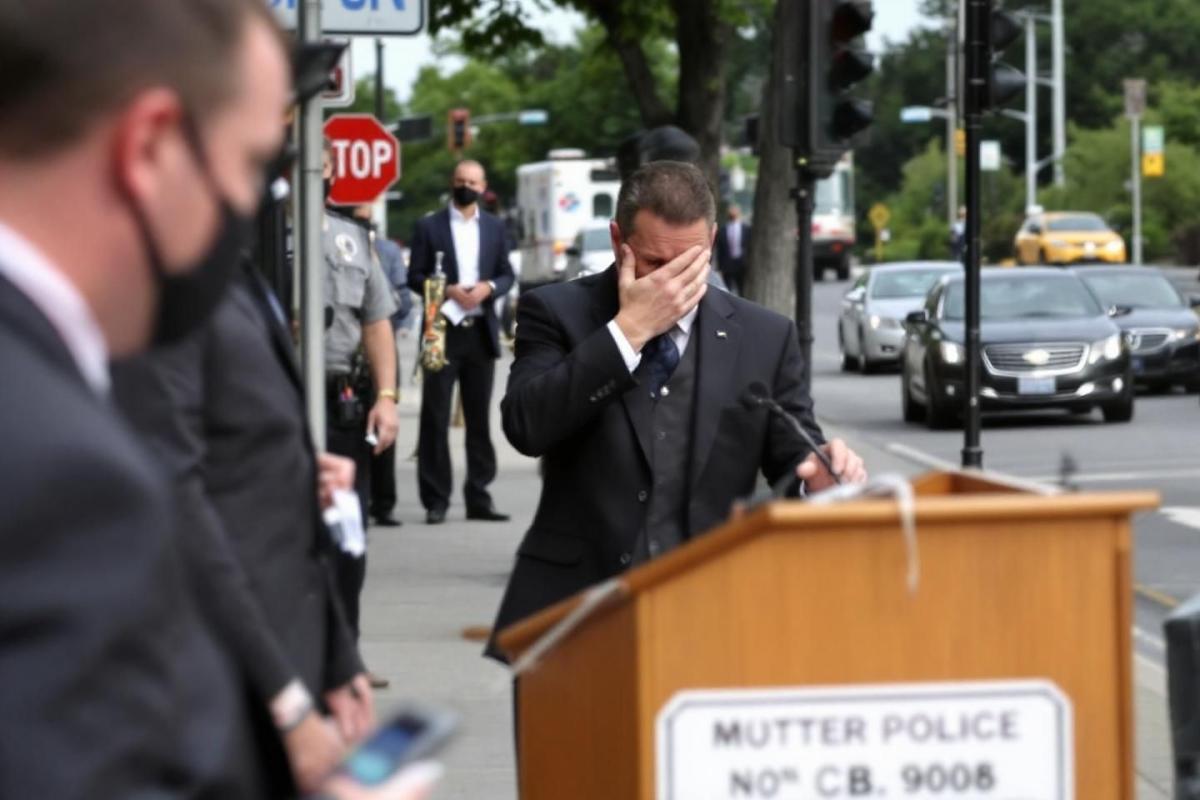
The mayor of Salisbury, Maryland, Randy Taylor, appeared before Wicomico County District Court where he accepted responsibility for a traffic violation that occurred during the summer months. The incident involved a failure to yield to a pedestrian who was lawfully crossing at a designated intersection, raising questions about public officials’ adherence to traffic regulations and their accountability to the communities they serve.
Details of the traffic incident involving the Salisbury official
The events unfolded at the busy intersection of South Boulevard and Route 13, where Randy Taylor attempted to execute a right turn while the traffic signal displayed red. According to testimony presented by state prosecutors, a pedestrian was actively using the crosswalk at that precise moment. The individual was navigating the intersection with the assistance of a mobility device, which became damaged during the encounter with the mayor’s vehicle.
While the pedestrian fortunately sustained no physical injuries, his walker suffered significant damage that rendered it unusable. Court documents indicate that following the incident, Taylor took steps to address the situation by assisting the affected individual in obtaining a replacement mobility aid. This gesture, while appreciated, did not eliminate the legal consequences associated with the traffic violation that had occurred.
The intersection where this incident took place represents a critical juncture in Salisbury’s road network, where vehicle traffic frequently intersects with pedestrian movement. Such locations demand heightened awareness from drivers, particularly when executing turns at traffic signals. The presence of crosswalks serves as a clear indication that pedestrian right-of-way must be respected, regardless of a driver’s intention to proceed through or around an intersection.
Legal proceedings and sentencing outcome
The traffic citation carried potential penalties that included incarceration for up to 60 days, reflecting the seriousness with which Maryland law treats violations involving pedestrian safety. However, prosecutors recommended a more measured approach to sentencing, taking into account various factors including the mayor’s cooperation and his efforts to rectify the damage caused to the victim’s property.
The judicial ruling resulted in a monetary penalty of $500, which Taylor was ordered to pay. This financial consequence represents the court’s determination of an appropriate sanction for the violation, balancing accountability with proportionality. The victim himself attended the court proceedings and demonstrated remarkable understanding regarding the situation, stating publicly that he harbored no resentment toward the mayor and acknowledged that such incidents can occur unexpectedly in daily life.
| Aspect of the case | Details |
|---|---|
| Location | South Boulevard and Route 13 intersection |
| Violation type | Failure to stop for pedestrian in crosswalk |
| Maximum penalty | 60 days incarceration |
| Actual sentence | $500 fine |
| Victim status | Uninjured, walker damaged |
This case serves as a reminder that pedestrian safety remains a critical concern in urban environments. Similar incidents, such as the recent pedestrian hit twice and trapped under vehicle in Salisbury, according to police reports, underscore the ongoing challenges communities face in protecting vulnerable road users.
Political context and community reaction
The traffic violation occurred against a backdrop of existing tensions within Salisbury’s municipal government. Councilwoman Michele Gregory has been vocal in her criticism of the mayor’s leadership, citing this incident as part of a broader pattern of what she characterizes as problematic decision-making. During the week of the court appearance, Taylor had also generated controversy through his actions regarding rainbow crosswalks in the downtown district, which were paved over under his direction.
Gregory’s public statements reflected mounting frustration among some council members with the mayor’s tenure. She articulated concerns that have accumulated over a two-year period, describing a series of what she termed mistakes and shortcomings. The councilwoman’s assertion that “enough is enough” signals potential challenges ahead for Taylor’s administration and suggests growing discord within the city’s leadership structure.
When approached by journalists from WBOC for comment on Gregory’s criticism, Taylor’s response was notably brief and somewhat cryptic. He began to address the characterization of his actions as a mistake before declining to elaborate further and departing from the conversation. This limited engagement with media inquiries leaves questions about how the mayor perceives both the traffic incident and the broader critiques of his leadership style.
Implications for pedestrian safety and official accountability
This case highlights several important considerations regarding traffic safety and the responsibilities of elected officials. The circumstances underscore how even experienced drivers can fail to exercise adequate caution at intersections, particularly when multiple factors demand attention simultaneously. The following elements contributed to this particular incident :
- Attempting a right turn while the signal displayed red
- Insufficient visual scanning for pedestrians in the crosswalk
- The presence of a vulnerable road user with reduced mobility
- The complex nature of busy intersection navigation
Public officials face heightened scrutiny regarding their conduct, both in their professional capacities and in their personal behavior. When elected leaders violate traffic laws, particularly those designed to protect pedestrian safety, it raises legitimate questions about accountability standards and appropriate consequences. The resolution of this case through a guilty plea demonstrates acceptance of responsibility, though opinions differ regarding whether the penalty adequately addresses the violation.
Moving forward, this incident may serve as a catalyst for renewed emphasis on pedestrian safety measures throughout Salisbury. Communities nationwide grapple with balancing efficient vehicle traffic flow against the imperative to protect those traveling on foot or using mobility assistance devices. Enhanced crosswalk visibility, improved signage, and driver education initiatives represent potential strategies for reducing similar incidents in the future and ensuring that all road users can navigate urban environments safely and confidently.

- UK wood electricity generation hits record high, Drax data reveals - October 18, 2026
- UK wood electricity generation hits record high, Drax data reveals - October 18, 2026
- England league-union hybrid match proposed for 2026 - October 16, 2026

