
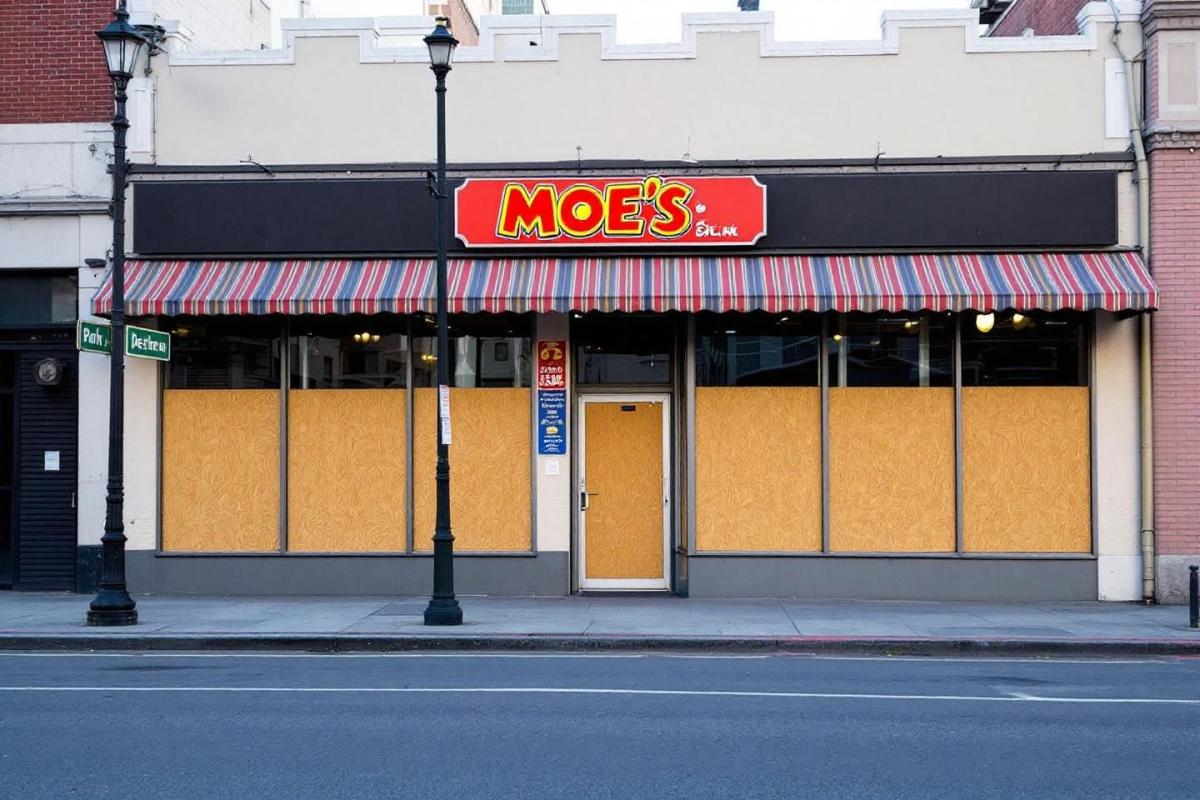
The north Salisbury dining landscape has shifted dramatically with the permanent closure of a popular Mexican-inspired eatery. Located at 109-B Hampshire Road, the Moe’s Southwest Grill restaurant near Walmart Super Center has shuttered its doors for good, leaving residents wondering about the future of this prime commercial space. This development represents another chapter in the evolving retail and restaurant scene across Salisbury, Maryland, where businesses continue to adapt to changing market conditions.
A new tenant is already being negotiated for the former restaurant site
Property management firm SVN | Miller has wasted no time in seeking a replacement tenant for the vacant location. Dylan Mezick, serving as an associate advisor with the company, provided insights into the current status during a December 8 conversation. The commercial property officially hit the market in mid-November, triggering immediate interest from potential business operators.
According to Mezick, negotiations are currently underway with prospective tenants who could bring something entirely novel to the Salisbury market. This tantalizing hint suggests that residents might soon experience a business concept previously unavailable in the area. The swift transition from closure to active negotiations demonstrates the property’s attractiveness and its strategic location near major retail anchors.
The Hampshire Road corridor continues to attract commercial interest despite occasional turnover. Positioned adjacent to one of the region’s busiest shopping destinations, the site offers excellent visibility and accessibility for any incoming business. Real estate professionals view this location as highly desirable due to consistent traffic patterns and established customer bases in the surrounding area.
While specific details about the incoming tenant remain confidential during ongoing negotiations, the promise of a fresh dining or retail concept has generated considerable local excitement. Similar business transitions in Salisbury have previously brought welcome additions to the community, mirroring patterns seen elsewhere, such as when K J Cole Ltd closes doors : Salisbury hardware store ends 60-year legacy.
Understanding the factors behind restaurant closures in regional markets
Restaurant closures in mid-sized markets like Salisbury typically stem from multiple interconnected factors. While specific reasons for this particular closure haven’t been publicly disclosed, industry-wide challenges provide context for understanding such business decisions. The fast-casual dining sector has faced significant headwinds in recent years, reshaping the competitive landscape.
Several key elements influence restaurant viability in regional markets :
- Operating costs including rising labor expenses and supply chain disruptions
- Shifting consumer preferences toward different dining concepts or delivery services
- Competition intensity from both established chains and emerging local establishments
- Real estate considerations and lease terms that may no longer align with business performance
- Corporate-level strategic decisions affecting multiple franchise or company-owned locations
The Mexican-inspired fast-casual segment has experienced particular volatility as consumers explore diverse culinary options. Established players must continually innovate their menu offerings and customer experience to maintain market share. Franchise operators often face additional pressures balancing corporate expectations with local market realities.
Geographic factors also play crucial roles in restaurant sustainability. North Salisbury has witnessed significant commercial development, creating both opportunities and challenges for existing businesses. The concentration of dining options in relatively compact areas intensifies competition for customer dollars, requiring differentiation and consistent execution.
| Factor category | Impact level | Typical response strategies |
|---|---|---|
| Labor costs | High | Menu pricing adjustments, operational efficiency improvements |
| Customer preferences | Medium to High | Menu innovation, service model adaptation |
| Competition density | Medium | Marketing investments, loyalty program enhancements |
| Real estate expenses | Medium | Lease renegotiation, location consolidation |
Major fast-food expansion signals continued growth in Salisbury’s dining sector
While one establishment closes, another significant player prepares to expand its footprint. Construction continues advancing on Salisbury’s fourth Chick-fil-A location at 828-840 South Salisbury Boulevard along Route 13. This south-side development represents substantial investment in the local market and confidence in the area’s economic trajectory.
Representatives from the popular chicken-focused chain have indicated that early March 2026 represents their target opening timeframe. This timeline allows for comprehensive construction completion, equipment installation, and staff training. Chick-fil-A’s expansion strategy focuses on markets demonstrating strong population growth and consumer spending patterns, positioning Salisbury as an attractive opportunity.
The contrast between closures and new openings illustrates the dynamic nature of Salisbury’s commercial real estate landscape. Different restaurant concepts appeal to varying customer demographics and dining occasions. Chick-fil-A’s consistent reputation for customer service excellence and operational efficiency has made it a dominant force in fast-food segments across Maryland, where the chain operates 91 locations.
South Salisbury Boulevard represents a strategic location for restaurant development, benefiting from substantial traffic volumes and proximity to residential neighborhoods. The fourth location will complement existing Chick-fil-A restaurants while serving areas previously requiring longer drives. This geographic distribution strategy helps maximize market penetration while minimizing cannibalization between locations.
What these changes mean for local residents and the business community
Business transitions in retail corridors create both challenges and opportunities for communities. Local residents lose familiar dining options but gain potential access to new culinary experiences or service providers. The relatively quick turnaround between closure and active property marketing suggests healthy demand for commercial spaces in Salisbury.
For the broader business community, these developments signal evolving consumer preferences and market conditions. Successful operators must remain adaptable, continuously assessing their value propositions against changing customer expectations. The promise of concepts previously unavailable in Salisbury could introduce innovative business models or regional favorites making their first local appearance.
Employment implications accompany such transitions, as staff from closed establishments seek new opportunities while incoming businesses prepare hiring campaigns. The timing of these changes, occurring as one year ends and another begins, allows affected workers to explore options during a traditionally active hiring period. Restaurant industry experience remains valuable across multiple dining concepts, facilitating workforce transitions.
Commercial property dynamics in Salisbury reflect broader economic health indicators for the region. Active negotiations and continued construction projects demonstrate investor confidence and business interest. These factors contribute to tax revenue generation and job creation, supporting municipal services and community development initiatives throughout the area.

- Salisbury’s Moe’s has permanently closed : here’s what’s happening now - October 29, 2026
- The Ashes 2025-26 : Andy Zaltzman on how statistical history offers England little hope - October 28, 2026
- England fights to avoid worst Ashes tour in modern Australia history - October 27, 2026

