
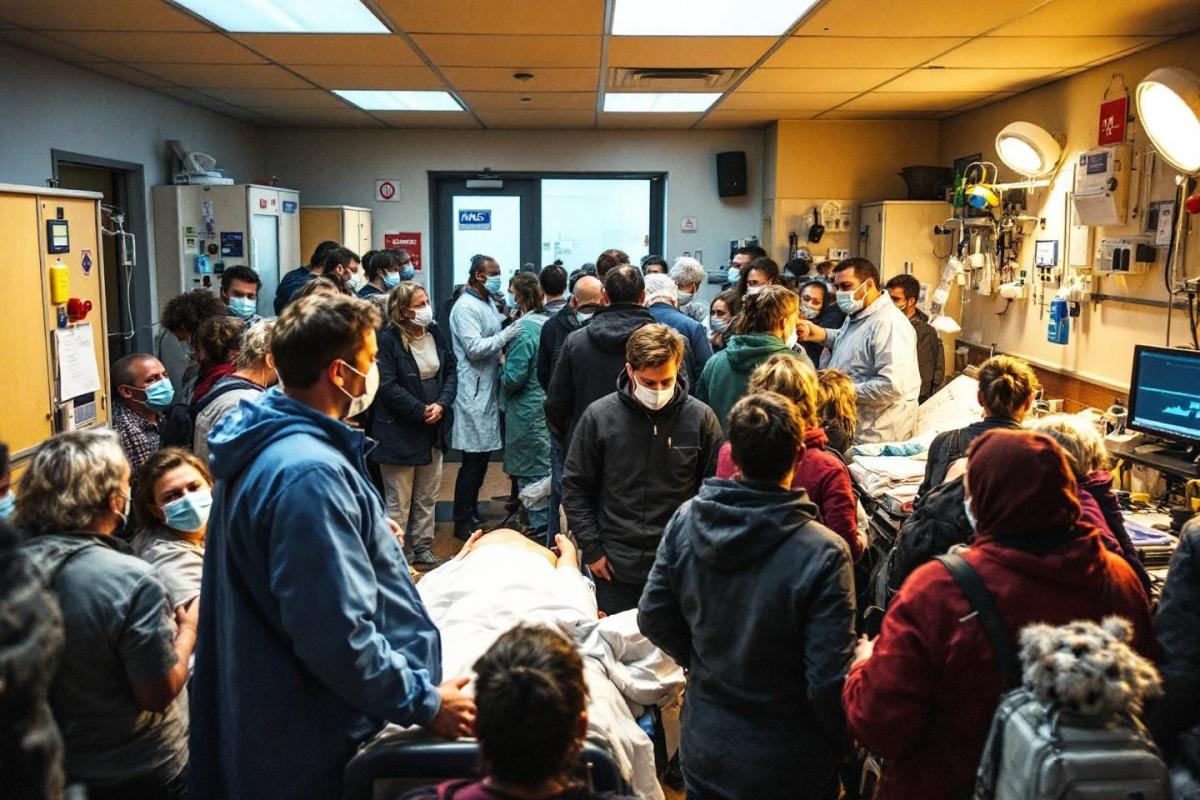
The National Health Service across England finds itself grappling with an extraordinary influenza outbreak that continues to intensify without showing signs of slowing down. Hospital admissions linked to the viral infection have surged dramatically, creating significant pressure on healthcare facilities already stretched thin during the winter months. Medical professionals describe the situation as unprecedented in recent memory, with infection rates climbing at alarming speeds throughout communities and clinical settings alike.
Unprecedented surge strains healthcare capacity across the nation
Recent data reveals that daily flu admissions in hospitals have reached 2,660 cases on average over the seven-day period ending Sunday. This represents a staggering 50% increase compared to the previous week, and officials indicate the upward trajectory has persisted throughout current days. NHS England characterizes the scale by noting it equals having three entire hospitals filled exclusively with influenza patients, with certain facilities reporting nearly 10% of their beds occupied by individuals suffering from the virus.
Healthcare administrators express growing concern that patient numbers may exceed 5,000 by weekend, creating what Professor Meghana Pandit describes as a worst-case scenario for this period. The medical director emphasizes how staff members face extreme workloads while striving to maintain quality patient care standards. This wave affects populations differently, with hospital admission rates peaking among individuals over 75 years and children under five, though young people aged five to 14 show the highest positivity rates for viral detection.
The situation extends beyond England’s borders, affecting the entire United Kingdom. Scotland recorded a 25% increase in confirmed cases over the last week, accompanied by a 15% rise in hospital admissions. Wales and Northern Ireland report similar patterns, with children and young populations experiencing particularly significant infection rates. Some educational institutions have implemented Covid-era protective measures to curb transmission, with at least one Caerphilly school closing temporarily and several Aberdeenshire schools reducing operational hours.
| Region | Weekly increase | Most affected groups |
|---|---|---|
| England | 50% rise in admissions | Over 75s and under 5s |
| Scotland | 25% case increase | Children and young people |
| Wales | Similar rising pattern | Youth populations |
| Northern Ireland | Comparable increases | Young demographics |
Mutated viral strain challenges population immunity
This season’s influenza outbreak began approximately one month earlier than typical annual patterns, driven by a mutated strain of the virus. The dominant H3N2 variant carries genetic modifications not previously encountered by the general population, potentially explaining reduced immunity levels. Health Secretary Wes Streeting described the challenge in stark terms, stating that hospital admissions could triple before reaching peak levels, with uncertainty surrounding when that peak might occur.
Writing in the Times, Streeting emphasized : “This winter, our NHS faces a challenge unlike any it has seen since the pandemic.” The statement underscores the exceptional nature of current circumstances. While hospital flu numbers stand at their highest level for this time of year since record-keeping began in 2021, officials note this data set doesn’t capture the two worst influenza seasons of the past 15 years, which occurred in 2014-15 and 2017-18.
The UK Health Security Agency monitors infection levels across both community and hospital settings, indicating that rates continue climbing, though perhaps less sharply than the preceding week. However, Dr Conall Watson, an infectious diseases expert at UKHSA, cautions against interpreting this as evidence of peaking. He stresses the virus remains unpredictable, warning that temporary lulls can precede renewed surges. The public health concern extends beyond influenza, as norovirus cases also rise, with more than 350 hospital beds occupied by patients suffering from the vomiting bug. Such a challenging environment has drawn criticism regarding the healthcare system’s capacity. As communities continue managing these viral threats, the importance of preventative measures remains paramount, much like the coordination required during emergency response situations that test our collective resilience.
Vaccination efforts accelerate amid time-sensitive protection needs
Health officials strongly encourage eligible populations to receive influenza vaccinations before holiday gatherings intensify viral transmission opportunities. Dr Watson emphasizes that “there is still plenty of flu vaccine available,” though warns that time for pre-Christmas protection runs short. Free NHS vaccinations target specific groups including :
- Individuals aged 65 and older
- People with certain chronic health conditions
- Pregnant women throughout any trimester
- Healthcare workers and caregivers
The vaccination requires approximately two weeks following administration to develop fullest protective immunity, making immediate scheduling critical for those planning family gatherings. This timeframe means individuals vaccinated now would achieve peak protection just before Christmas celebrations, when household mixing increases transmission risks.
Healthcare workforce pressures mount amid planned industrial action
The crisis unfolds as resident doctors, formerly known as junior doctors, prepare for potential strike action scheduled to begin next week. The British Medical Association agreed to poll members regarding acceptance of a fresh offer from Health Secretary Streeting, with results expected Monday. Prime Minister Sir Keir Starmer characterized the BMA’s position as “irresponsible,” urging acceptance particularly given current flu pressures approaching Christmas.
Daniel Elkeles from NHS Providers articulates the urgency : “The NHS is in the thick of a storm come early. Flu is hitting hard and other winter bugs are surging.” He appeals for doctors to step back from planned walkouts, describing the government’s offer as sensible and the dispute as damaging. Dr Vicky Price, president of the Society for Acute Medicine, describes how winter viruses strain an already fragile system, with patients experiencing extended waits in accident and emergency departments as staff face overwhelming patient volumes.
However, Price criticizes using the outbreak as a “convenient scapegoat” for what she terms predictable capacity breakdowns stemming from workforce shortages. She argues that emergency department conditions have deteriorated such that former critical incidents now appear routine, representing not isolated emergencies but culmination of systemic failure demanding comprehensive solutions beyond immediate crisis management.

- Super flu wave hits hospitals in England with no peak yet - November 1, 2026
- How long Britain could really fight for if war broke out tomorrow - October 31, 2026
- Scientists discovered the truth about 16 mysterious pits near Stonehenge - October 30, 2026

