
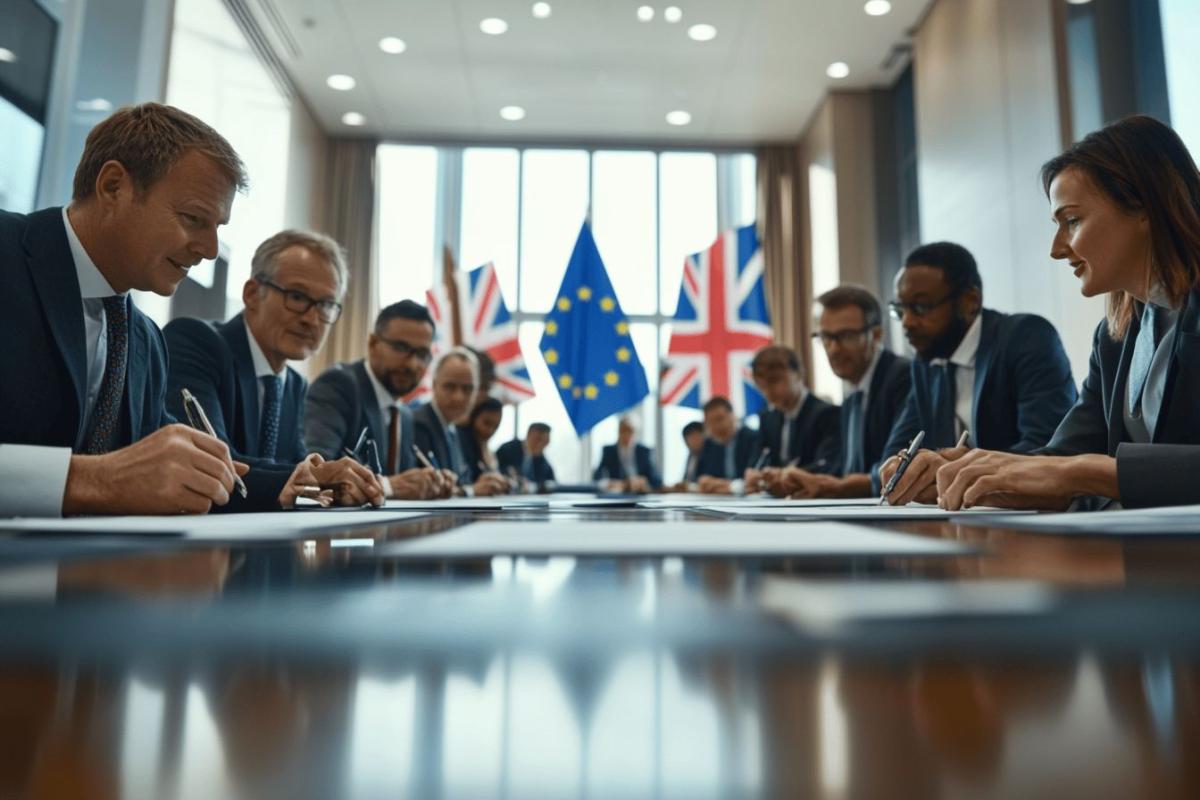
British travelers will soon enjoy smoother journeys through European airports as the UK reaches a landmark agreement with the European Union. This breakthrough deal allows British passport holders to use e-gates across Europe, significantly reducing waiting times at border control points. The agreement marks a major development in UK-EU relations since Brexit and comes as part of broader negotiations ahead of an important summit in London.
Streamlining travel for British passport holders
The new arrangement between the UK and EU represents a significant improvement for British travelers entering European countries. Currently, UK citizens face longer queues as they must have their passports physically stamped when arriving at most European airports. This process has been a source of frustration for many holidaymakers since Brexit took effect.
Under the forthcoming agreement, British travelers will gain access to automated e-gates previously reserved exclusively for EU and European Economic Area passport holders. This change effectively eliminates the two-queue system that has been in place since the UK’s departure from the European Union.
While some countries like Portugal and Spain had already independently introduced e-gates accepting British passports, the Foreign Office still advised UK travelers to get passport stamps. The new agreement would standardize access across the EU, providing consistency for British passport holders throughout Europe.
The benefits of this arrangement for British travelers include:
- Significantly reduced waiting times at European airports
- Elimination of the need for manual passport stamping
- Consistent entry procedures across all EU member states
- Enhanced travel experience during peak holiday seasons
Prime Minister Keir Starmer commented that the agreement represents “another step forward” for the UK and would “be good for our jobs, good for our bills and good for our borders.” This sentiment reflects the government’s broader strategy to improve post-Brexit relations with the European Union while delivering practical benefits to British citizens.
Border technology and future travel systems
The e-gate agreement comes at a critical time as the EU prepares to implement new border control systems. The European Union is developing an Entry/Exit System (EES) scheduled to begin operating in October 2025. This system will replace traditional passport stamping with digital recording of entries and exits.
Under the EES, British travelers will need to provide biometric data, including fingerprints and facial scans, when crossing EU borders. Additionally, a separate EU travel authorization system is expected to be operational before the end of 2025.
The UK has already implemented its own Electronic Travel Authorization (ETA) scheme for EU and other international travelers, which launched in April 2025. This system costs £16 and permits multiple visits to the UK of up to six months over a two-year period.
| Travel System | Implementation Date | Applicable To | Features |
|---|---|---|---|
| UK E-gate Access | Summer 2025 | British travelers to EU | Automated border control, reduced waiting times |
| EU Entry/Exit System | October 2025 | All non-EU travelers | Biometric data collection, digital recording |
| UK ETA Scheme | April 2025 (active) | EU and international visitors | £16 fee, valid for multiple entries over two years |
These technological advancements represent a shift toward more efficient border management systems while maintaining necessary security protocols. The coordination of these systems between the UK and EU demonstrates a commitment to practical cooperation despite broader political differences.
Broader implications for UK-EU relations
The e-gate agreement is part of a wider set of negotiations taking place ahead of a highly anticipated UK-EU summit in London. These talks extend beyond travel considerations to encompass security, defense, and economic cooperation.
Chancellor Rachel Reeves has emphasized that the deal represents a “step towards” a deeper and ongoing partnership with Europe. “I am ambitious for our future. This isn’t a one-off. There will be things that we achieve, some concrete outcomes on Monday, but there will also be a step towards where we want to go next,” she stated.
Several additional mobility-related issues are under discussion between British and European negotiators, including:
- Simplifying visa processes for musicians and performing artists touring in Europe
- Developing a youth mobility scheme to allow young Europeans and Britons to temporarily live and work in each other’s territories
- Creating a veterinary agreement to reduce barriers for farming and food industries
- Exploring opportunities for enhanced trade cooperation
The government views these negotiations as part of a broader strategy to restore productive working relationships with European partners while maintaining the UK’s independence. This approach aligns with recent diplomatic successes, including a multibillion-pound free trade agreement with India and a deal to reduce tariffs with the United States.
As Prime Minister Starmer noted, “In this time of great uncertainty and volatility, the UK will not respond by turning inwards, but by proudly taking our place on the world stage – strengthening our alliances and closing deals in the interests of British people.”
The e-gate agreement demonstrates how practical cooperation can deliver tangible benefits for citizens while helping to rebuild trust and goodwill between the UK and EU. This pragmatic approach may set the tone for future negotiations on more complex issues, potentially opening doors to deeper cooperation in areas of mutual interest.

- Salisbury teenager becomes world’s eighth-best BMX racer - March 20, 2026
- Salisbury teenager becomes world’s eighth-best BMX racer - March 20, 2026
- Government expands police use of live facial recognition vans across major cities - March 19, 2026

