
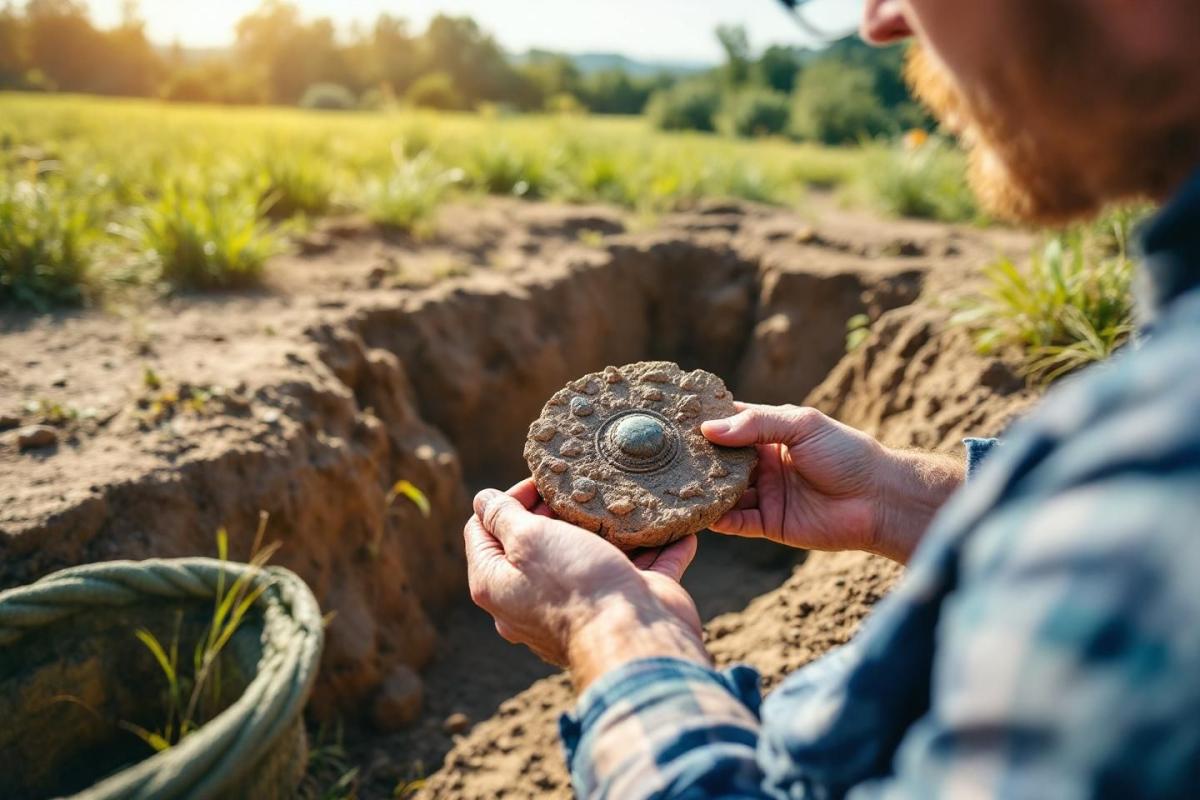
The ancient settlement near Amesbury continues to unveil its secrets as archaeologists uncover remarkable prehistoric artefacts dating back over five millennia. This ongoing excavation project has attracted volunteers from across the globe, transforming a field in Wiltshire into a window to Britain’s distant past. The discoveries shed new light on human activity in the region thousands of years before Stonehenge became the iconic monument we know today.
Ancient island reveals prehistoric treasures from Mesolithic period
The excavation site sits strategically positioned near Amesbury town center, where geological evidence suggests an ancient island once existed within a vast river system. This prehistoric landscape would have provided ideal conditions for early human settlements, offering access to water resources and elevated ground for safety.
Professor David Jacques from the University of Buckingham leads the research efforts, drawing upon his extensive experience from previous excavations at nearby Blick Mead. His team has employed geophysical survey techniques to identify promising areas for excavation, revealing hotspots of ancient human activity across the site.
The Mesolithic Avon Valley project represents a collaborative effort involving multiple universities, focusing on understanding prehistoric life in this archaeologically rich region. The project’s scope extends beyond simple artifact recovery, aiming to reconstruct the daily lives and cultural practices of Britain’s earliest inhabitants.
Among the most significant discoveries are worked flint tools created by skilled craftspeople over 5,000 years ago. These stone implements demonstrate sophisticated knapping techniques and provide insights into the technological capabilities of Mesolithic communities. The finds tent now houses an impressive collection of these prehistoric tools alongside medieval roof tiles, illustrating the site’s continuous occupation across millennia.
International volunteers experience hands-on archaeological training
The excavation has attracted approximately 80 dedicated volunteers from diverse backgrounds, including participants traveling from as far as America to contribute to this remarkable project. This international collaboration brings together amateur enthusiasts and professional archaeologists in a shared quest to uncover Britain’s prehistoric heritage.
Helen Zheng, a first-time volunteer, describes her transformative experience learning archaeological techniques from seasoned professionals. The training encompasses fundamental skills including proper excavation methods, stratigraphic analysis, and artifact identification. Volunteers quickly master the delicate art of trowel work and develop keen eyes for distinguishing between different soil layers.
The excavation process follows established archaeological protocols :
- Careful removal of topsoil to expose archaeological layers
- Systematic recording of artifact locations and contexts
- Detailed documentation of soil changes and features
- Meticulous cleaning and cataloging of recovered items
- Professional photography of significant discoveries
Julie Sauter, an American volunteer, reflects on the profound connection she feels to past civilizations through this hands-on experience. The excavation provides participants with tangible links to ancient human communities, fostering appreciation for prehistoric peoples’ ingenuity and resilience.
Community engagement transforms local archaeological understanding
The Amesbury History Centre has orchestrated a comprehensive week of educational events complementing the excavation work, successfully engaging hundreds of community members in archaeological discovery. This grassroots approach democratizes access to scientific research and cultivates public interest in local heritage preservation.
The community engagement program demonstrates the powerful impact of participatory archaeology on public understanding of prehistoric Britain. Local residents gain firsthand experience with archaeological methods while contributing meaningfully to scientific research. This collaborative model establishes lasting connections between professional archaeologists and community stakeholders.
| Period | Artifact Types | Cultural Significance |
|---|---|---|
| Mesolithic (5000+ years ago) | Worked flints, stone tools | Evidence of pre-Stonehenge settlement |
| Medieval | Roof tiles, pottery fragments | Continuous occupation patterns |
| Modern | Various household items | Recent land use history |
The excavation’s proximity to world-famous Stonehenge adds particular significance to these discoveries, as they provide crucial context for understanding the broader prehistoric landscape. The artifacts reveal that sophisticated human communities thrived in this region long before the megalithic monument’s construction, challenging traditional narratives about early British civilization.
Scientific discoveries reshape prehistoric British chronology
The Amesbury excavations contribute valuable data to ongoing research into Britain’s prehistoric timeline, particularly regarding Mesolithic period settlements in the Avon Valley region. These findings complement previous discoveries at Blick Mead, gradually building a comprehensive picture of early human activity in this archaeologically significant landscape.
The recovered artifacts span multiple historical periods, demonstrating the site’s strategic importance across thousands of years of human occupation. This temporal depth provides researchers with unique opportunities to study cultural continuity and change over extended timeframes, revealing patterns of technological innovation and social development.
The geophysical survey data guides excavation priorities, ensuring maximum scientific value from limited resources. This targeted approach has proven highly effective, consistently yielding significant discoveries that advance understanding of prehistoric British communities and their relationship with the surrounding environment.
Future research phases will likely expand the excavation area and incorporate additional scientific techniques, including radiocarbon dating and environmental analysis. These methods will provide precise chronological frameworks and reconstruct ancient ecosystems, further illuminating the lives of Britain’s earliest inhabitants in this remarkable archaeological landscape.

- Change to forecast imminent after big freeze brings milder weather conditions - September 23, 2026
- Once-extinct European wildcats set to make a comeback in England - September 21, 2026
- Joe Salisbury takes break from tennis due to anxiety struggles - September 20, 2026

