
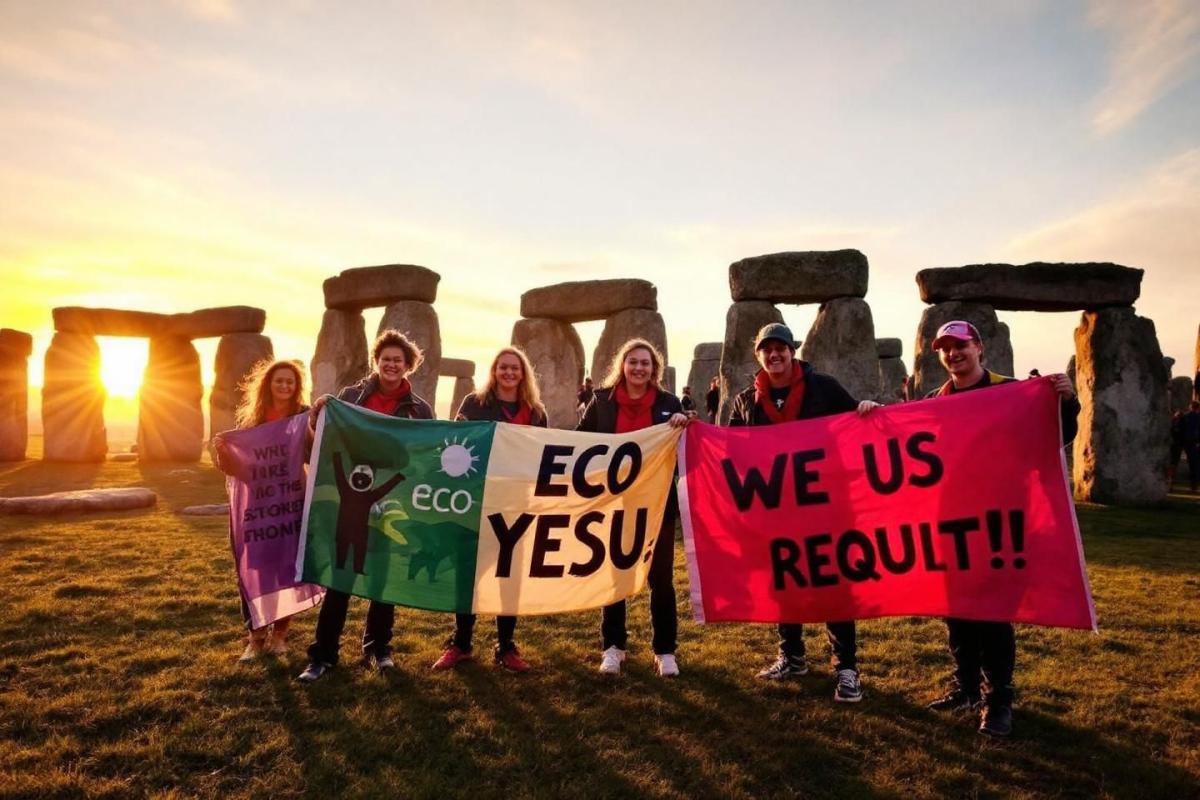
Three climate protesters from the environmental group Just Stop Oil successfully avoided criminal charges after their controversial action at the ancient monument of Stonehenge last summer. The Salisbury Crown Court jury delivered their verdict on Friday, October 31, clearing Luke Watson, Rajan Naidu, and Niamh Lynch of all criminal damage allegations related to their orange powder demonstration at the prehistoric site.
Court verdict delivers victory for environmental protesters
The jury’s decision represents a significant legal victory for the climate activism movement, particularly regarding freedom of expression and the right to peaceful protest. Watson faced charges of aiding and abetting the destruction of an ancient protected monument, while both Naidu and Lynch were charged with damaging the heritage site and causing public nuisance.
Following the acquittal, Rajan Naidu expressed his satisfaction with the outcome, stating his commitment to environmental causes. “Life and survival before greed and profit ! We need a global fossil fuel non-proliferation treaty right now,” he declared outside the courthouse, emphasizing the activists’ core message about urgent climate action.
The legal team for the defendants successfully argued that their actions fell under the protection of Articles 10 and 11 of the European Convention on Human Rights, which guarantee freedom of speech and assembly. This constitutional defense proved crucial in securing their acquittal, establishing important precedent for future environmental protests.
Judge Paul Dugdale acknowledged the complexity of balancing protest rights against heritage protection, describing it as a difficult legal question to navigate. His remarks highlighted the ongoing tension between environmental activism and cultural preservation in modern society.
Details of the Stonehenge incident and environmental message
The demonstration occurred in June 2024 when the activists targeted the 5,000-year-old stone circle with a specially prepared mixture. The protesters used a combination of cornflour, talcum powder, and orange dye to coat several of the ancient stones, creating a dramatic visual statement about climate urgency.
| Activist Name | Charges Filed | Court Outcome |
|---|---|---|
| Luke Watson | Aiding and abetting damage | Not guilty |
| Rajan Naidu | Monument damage, public nuisance | Not guilty |
| Niamh Lynch | Monument damage, public nuisance | Not guilty |
The action was strategically timed to coincide with political developments, as the activists called for the UK’s incoming government to commit to a legally binding fossil fuel treaty. Their demands specifically focused on phasing out fossil fuels by 2030 through international cooperation and binding agreements.
Naidu drew historical parallels between their climate activism and past nuclear disarmament efforts, arguing that current environmental threats require similar international treaty frameworks. “Either we end the fossil fuel era, or the fossil fuel era will end us,” he warned during the original demonstration, highlighting the existential nature of climate change.
The activists emphasized their belief that dramatic action was necessary to draw attention to what they consider an impending climate catastrophe. Their choice of Stonehenge as a target was intended to generate maximum media coverage and public discussion about environmental policies.
Heritage concerns and cleanup costs following the protest
Despite the court’s verdict, heritage officials expressed serious concerns about the impact of the demonstration on the ancient monument. English Heritage chief executive Nick Merriman emphasized that the absence of visible damage did not eliminate all harmful effects of the action.
The cleanup operation required specialized techniques to remove the orange substance from the stone surfaces without causing additional damage. Professional conservators worked carefully to restore the monument’s appearance, using methods appropriate for the ancient sandstone structure.
Financial implications of the protest included cleanup costs totaling £620 ($815), demonstrating the practical consequences of such environmental demonstrations. This expense reflects the specialized expertise and careful procedures required to maintain the integrity of world heritage sites.
Merriman also highlighted the emotional and spiritual impact on visitors and communities who hold Stonehenge in special regard. Many people consider the monument sacred, making any interference particularly distressing regardless of the underlying political message.
The incident raises ongoing questions about balancing environmental activism with cultural preservation. While the court found the protesters’ actions legally justified under freedom of expression principles, heritage organizations continue advocating for stronger protections of irreplaceable historical sites.
Previous legal proceedings had seen two Just Stop Oil activists plead not guilty to Stonehenge damage charges, setting the stage for this significant court victory. The successful defense strategy may influence future cases involving environmental protests at protected cultural sites, potentially reshaping the legal landscape for climate activism in the UK.

- England league-union hybrid match proposed for 2026 - October 16, 2026
- England league-union hybrid match proposed for 2026 - October 16, 2026
- Body found in Salisbury with no signs of foul play, police say - October 15, 2026

