
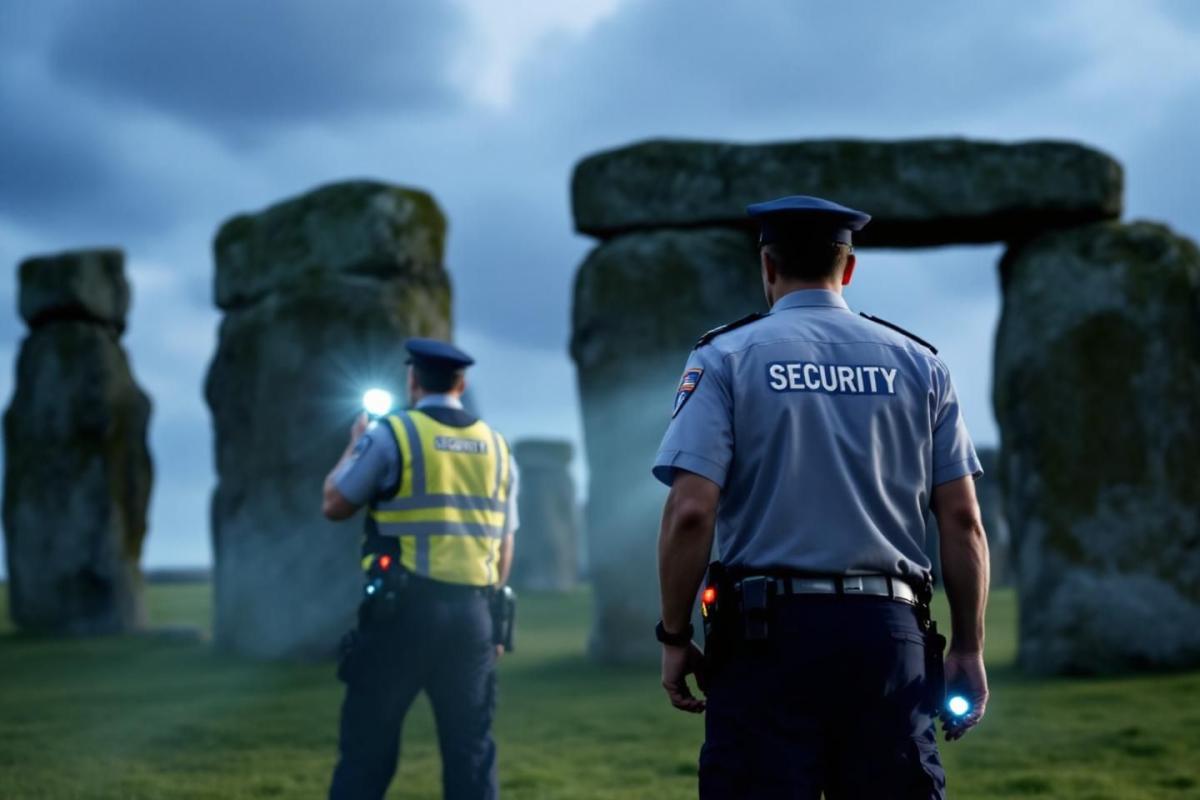
The security measures at Britain’s most famous prehistoric monument have been significantly enhanced following a daring heist at Paris’s renowned art museum. Stonehenge security protocols now include specialized training programs designed to identify potential threats and suspicious activities around the ancient site.
Enhanced security training for heritage site volunteers
English Heritage has implemented comprehensive hostile reconnaissance training for staff and volunteers at Stonehenge following the October robbery in France. The training focuses on recognizing unusual behavior patterns and identifying potential security risks at the historic site.
The ancient stone circle, constructed approximately 5,000 years ago, carries an estimated value of £51 million according to 2010 assessments. This substantial worth has prompted heritage officials to reassess security measures across all managed properties throughout England.
Volunteers receive detailed guidance on spotting suspicious activities, though some express skepticism about the practicality of such measures. One volunteer questioned the effectiveness of training civilians to confront organized criminal gangs, particularly given the remote location and massive scale of the megalithic stones.
The training program covers several key areas designed to protect cultural heritage sites :
- Recognition of surveillance activities and unusual photography patterns
- Identification of potential escape routes and vehicle positioning
- Documentation of suspicious equipment or tools near the site
- Proper communication protocols with security personnel and law enforcement
The Louvre heist that sparked international concern
On October 19th, criminals executed a sophisticated daylight robbery at the Louvre Museum in Paris, stealing crown jewels valued at £76 million. The thieves arrived with specialized equipment, including a vehicle-mounted mechanical lift, shortly after the museum’s 9 :30 AM opening time.
Two perpetrators gained access through a first-floor window of the Galerie d’Apollon using battery-powered disc cutters. After threatening security guards who subsequently evacuated the premises, the criminals broke into multiple display cases containing diamond and gemstone-encrusted artifacts from 19th-century French royalty.
Nine precious items were stolen during the brazen attack, with evidence suggesting the thieves dropped at least one damaged crown during their hasty escape. The incident prompted heightened security measures at cultural institutions across France and subsequently influenced security protocols at heritage sites throughout Europe.
| Security Measure | Implementation Timeline | Target Sites |
|---|---|---|
| Hostile reconnaissance training | Immediate | All English Heritage properties |
| Enhanced surveillance protocols | Within 30 days | High-value heritage sites |
| Volunteer security briefings | Ongoing | Major archaeological sites |
Challenges of protecting ancient monuments
The practical difficulties of stealing 30-tonne Stonehenge stones present unique security challenges compared to traditional museum artifacts. Unlike portable treasures, these megalithic structures would require extraordinary logistical planning and heavy machinery for any attempted theft.
Heritage site security faces particular complexities due to the outdoor nature and remote locations of many archaeological monuments. Unlike enclosed museums with controlled access points, ancient sites like Stonehenge must balance public accessibility with protection measures.
Recent incidents have highlighted vulnerabilities at historic sites, including vandalism attacks using spray paint that required arrests and cleanup efforts. These events demonstrate the ongoing need for vigilant protection of irreplaceable cultural heritage.
Some volunteers question whether civilian training adequately prepares them for confronting organized criminal enterprises. The remote locations of many heritage sites, combined with limited staffing, create additional security concerns that traditional museum protocols may not address effectively.
Ongoing security adaptations across heritage sites
English Heritage officials acknowledge that the Louvre incident served as a crucial reminder about existing security procedures and the importance of maintaining alertness to suspicious behavior patterns. The organization continues evaluating and updating protection measures across its extensive network of historic properties.
The charity manages numerous sites throughout England, ranging from ancient monuments to medieval castles, each presenting distinct security challenges. Some locations contain valuable artifacts and collections, while others primarily offer historical significance rather than portable treasures.
Security training programs now emphasize the importance of early detection and proper communication channels rather than direct confrontation with potential thieves. Staff members learn to document suspicious activities and coordinate with law enforcement agencies when necessary.
Heritage protection strategies continue evolving in response to changing criminal methodologies and technological capabilities. The balance between public access and security remains a constant consideration for organizations responsible for preserving Britain’s archaeological treasures for future generations.

- UK wood electricity generation hits record high, Drax data reveals - October 18, 2026
- UK wood electricity generation hits record high, Drax data reveals - October 18, 2026
- England league-union hybrid match proposed for 2026 - October 16, 2026

