
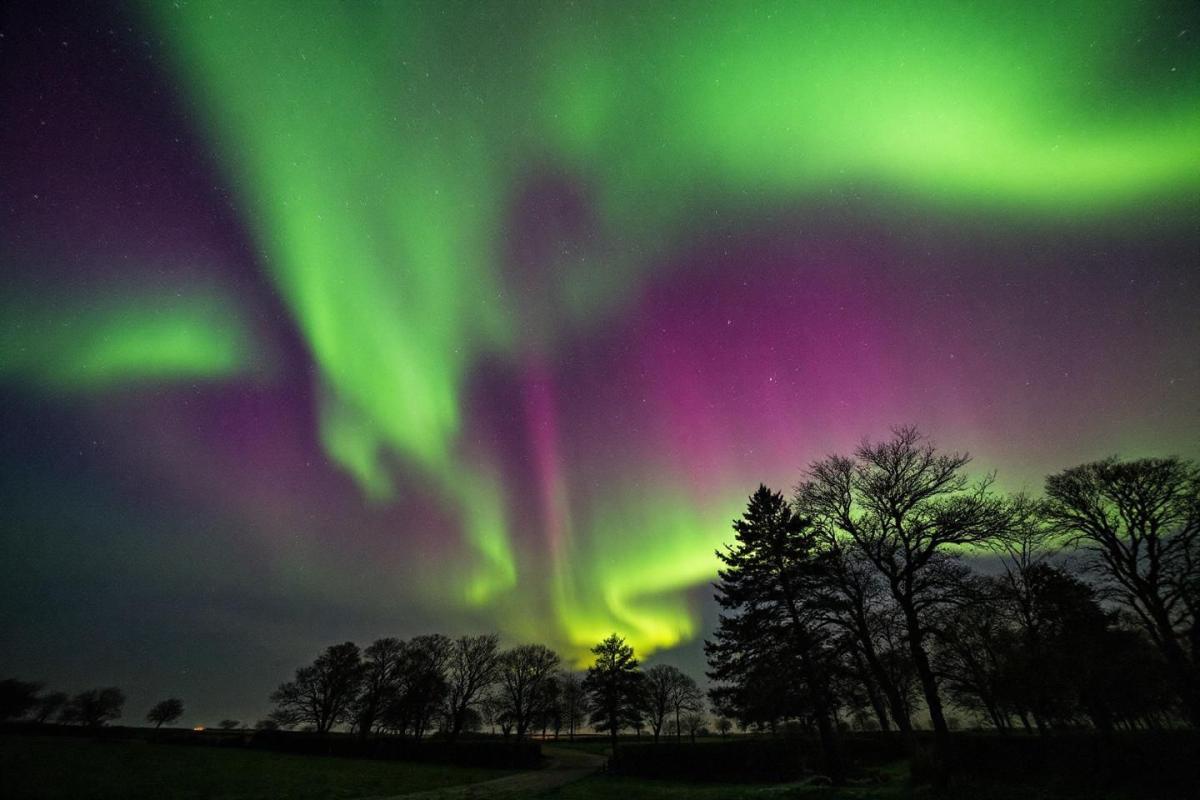
The celestial spectacle known as aurora borealis may grace British skies this week, offering residents a rare opportunity to witness one of nature’s most breathtaking phenomena. A powerful geomagnetic disturbance is forecast to impact Earth’s magnetic field, with activity levels potentially reaching severe classifications that could push the luminous displays further south than usual across the United Kingdom.
Understanding the solar activity behind the auroral display
The Sun currently finds itself in an exceptionally active period, characterised by multiple explosive eruptions from its outer atmosphere. These events, scientifically termed Coronal Mass Ejections, propel vast quantities of charged plasma particles toward our planet at tremendous velocities. When these solar particles collide with gases in Earth’s upper atmosphere, they create the mesmerising light shows we recognise as northern lights.
According to monitoring agencies, three distinct CMEs are currently travelling through space on a trajectory toward Earth. The National Oceanographic Atmospheric Administration has classified this event with significant concern, predicting intensity levels that could reach G3 or even G4 on their storm classification scale. Additionally, observers have detected what appears to be the most powerful solar flare of the current solar cycle, adding electromagnetic radiation to the mix of space weather phenomena approaching our planet.
These massive bursts of electromagnetic radiation move at light speed, covering the distance from the Sun to Earth in approximately eight minutes. The plasma material, however, takes considerably longer to arrive, sometimes requiring several days to complete its journey through the solar system.
What geomagnetic storms mean for our planet
When discussing geomagnetic storms, we refer to temporary disturbances in Earth’s magnetic field lasting from minutes to hours. These phenomena result from the interaction between solar wind and our planet’s magnetosphere. The KP index, which measures geomagnetic activity on a scale from KP1 to KP9, classifies this particular storm as a rare KP8 event, suggesting exceptional conditions for auroral visibility.
Historical precedents remind us of space weather impacts on human technology. The Victorian era witnessed the Carrington Event in 1859, when a massive solar eruption disrupted telegraph communications and railway signalling systems across continents. More recently, in 2017, two significant solar flares interfered with GPS navigation systems worldwide, demonstrating our modern vulnerability to solar activity.
| Storm Level | Classification | Potential Impacts | Aurora Visibility |
|---|---|---|---|
| G3 | Strong | Satellite navigation affected, power grid fluctuations | Scotland, Northern England |
| G4 | Severe | Widespread voltage control issues, GPS disruption | Most of UK including southern regions |
| KP8 | Rare Event | Enhanced electromagnetic interference | Visible across entire UK |
While these storms pose no direct threat to humans protected by our atmosphere, astronauts in space face genuine radiation hazards during such events. On Earth, the primary concerns involve technological infrastructure, particularly power distribution networks and satellite-dependent systems including telecommunications and navigation services.
Optimal viewing conditions and timing across Britain
For those hoping to witness this spectacular natural phenomenon, the early hours of Wednesday morning and Wednesday night present the best viewing opportunities. The Met Office Space Weather forecast indicates that northern Scotland and northern England will enjoy particularly favourable conditions, though clear skies could extend viewing possibilities further south.
Tuesday night’s weather patterns suggest developing clear conditions across southern and north-eastern Scotland as weather fronts move southward. Northern Ireland and northern England should experience improving visibility during the latter half of the night. Even regions typically less favoured for aurora viewing, including Wales, the Midlands, and south-west England, may benefit from clearer spells as the night progresses.
For successful aurora hunting, observers should consider these practical steps :
- Identify locations with minimal light pollution and unobstructed views toward the northern horizon
- Check UK weather forecast for updated conditions throughout the viewing period
- Utilise camera equipment with long exposure capabilities, as photographic sensors often capture details invisible to the naked eye
- Allow sufficient time for eyes to adjust to darkness, typically requiring 20 to 30 minutes
- Monitor real-time aurora forecasts and space weather alerts for optimal timing
Wednesday night presents more challenging conditions, with cloud cover likely across many regions. However, early opportunities may emerge for East Anglia, whilst northern Scotland could see clearing skies later in the evening.
Preparing for future auroral events
This week’s anticipated display represents just one chapter in the Sun’s ongoing active phase. As our star progresses through its approximately eleven-year cycle, similar opportunities for aurora observation will likely arise with increasing frequency. The current solar maximum period means that charged particles regularly stream toward Earth, creating multiple chances for skygazers to experience these extraordinary light displays.
The scientific community continues monitoring solar activity through sophisticated instruments and satellite networks. These observations not only help predict auroral displays but also protect critical infrastructure from potential disruptions. Understanding the behaviour of coronal plasma and electromagnetic radiation remains essential for our increasingly technology-dependent society.
Even if weather conditions or timing prove unfavourable this week, patience rewards dedicated aurora enthusiasts. Space weather forecasting has advanced considerably, providing reliable advance warning of geomagnetic storms. Those who miss this particular event should remain vigilant for future alerts, as the coming months promise additional opportunities to witness the northern lights dancing across British skies during this exceptional period of solar activity.


