
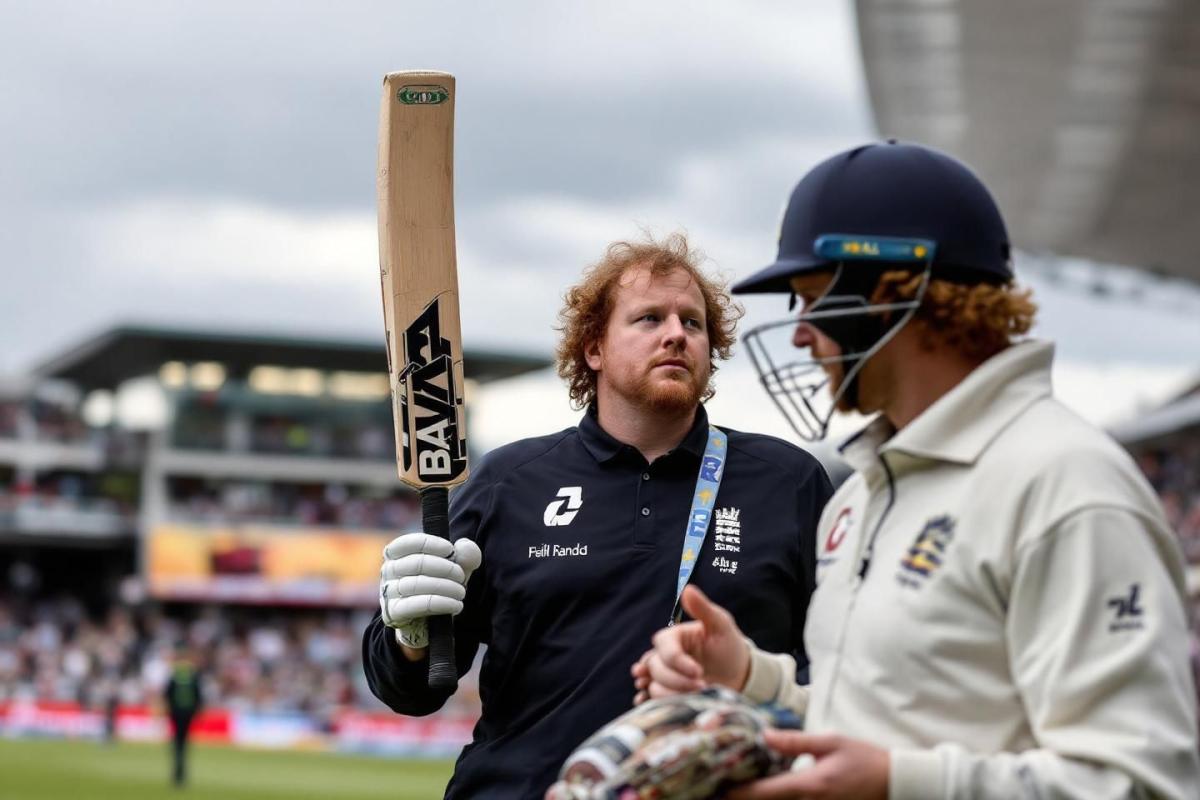
The statistical landscape of Test cricket reveals a harsh reality for England supporters following their side’s struggles in the opening matches of this Australian campaign. The numbers paint an unforgiving picture, one that Ben Stokes and his squad must somehow rewrite if they are to achieve what few teams have accomplished in the sport’s lengthy narrative.
Historical patterns reveal England’s uphill battle
When examining the historical record since the Second World War, England’s dominance in the wrong category becomes strikingly apparent. The team has found itself trailing by two matches after the opening encounters on 17 occasions, whilst Australia has experienced this predicament merely twice. Those Australian instances occurred in 2013 and during the 1978-79 season, when World Series Cricket had depleted their available talent pool considerably.
What makes the current scenario particularly challenging is the pattern that follows such deficits. In 16 of the 18 previous post-war series where a side trailed 2-0, the losing team ultimately surrendered the series by at least three matches. The 1994-95 campaign offered a minor deviation, with England limiting their damage to a 3-1 defeat. Only during the 2023 series did England genuinely threaten to overturn such a disadvantage, though statistical probability remained firmly against them throughout that contest.
The contrast between recent campaigns highlights the steepness of England’s current challenge. Two years ago, competitive margins characterized the opening defeats, with England’s run-scoring efficiency nearly matching Australia’s. This time, however, the disparity yawns wider, with England averaging 22.7 runs per wicket compared to Australia’s commanding 38.2. These figures mirror disturbingly similar patterns from previous unsuccessful tours in 2021-22 and 2017-18.
Australia’s fortress remains impenetrable for visiting sides
The geographical dimension of England’s struggles cannot be understated. Seventeen consecutive Tests without victory on Australian soil represents a streak exceeded only once in England’s cricketing history. That previous record involved 19 matches without success in Pakistan, though that sequence unfolded across four decades between 1961 and 2000, with 17 draws cushioning the disappointment.
Australia’s dominance over England in recent encounters has been emphatic rather than marginal. Of the 15 defeats in England’s current winless run, three have ended with innings victories for the hosts. When Australia has chased fourth-innings targets, England has consistently lost by substantial margins of eight, nine, or ten wickets. The pattern suggests systematic superiority rather than occasional fortune.
| Metric | England 2023 | England 2025-26 |
|---|---|---|
| Runs per wicket (first 2 Tests) | 34.6 | 22.7 |
| Australia runs per wicket | 35.8 | 38.2 |
| Total overs faced | 304+ overs | 219.1 overs |
| Match outcome after 2-0 deficit | 2-2 (drawn) | TBD |
The brevity of England’s batting displays compounds their difficulties. Having faced just 219.1 overs across both matches, England’s batsmen have spent less time at the crease than any team falling 2-0 behind in Ashes history. This represents 85 fewer overs than during the Mitchell Johnson-inspired demolition of 2013-14, a series remembered for its brutal efficiency.
Lower-order contributions expose critical weakness
One particularly concerning aspect involves the performance differential between the teams’ lower batting orders. Where Australia’s tail-enders have occupied the crease for extended periods and contributed meaningful runs, England’s final partnerships have evaporated with alarming rapidity. The Mitchell Starc-Scott Boland ninth-wicket stand exemplified this contrast, lasting 27.2 overs and fundamentally altering the series momentum.
In comparison, England’s combined eighth, ninth, and tenth-wicket partnerships across four innings have lasted merely 27.5 overs total. This equates to losing a wicket every 14 deliveries, a rate that makes competitive totals mathematically impossible. The disparity becomes more pronounced when examining individual contributions. Players like Gus Atkinson and Brydon Carse, who possess respectable first-class records, have managed just 78 runs from 91 balls combined, whilst Australian tail-enders with inferior domestic averages have shown greater resilience and application. For followers interested in cricket’s broader competitive landscape, India vs England : Live cricket score and updates from 3rd ODI in Ahmedabad offers another perspective on England’s current form across formats.
Statistical anomalies offer minimal comfort
England’s spin bowling has unexpectedly outperformed Australia’s equivalent in wicket-taking, a metric that historically correlates with series success. Over the past five decades, whenever England’s spinners have claimed more wickets than their Australian counterparts after two Tests Down Under, victory has followed. This occurred in 2010-11, 1986-87, and 1978-79, though context matters significantly in each instance.
Additional statistical curiosities provide fragile threads of optimism for those inclined toward numerical comfort. The last occasion England was dismissed in fewer than 80 overs across the opening four innings preceded the triumphant 2005 campaign. Similarly, every seventh-wicket partnership exceeding 90 runs in Australia since the Second World War has accompanied eventual series victory. The Stokes-Jacks 96-run stand therefore technically maintains this pattern, though relying on such narrow precedents requires considerable faith.
However, these statistical outliers must be weighed against overwhelming evidence pointing toward continued Australian supremacy. The hosts have demonstrated tactical flexibility and situational awareness that England has struggled to match beyond isolated passages of play. In Brisbane, Australia’s scoring rate exceeded England’s, marking a departure from typical patterns during the Stokes-McCullum era. England’s bowling economy has deteriorated across both matches, conceding runs at rates above 4.5 per over, representing their fifth and sixth least economical performances since implementing their aggressive philosophy.
The fundamental challenge facing England extends beyond individual performances or temporary setbacks. They must overcome deeply entrenched patterns, historical precedents, and current form differentials simultaneously whilst operating in conditions that have proven consistently inhospitable to their cricket for nearly two decades.

- The Ashes 2025-26 : Andy Zaltzman on how statistical history offers England little hope - October 28, 2026
- England fights to avoid worst Ashes tour in modern Australia history - October 27, 2026
- England and Scotland learn World Cup 2026 kick-off times - October 26, 2026

