
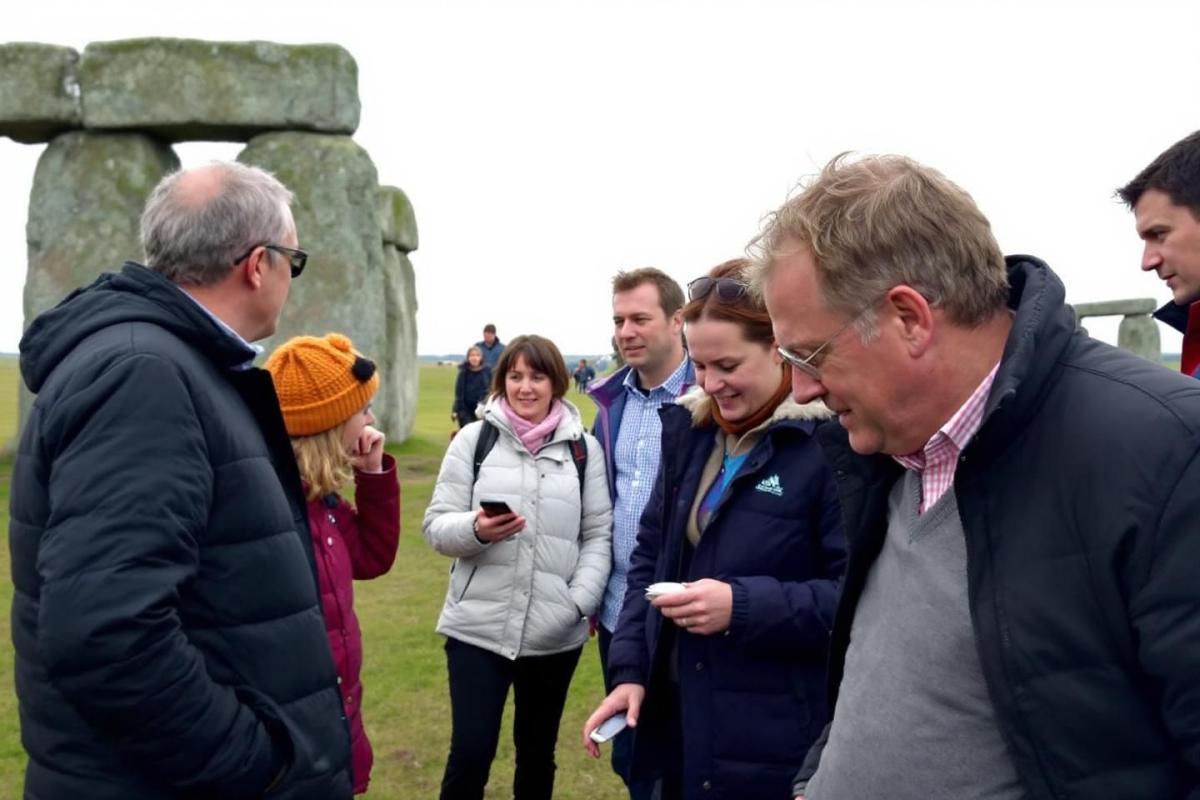
Archaeological investigations at Durrington Walls, situated just north of the iconic Stonehenge monument, have unveiled remarkable evidence about a ring of massive prehistoric pits. These 16 enormous excavations, forming an impressive circular pattern spanning over 1.25 miles in diameter, have been definitively confirmed as deliberately constructed structures from the Neolithic era. Advanced scientific analysis has revealed that these enigmatic features date back to approximately 2480 B.C.E., representing one of Britain’s most significant prehistoric discoveries.
The sophisticated research employed multiple analytical techniques to unravel the mystery. Scientists utilized optically stimulated luminescence dating, environmental DNA analysis, geochemical testing, and sediment examination to establish both the age and artificial origin of these structures. Each pit measures nearly 33 feet across and reaches depths of up to 16 feet, demonstrating the extraordinary labor investment required by ancient communities.
Une découverte monumentale sans précédent au Royaume-Uni
Researchers from various academic institutions, including the University of Bradford and the University of St Andrews, have conducted extensive investigations since the pits were first identified in 2020. Professor Vince Gaffney, who leads the archaeological team, emphasized that this circular arrangement of shafts represents an unprecedented discovery within British prehistory. The site’s scale and complexity challenge previous understanding of Neolithic capabilities and social organization.
Durrington Walls itself ranks among Britain’s largest prehistoric enclosures, encompassing an area exceeding one square mile. The newly confirmed pit circle adds another dimension to this already impressive site. Unlike random natural formations, the pits exhibit remarkable uniformity in their construction and placement, suggesting coordinated planning and execution by organized groups.
The geochemical signatures found within the pit fills provide compelling evidence for synchronized construction. Tim Kinnaird from St Andrews’ Dating Laboratory noted that the consistent chemical composition across all examined pits indicates they were created during a very compressed timeframe. This temporal concentration could only result from dedicated communal effort and sophisticated project management, highlighting the advanced organizational capabilities of Neolithic societies.
| Caractéristique | Mesure |
|---|---|
| Diamètre du cercle | Plus de 2 kilomètres |
| Diamètre de chaque fosse | Environ 10 mètres |
| Profondeur maximale | Jusqu’à 5 mètres |
| Période de construction | Vers 2480 avant notre ère |
| Nombre total de fosses | 16 structures |
Des techniques d’analyse révolutionnaires appliquées au site
The research methodology combined traditional archaeological approaches with cutting-edge scientific tools. Borehole coring techniques allowed scientists to extract sediment samples without extensive excavation, preserving the site while gathering crucial data. This minimally invasive approach revealed the pits’ internal structure and fill composition, providing insights into how they accumulated material over millennia.
Professor Richard Bates highlighted the exceptional opportunity to apply multiple geophysical and geochemical techniques simultaneously. The integration of these diverse methods generated a comprehensive understanding impossible through single-technique analysis. The fine clay-silt layers discovered within the pits suggest gradual infilling processes occurring over extended periods after their initial construction.
Environmental DNA analysis represents one of the most innovative aspects of the investigation. This technique detects genetic material preserved in ancient sediments, potentially identifying plants, animals, and human activity associated with the site. Such information helps reconstruct the prehistoric landscape and understand how ancient communities interacted with their environment during the Late Neolithic period.
La précision géométrique révèle une planification sophistiquée
The near-perfect circular arrangement of the pits across such vast distances demonstrates extraordinary surveying capabilities. The precision required to position 16 separate excavations in an accurate geometric pattern without modern instruments reflects advanced mathematical and spatial understanding. This achievement becomes even more impressive considering the topographical challenges of the landscape.
Several key aspects emphasize the sophistication involved :
- Coordination of multiple work teams across distant locations
- Maintenance of precise angular measurements over extended distances
- Standardization of pit dimensions despite varying ground conditions
- Integration with existing monuments at Durrington Walls
- Apparent alignment with celestial or landscape features
The monumental effort invested in creating these structures suggests they held profound significance for Neolithic communities. Archaeologists theorize the pits may have delineated sacred boundaries associated with ceremonial activities, similar to those performed at nearby Stonehenge. The relationship between these two sites continues to intrigue researchers studying prehistoric ritual landscapes.
L’importance culturelle et archéologique des fosses néolithiques
This discovery fundamentally alters perceptions of Late Neolithic society’s complexity and organizational capacity. The scale of the project required substantial population mobilization, resource allocation, and sustained community commitment. Such coordinated action implies hierarchical social structures capable of planning and executing large-scale construction projects over considerable periods.
The Durrington Walls pit circle represents more than isolated features—it forms part of an elaborate monumental landscape demonstrating sophisticated cultural expression. The structured arrangement speaks to beliefs, cosmological understanding, and social practices that defined prehistoric communities. These findings contribute significantly to understanding how ancient peoples conceptualized and modified their environments.
The combination of physical labor, technical skill, and geometric precision required for this undertaking challenges simplistic views of prehistoric societies. The evidence suggests highly organized communities with specialized knowledge, effective communication systems, and shared cultural values motivating collective action. This revelation positions the Durrington Walls complex as a testament to human ingenuity millennia before written history.

- Scientists discovered the truth about 16 mysterious pits near Stonehenge - October 30, 2026
- Salisbury’s Moe’s has permanently closed : here’s what’s happening now - October 29, 2026
- The Ashes 2025-26 : Andy Zaltzman on how statistical history offers England little hope - October 28, 2026

