
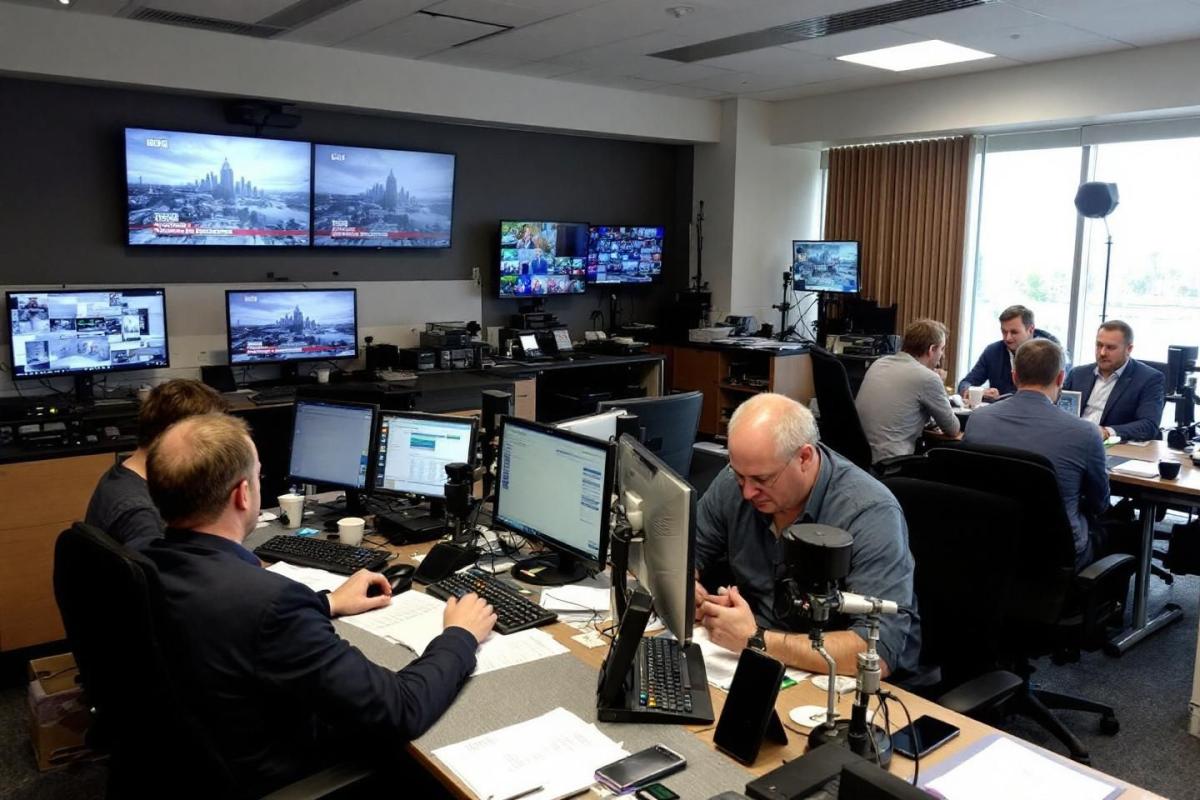
The British Broadcasting Corporation finds itself at the center of a major leadership upheaval following the departure of two key executives. Tim Davie and Deborah Turness have stepped down from their respective positions amid mounting controversy surrounding editorial decisions that sparked international criticism. This shake-up represents one of the most significant changes in the broadcaster’s organizational structure in recent years, raising questions about journalistic integrity and editorial oversight within one of the world’s most respected media institutions.
White House celebrates the departure of BBC leadership
The Trump administration has been quick to claim victory following the resignations, with officials drawing direct connections between their sustained criticism and the personnel changes. Karoline Leavitt, serving as White House Press Secretary, issued statements on social media characterizing the BBC as a “propaganda machine” and celebrating what she described as the president “going to war” with the broadcaster. Her comments on Sunday explicitly linked Trump’s aggressive stance toward the media organization with the subsequent departure of its senior leadership.
The administration’s celebration reflects a broader pattern of antagonism toward mainstream journalism that has characterized Trump’s political career since 2015. Senior administration officials have consistently portrayed major news outlets as fundamentally opposed to their agenda, frequently highlighting instances where media organizations face consequences for their coverage decisions. This approach represents a continuation of tactics employed during Trump’s first term, where media criticism formed a central component of political strategy.
The relationship between the White House and international media organizations has become increasingly strained, with officials using various platforms to challenge reporting they consider unfavorable. In this context, Rachel Reeves hints at UK-US trade deal with possible reduction in car tariffs, demonstrating the complex diplomatic landscape surrounding transatlantic relations. The administration’s vocal response to perceived media bias extends beyond domestic outlets to include foreign broadcasters operating with different editorial standards and regulatory frameworks.
Controversial documentary editing triggers international backlash
At the heart of this controversy lies a 2024 Panorama documentary examining Trump’s re-election campaign. The programme’s editing choices regarding footage from January 6, 2021, became the focal point of intense scrutiny and criticism. Specifically, the documentary presented edited portions of Trump’s speech in a manner that suggested he had explicitly encouraged his supporters to storm the United States Capitol during the congressional certification of Joe Biden’s electoral victory.
The editorial decisions made during post-production raised serious questions about journalistic accuracy and contextual representation. Critics argued that selective editing fundamentally altered the meaning of the president’s statements, creating an impression that diverged from the complete record of his remarks that day. This controversy highlights the delicate balance broadcasters must maintain between editorial freedom and factual accuracy when presenting political content to audiences.
| Key aspects of the controversy | Impact on BBC leadership |
|---|---|
| Documentary editing practices questioned | Internal pressure for accountability increased |
| International political criticism intensified | External pressure from US administration mounted |
| Editorial standards review demanded | Leadership credibility challenged significantly |
Multiple pressures converge on broadcast leadership
While the Trump administration has been eager to claim credit for these departures, the reality reflects a more complex situation. Pressure from within the United Kingdom played a primary role in driving the leadership changes, with domestic concerns about editorial standards and institutional accountability weighing heavily on decision-makers. The convergence of internal and external pressures created an untenable situation for the broadcaster’s top executives.
The timing of these resignations reflects several interconnected factors that made continued leadership increasingly difficult. Consider the following elements that contributed to this outcome :
- Sustained criticism from international political figures questioning editorial integrity
- Internal stakeholder concerns about maintaining journalistic standards and institutional reputation
- Public debate surrounding the appropriate boundaries of editorial interpretation versus factual reporting
- Regulatory considerations regarding broadcaster responsibilities and accountability mechanisms
Previous incidents had already strained relationships between the BBC and various political actors. In June, accusations emerged regarding coverage of an attack at a Gaza refugee camp, with administration officials claiming the broadcaster misreported events before subsequently adjusting its coverage. The BBC defended its reporting as appropriate handling of a fast-moving news story, illustrating ongoing tensions surrounding real-time journalism in complex international situations.
Long-standing tensions between Trump and mainstream journalism
The president’s characterization of mainstream media as fundamentally biased represents a consistent theme throughout his political career. Trump’s perspective on media coverage has shaped his communication strategy since launching his first presidential campaign, with allegations of systematic bias forming a cornerstone of his relationship with news organizations. His response to the BBC controversy, posted on Truth Social, described Davie and the leadership team as “very dishonest people” while accusing the broadcaster of attempting to “step on the scales of a presidential election.”
This antagonistic relationship extends far beyond individual incidents or specific news organizations. The administration’s approach reflects a comprehensive strategy of challenging media narratives and questioning the legitimacy of coverage perceived as unfavorable. Media outlets facing negative consequences for their reporting decisions are frequently highlighted by White House officials as validation of their criticisms, reinforcing a narrative of accountability for what they characterize as biased journalism.
The implications of this controversy extend beyond the immediate personnel changes at the BBC. Questions about editorial oversight, the appropriate use of selective editing in documentary filmmaking, and the relationship between political power and media independence remain subjects of intense debate. As international journalism continues navigating an increasingly polarized political landscape, the standards applied to coverage of contentious political figures will likely face ongoing scrutiny from multiple stakeholders with competing interests and perspectives.

- England league-union hybrid match proposed for 2026 - October 16, 2026
- England league-union hybrid match proposed for 2026 - October 16, 2026
- Body found in Salisbury with no signs of foul play, police say - October 15, 2026

